THE ADVENTURE COLLECTIVE® · Independent discovery and booking for outdoor travel

This guided half-day hike climbs Pedra Bonita in Tijuca Forest, offering sweeping 360° views of Rio’s coastline, Pedra da Gávea and Christ the Redeemer. Expect 3.5 km of trail, 203 m elevation gain, and a mix of rainforest scenery with accessible summit panoramas.
This guided half-day hike climbs Pedra Bonita in Tijuca Forest, offering sweeping 360° views of Rio’s coastline, Pedra da Gávea and Christ the Redeemer. Expect 3.5 km of trail, 203 m elevation gain, and a mix of rainforest scenery with accessible summit panoramas.
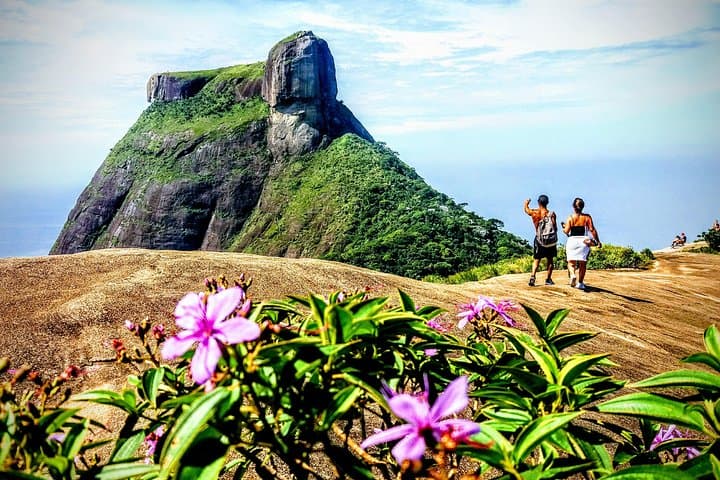
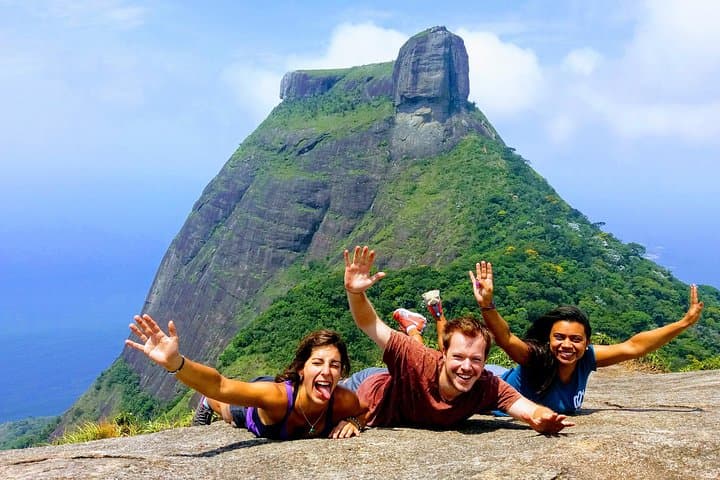
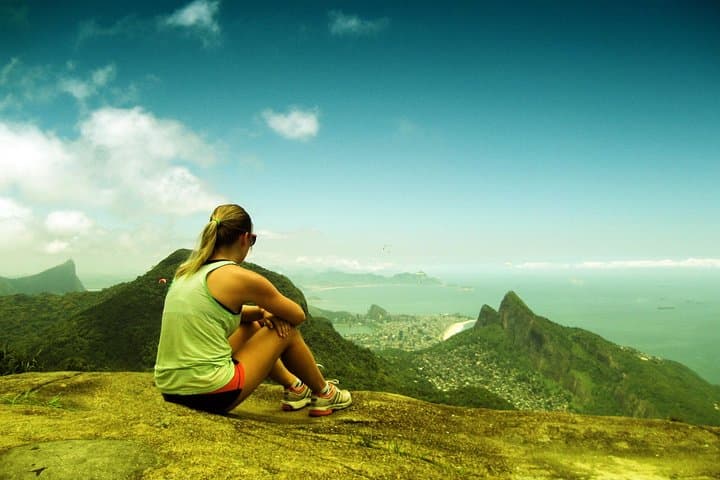
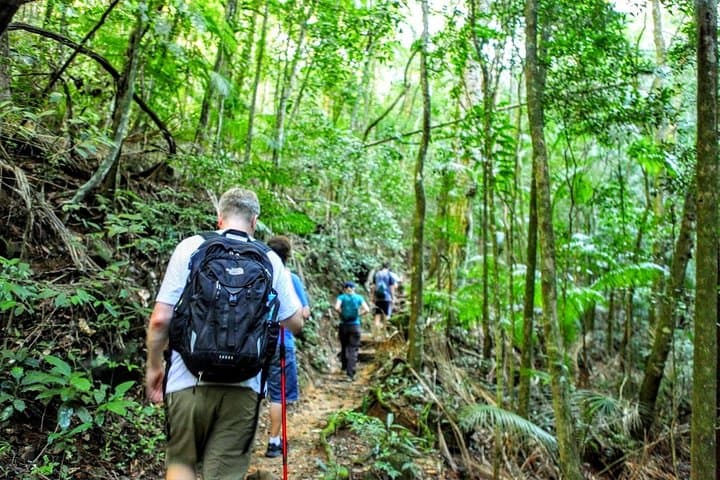
You start on a narrow track, the city’s noise shrinking behind the minibus as Tijuca’s green shoulder closes in. The trail pushes upward through dense Atlantic rainforest—ferns brushing sleeves, birds calling like small alarms—until the path opens on the rounded lip of Pedra Bonita. From the 696 m summit the ocean lays out in bands: blue, sand, and the busy curve of Rio’s southern beaches. Pedra da Gávea looms like a sculpted giant on the horizon, and Christ the Redeemer punctuates the skyline a little inland.
Verified experiences and guided adventures in the surrounding area.
Operated by Jungle Me · Rio de Janeiro, Rio de Janeiro
You start on a narrow track, the city’s noise shrinking behind the minibus as Tijuca’s green shoulder closes in. The trail pushes upward through dense Atlantic rainforest—ferns brushing sleeves, birds calling like small alarms—until the path opens on the rounded lip of Pedra Bonita. From the 696 m summit the ocean lays out in bands: blue, sand, and the busy curve of Rio’s southern beaches. Pedra da Gávea looms like a sculpted giant on the horizon, and Christ the Redeemer punctuates the skyline a little inland.
Tijuca is not a primordial wilderness but a reclaimed forest: 19th-century reforestation projects restored watersheds that supply Rio. The geology is granite and gneiss hewn by ancient uplift, producing the park’s steep escarpments and monoliths. Cultural life here is urban and outdoorsy—hang-gliders use Pedra Bonita’s launch and Cariocas come to hike, run and fly. Wildlife is visible and unintrusive: coatis forage near trails, marmosets flit in the canopy, and toucans call from tall trees.
Practical guidance: the guided route is roughly 3.5 km round-trip with about 203 m of elevation gain, taking roughly 2 hours of hiking in a half-day tour (transfers bring total to ~5 hours). Wear sturdy trail shoes, bring 1.5–2 L of water, sun protection and insect repellent. Morning departures improve visibility and avoid afternoon showers in Rio’s summer. Stay on marked paths, keep distance from wildlife, and expect uneven, sometimes rocky footing—good balance and steady knees make the climb comfortable. The reward is a wide, walkable summit and photo opportunities few urban forests can match.
moderate.
2–3 hours (hike) / 5 hours (tour incl. transfers).
Moderate fitness recommended—steady uphill walking for roughly 50 minutes to the summit, some uneven steps.
Yes—children 6 and up can usually manage; the tour operator advises against very young children under 5 and requires parental supervision.
Yes—pickup and drop-off are included from designated meeting points in Rio’s South Zone neighborhoods like Copacabana and Ipanema; exact pickup time is confirmed the night before.
The walking portion is about 3.5 km round-trip with 203 m of elevation gain; it’s rated easy-to-moderate and involves uneven terrain rather than technical climbing.
Pedra Bonita is a popular launch site for hang-gliding and paragliding, but flights are separate commercial activities and not included in this guided hike.
Tijuca Forest is largely reforested on 19th-century lands to restore watershed function for the growing city; many present trails follow old water-management roads.
The park is an urban conservation area—stay on trails, avoid feeding wildlife, and pack out trash to protect the recovering Atlantic Forest ecosystem.
Jungle Me operates guided outdoor trips and adventures with an emphasis on safety, stewardship, and memorable experiences.
You start on a narrow track, the city’s noise shrinking behind the minibus as Tijuca’s green shoulder closes in. The trail pushes upward through dense Atlantic rainforest—ferns brushing sleeves, birds calling like small alarms—until the path opens on the rounded lip of Pedra Bonita. From the 696 m summit the ocean lays out in bands: blue, sand, and the busy curve of Rio’s southern beaches. Pedra da Gávea looms like a sculpted giant on the horizon, and Christ the Redeemer punctuates the skyline a little inland.
You start on a narrow track, the city’s noise shrinking behind the minibus as Tijuca’s green shoulder closes in. The trail pushes upward through dense Atlantic rainforest—ferns brushing sleeves, birds calling like small alarms—until the path opens on the rounded lip of Pedra Bonita. From the 696 m summit the ocean lays out in bands: blue, sand, and the busy curve of Rio’s southern beaches. Pedra da Gávea looms like a sculpted giant on the horizon, and Christ the Redeemer punctuates the skyline a little inland.
Tijuca is not a primordial wilderness but a reclaimed forest: 19th-century reforestation projects restored watersheds that supply Rio. The geology is granite and gneiss hewn by ancient uplift, producing the park’s steep escarpments and monoliths. Cultural life here is urban and outdoorsy—hang-gliders use Pedra Bonita’s launch and Cariocas come to hike, run and fly. Wildlife is visible and unintrusive: coatis forage near trails, marmosets flit in the canopy, and toucans call from tall trees.
Practical guidance: the guided route is roughly 3.5 km round-trip with about 203 m of elevation gain, taking roughly 2 hours of hiking in a half-day tour (transfers bring total to ~5 hours). Wear sturdy trail shoes, bring 1.5–2 L of water, sun protection and insect repellent. Morning departures improve visibility and avoid afternoon showers in Rio’s summer. Stay on marked paths, keep distance from wildlife, and expect uneven, sometimes rocky footing—good balance and steady knees make the climb comfortable. The reward is a wide, walkable summit and photo opportunities few urban forests can match.