THE ADVENTURE COLLECTIVE® · Independent discovery and booking for outdoor travel

A full‑day, high‑effort circuit through Tijuca National Park that climbs to Taquara Hill (814m) and finishes with a waterfall shower. Expect 10.4 km, 848 m of gain, caves, coffee‑farm ruins and some of Rio’s best skyline views.
A full‑day, high‑effort circuit through Tijuca National Park that climbs to Taquara Hill (814m) and finishes with a waterfall shower. Expect 10.4 km, 848 m of gain, caves, coffee‑farm ruins and some of Rio’s best skyline views.
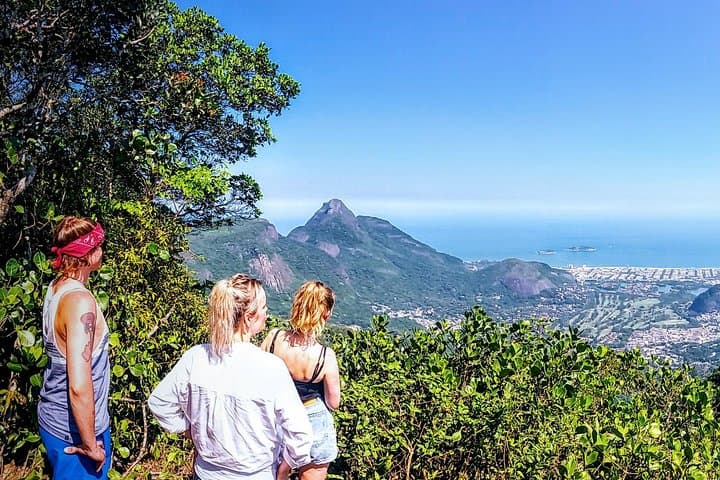
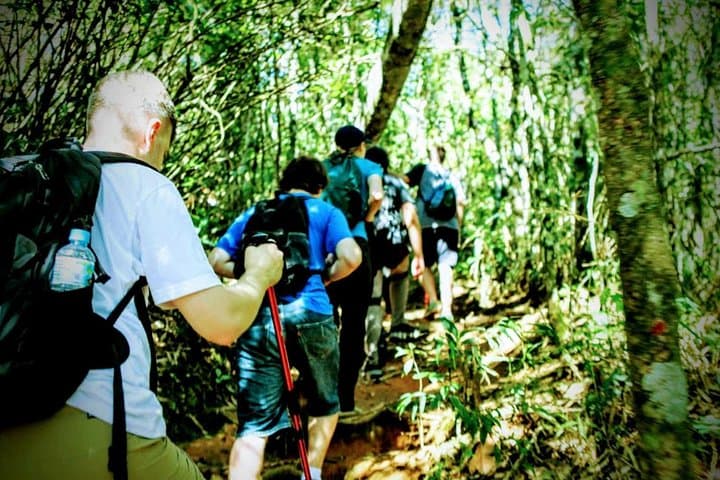
Fog slants through wide-leaved trees and the trail pitches up—roots and wet rock testing your steps as the city’s skyline peeks between trunks. You start in the heart of Tijuca National Park, one of the largest urban forests on Earth, and spend a full day threading rivers, caves and coffee-farm ruins toward Taquara Hill, a rugged peak that rises roughly 814m above sea level and rewards with sweeping views of the valley and Rio below.
Verified experiences and guided adventures in the surrounding area.
Operated by Jungle Me · Rio de Janeiro, Rio de Janeiro
Fog slants through wide-leaved trees and the trail pitches up—roots and wet rock testing your steps as the city’s skyline peeks between trunks. You start in the heart of Tijuca National Park, one of the largest urban forests on Earth, and spend a full day threading rivers, caves and coffee-farm ruins toward Taquara Hill, a rugged peak that rises roughly 814m above sea level and rewards with sweeping views of the valley and Rio below.
This route runs about 10.4 km (6.5 mi) with roughly 848 m (2,782 ft) of elevation gain, carved across old reforestation projects from the 1800s and pathways that once served coffee plantations. Geology here is granite and gneiss—steep slabs and boulder fields where water has polished the rock and carved small waterfalls. Culturally, the forest tells Brazil’s arc from colonial coffee economy through large-scale reforestation; you’ll pass a small 19th-century chapel and farm ruins that speak to that history.
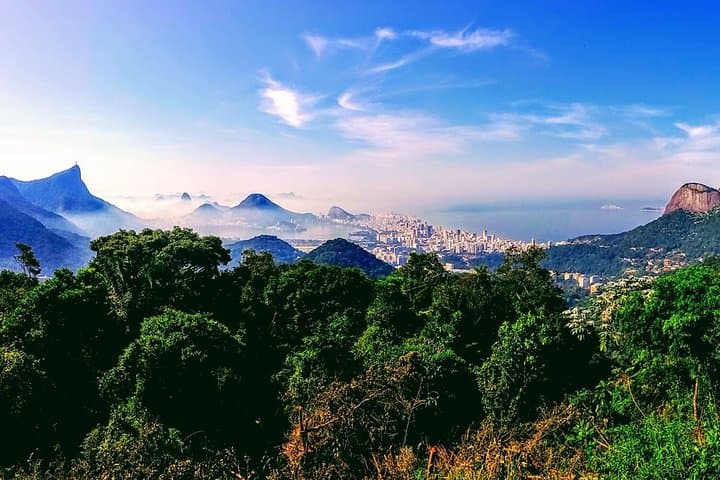
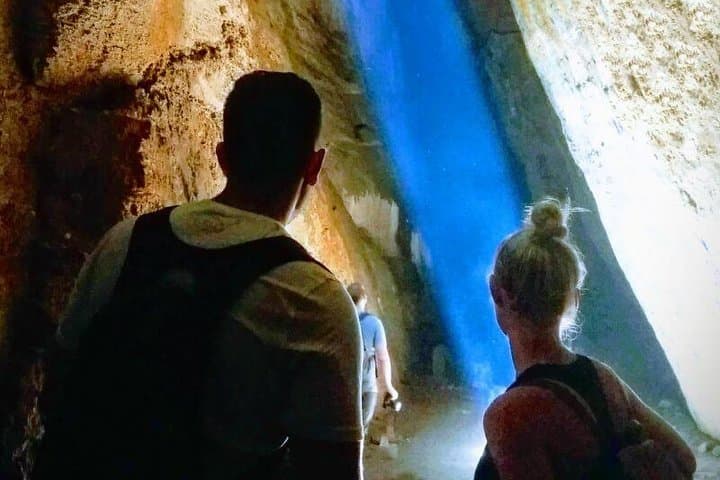
Expect rainforest humidity, sudden sun on exposed ridgelines, and cool cascades where the group can rinse off after the hike. On weekdays the itinerary can include Vista Chinesa for a classic framed view of Christ the Redeemer and Sugarloaf.
Practically: this is a hard, guided circuit—bring sturdy boots, 2–3 L of water, layered breathable clothing, insect repellent and a compact first-aid kit. Transfers from Rio’s South Zone are usually included; confirm pickup details the night before. Rain can change waterfall flow and sometimes forces rescheduling—plan a flexible day in the city for backup.
difficult.
4–6 hours (active time) / full day including transfers.
High fitness required—regular hikers who train on hills and carry a daypack will be comfortable
The circuit is classified hard: 10.4 km with ~848 m elevation gain. It’s best for hikers in good cardiovascular shape who are used to steep terrain.
Yes—transport from designated meeting points in Rio’s South Zone (Copacabana, Ipanema, Leblon, etc.) is usually included; confirm your pickup point at booking.
Taunay Waterfall visit is for photos only; the end‑of‑route waterfall may allow rinsing depending on recent rainfall—bring swimwear and a towel just in case.
Tours may be rescheduled or canceled for heavy rain or hazardous trail conditions; organizers typically offer refunds or alternate dates.
Tijuca was largely cleared for coffee farms in the 19th century and later reforested via one of the earliest large‑scale restoration projects in Brazil, which shaped today’s park trails.
As an urban national park, Tijuca faces visitor pressure and invasive species; stay on trails, pack out waste, and follow guide instructions to reduce impact.
Jungle Me operates guided outdoor trips and adventures with an emphasis on safety, stewardship, and memorable experiences.
Fog slants through wide-leaved trees and the trail pitches up—roots and wet rock testing your steps as the city’s skyline peeks between trunks. You start in the heart of Tijuca National Park, one of the largest urban forests on Earth, and spend a full day threading rivers, caves and coffee-farm ruins toward Taquara Hill, a rugged peak that rises roughly 814m above sea level and rewards with sweeping views of the valley and Rio below.
Fog slants through wide-leaved trees and the trail pitches up—roots and wet rock testing your steps as the city’s skyline peeks between trunks. You start in the heart of Tijuca National Park, one of the largest urban forests on Earth, and spend a full day threading rivers, caves and coffee-farm ruins toward Taquara Hill, a rugged peak that rises roughly 814m above sea level and rewards with sweeping views of the valley and Rio below.
This route runs about 10.4 km (6.5 mi) with roughly 848 m (2,782 ft) of elevation gain, carved across old reforestation projects from the 1800s and pathways that once served coffee plantations. Geology here is granite and gneiss—steep slabs and boulder fields where water has polished the rock and carved small waterfalls. Culturally, the forest tells Brazil’s arc from colonial coffee economy through large-scale reforestation; you’ll pass a small 19th-century chapel and farm ruins that speak to that history.
Expect rainforest humidity, sudden sun on exposed ridgelines, and cool cascades where the group can rinse off after the hike. On weekdays the itinerary can include Vista Chinesa for a classic framed view of Christ the Redeemer and Sugarloaf.
Practically: this is a hard, guided circuit—bring sturdy boots, 2–3 L of water, layered breathable clothing, insect repellent and a compact first-aid kit. Transfers from Rio’s South Zone are usually included; confirm pickup details the night before. Rain can change waterfall flow and sometimes forces rescheduling—plan a flexible day in the city for backup.