THE ADVENTURE COLLECTIVE® · Independent discovery and booking for outdoor travel

A high-energy day hike from Lijiang that traces the upper Jinsha River through one of the world’s deepest gorges. Expect steep stone steps, dramatic river views, and a rest at Half-way Guesthouse with a clear sightline to Jade Dragon Snow Mountain.
A high-energy day hike from Lijiang that traces the upper Jinsha River through one of the world’s deepest gorges. Expect steep stone steps, dramatic river views, and a rest at Half-way Guesthouse with a clear sightline to Jade Dragon Snow Mountain.
The morning air on the south gate of Lijiang Ancient Town is crisp; guides and hikers gather as minibuses rattle north toward the canyon. Within an hour the road narrows, the river’s voice deepens, and the trail drops into a landscape where rock and water argue for dominance. You hike from the 14km point past terraced fields into the steeper flanks, pausing at Half-way Guesthouse to watch the Jade Dragon Snow Mountain stand like a cold roof above the gorge.
Verified experiences and guided adventures in the surrounding area.
Operated by Century Holiday · Lijiang, Yunnan
The morning air on the south gate of Lijiang Ancient Town is crisp; guides and hikers gather as minibuses rattle north toward the canyon. Within an hour the road narrows, the river’s voice deepens, and the trail drops into a landscape where rock and water argue for dominance. You hike from the 14km point past terraced fields into the steeper flanks, pausing at Half-way Guesthouse to watch the Jade Dragon Snow Mountain stand like a cold roof above the gorge.
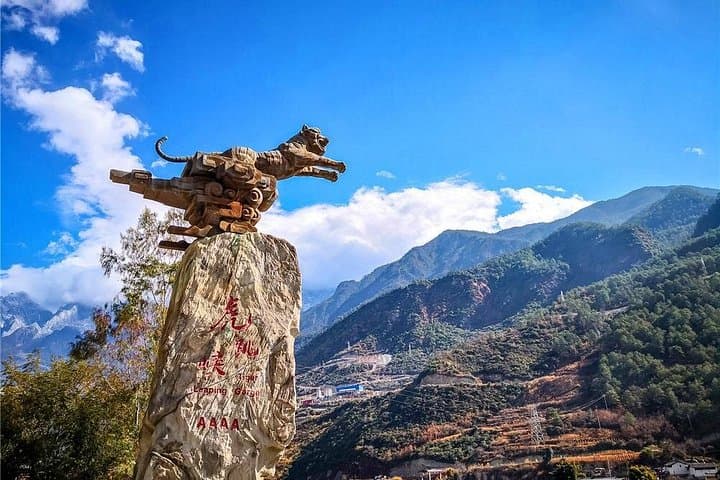
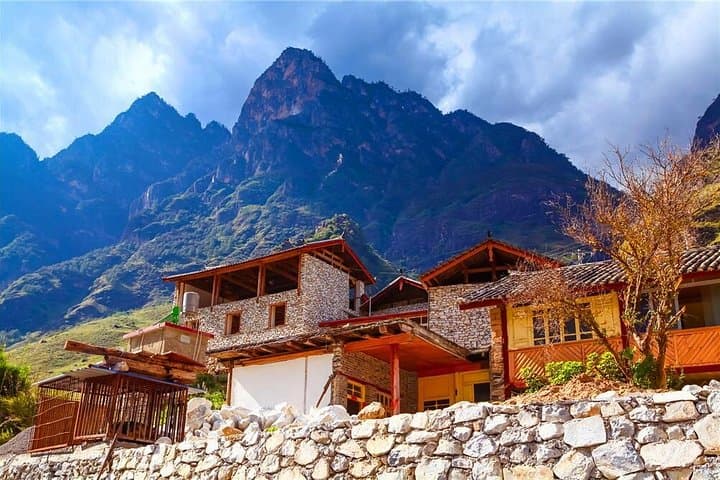
Tiger Leaping Gorge sits where the Jinsha River — an upper Yangtze tributary — forces itself between the massif of Jade Dragon and Haba Snow Mountain. The gorge’s depth and speed are a product of recent uplift and rapid river incision; for millennia local Naxi and Tibetan communities have used the flanks and passes for trade and seasonal grazing. Today small guesthouses and stone paths thread the slope, offering intimate viewpoints at Tina’s Guesthouse and the 14km markers.
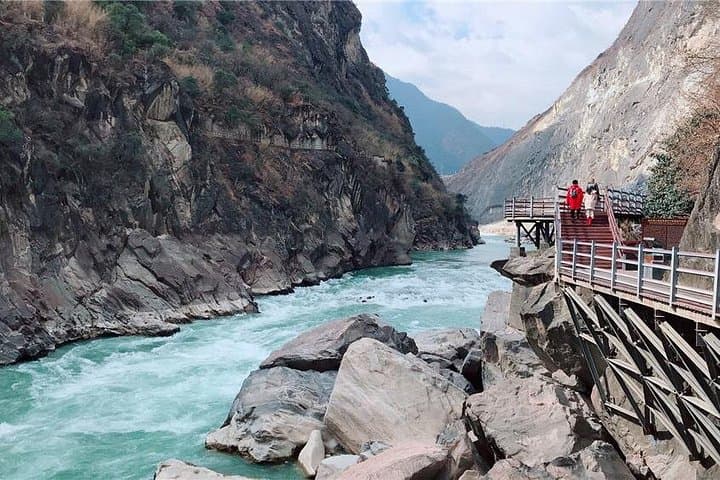
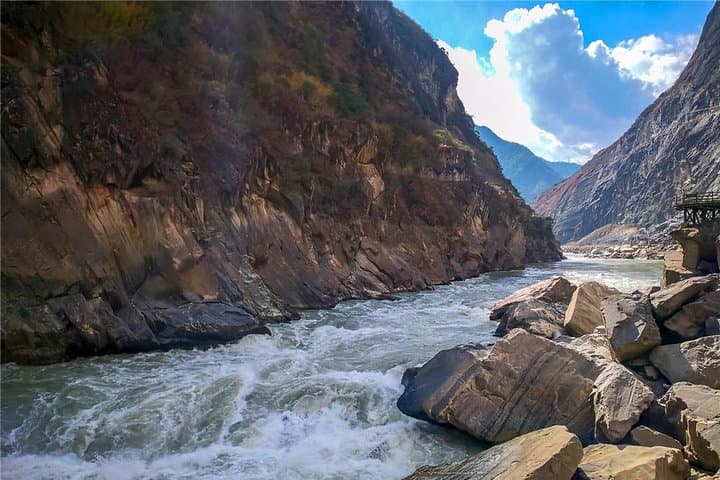
Expect mostly singletrack and switchbacked stone steps, intermittent public-vehicle transfers, and steady altitude shifts rather than technical climbing. The trail delivers close-up river roar, shear-walled canyon views, and birdlife that darts along the scrub. Practicalities: start early, carry layers for wind and sun, bring at least 2 liters of water, and budget 6–8 hours door-to-door including transfers. If you finish in Lijiang or opt to continue to Shangri‑la, confirm pickup points before you set off — transport windows are fixed. Stick to marked paths to limit erosion and respect guesthouse etiquette when pausing for views.
moderate.
8 hours.
Good aerobic fitness and comfort with sustained uphill and downhill hiking; able to handle 6–12 km over uneven terrain.
The booked tour runs about 8 hours door-to-door, with roughly 3–5 hours of hiking depending on pace and exact route segments.
This is best for hikers with moderate fitness; beginners who are used to walking several hours and taking steady uphill sections can manage with rest breaks.
Yes — the tour offers end points in Lijiang or Shangri‑la; select your drop-off when booking and reconfirm with the guide.
The itinerary states entrance tickets mentioned are included; confirm specific access fees with the operator ahead of time.
The gorge is carved by the Jinsha River; local Naxi and Tibetan communities have long used trails through the canyon for trade and seasonal movement.
The trail is vulnerable to erosion and increased visitor pressure — stay on marked paths, avoid single-use plastics, and respect guesthouse rules to minimize impact.
Century Holiday operates guided outdoor trips and adventures with an emphasis on safety, stewardship, and memorable experiences.
The morning air on the south gate of Lijiang Ancient Town is crisp; guides and hikers gather as minibuses rattle north toward the canyon. Within an hour the road narrows, the river’s voice deepens, and the trail drops into a landscape where rock and water argue for dominance. You hike from the 14km point past terraced fields into the steeper flanks, pausing at Half-way Guesthouse to watch the Jade Dragon Snow Mountain stand like a cold roof above the gorge.
The morning air on the south gate of Lijiang Ancient Town is crisp; guides and hikers gather as minibuses rattle north toward the canyon. Within an hour the road narrows, the river’s voice deepens, and the trail drops into a landscape where rock and water argue for dominance. You hike from the 14km point past terraced fields into the steeper flanks, pausing at Half-way Guesthouse to watch the Jade Dragon Snow Mountain stand like a cold roof above the gorge.
Tiger Leaping Gorge sits where the Jinsha River — an upper Yangtze tributary — forces itself between the massif of Jade Dragon and Haba Snow Mountain. The gorge’s depth and speed are a product of recent uplift and rapid river incision; for millennia local Naxi and Tibetan communities have used the flanks and passes for trade and seasonal grazing. Today small guesthouses and stone paths thread the slope, offering intimate viewpoints at Tina’s Guesthouse and the 14km markers.
Expect mostly singletrack and switchbacked stone steps, intermittent public-vehicle transfers, and steady altitude shifts rather than technical climbing. The trail delivers close-up river roar, shear-walled canyon views, and birdlife that darts along the scrub. Practicalities: start early, carry layers for wind and sun, bring at least 2 liters of water, and budget 6–8 hours door-to-door including transfers. If you finish in Lijiang or opt to continue to Shangri‑la, confirm pickup points before you set off — transport windows are fixed. Stick to marked paths to limit erosion and respect guesthouse etiquette when pausing for views.