THE ADVENTURE COLLECTIVE® · Independent discovery and booking for outdoor travel

Drive the High Atlas over Tichka Pass to visit Telouet’s Glaoui Kasbah and the UNESCO ksar of Aït Ben Haddou on a long, culture-rich day trip from Marrakech. Expect dramatic mountain panoramas, earthen architecture, and short uneven walks at historic sites.
Drive the High Atlas over Tichka Pass to visit Telouet’s Glaoui Kasbah and the UNESCO ksar of Aït Ben Haddou on a long, culture-rich day trip from Marrakech. Expect dramatic mountain panoramas, earthen architecture, and short uneven walks at historic sites.
At dawn the minivan peels away from Marrakesh, city noise folding behind as the road climbs into the High Atlas. The air thins and the landscape shifts—red-brown mountains wear stripes of mineral color, and wind carves terraces into the slopes. By the time the road crests Tichka Pass (2,260 m) the sky feels sharper and the villages below look like stacked clay models.
Verified experiences and guided adventures in the surrounding area.
Operated by Adventure masters · Marrakech, Marrakesh-Safi
At dawn the minivan peels away from Marrakesh, city noise folding behind as the road climbs into the High Atlas. The air thins and the landscape shifts—red-brown mountains wear stripes of mineral color, and wind carves terraces into the slopes. By the time the road crests Tichka Pass (2,260 m) the sky feels sharper and the villages below look like stacked clay models.
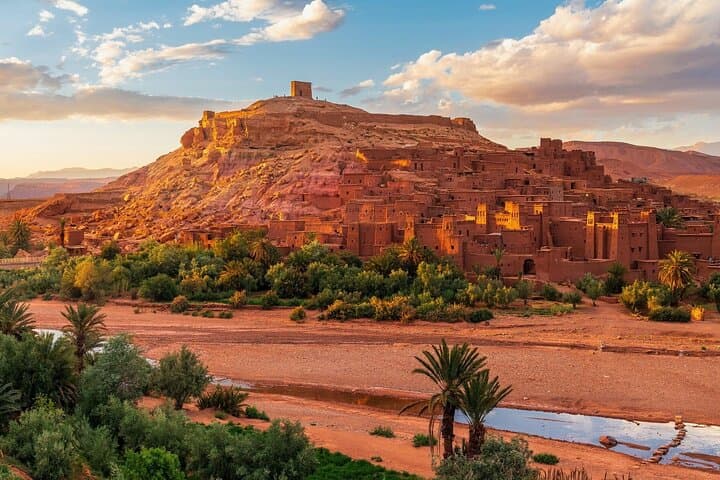
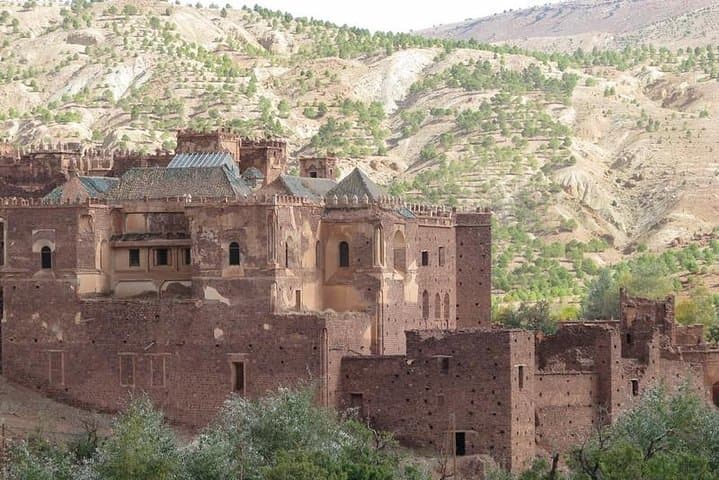
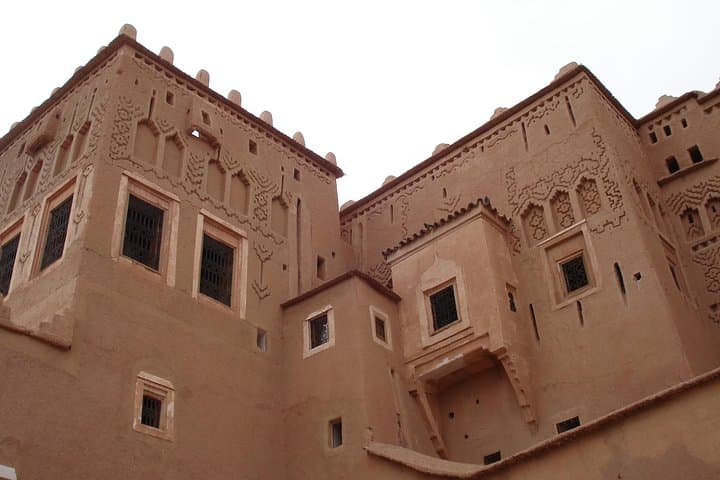
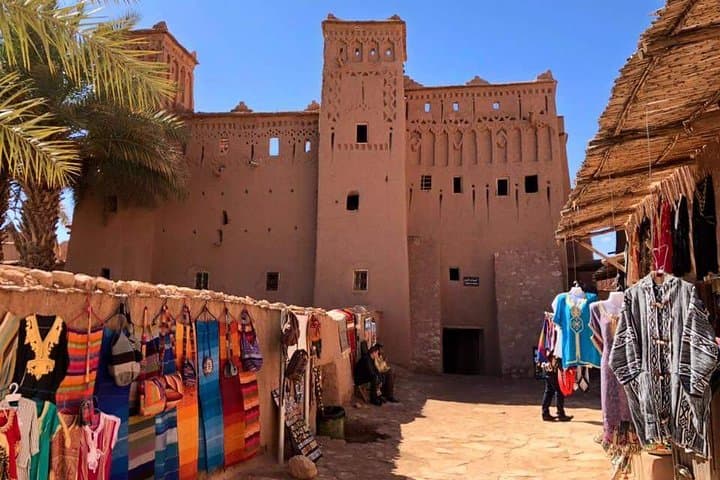
This route stitches together centuries of history: trading pistes, Glaoui power, and the fortified ksar of Aït Ben Haddou. Telouet’s Glaoui Kasbah reveals 19th-century artisanship—plasterwork, cedar ceilings and a paradox of ruinous exterior and ornate interior—while Aït Ben Haddou, a UNESCO-protected ksar, reflects earthen architecture and the legacy of Almoravid-era settlement. Geologically, the High Atlas is young and uplifted, its folded strata sending fast-draining slopes and narrow valleys to the south.
Culturally the day moves between Berber villages, cooperative workshops and film sets in Ouarzazate, where desert light and wide horizons attracted international cinema.
Practical guide: expect a long day (8–12 hours) dominated by driving with short walks on uneven surfaces; bring sturdy shoes, sun protection and at least 1.5–2 liters of water. Mornings are coolest; afternoons can be hot and dusty. Photography stops are frequent but limited by parking and tourist flow. Respect private property at Telouet and Aït Ben Haddou, hire a local guide to access interiors, and plan your return to Marrakech for evening traffic. The route rewards patience—a landscape that dares you to look farther, and monuments that repay close attention.
easy.
8–12 hours.
Suitable for most fitness levels; the trip is primarily driving with short periods of uneven walking at sites.
Expect an 8–12 hour day with roughly 6–8 hours of driving cumulative, including stops for sightseeing and photos.
No technical hikes; visits involve short walks on uneven, often steep mudbrick streets and stairs—comfortable walking shoes recommended.
Bottled water is included; lunch arrangements vary by operator—confirm dietary needs at booking to ensure options are available.
Access varies: Telouet’s interior may require a local guide and modest entrance fee, while parts of Aït Ben Haddou are managed for visitors—follow signage and respect private areas.
The Glaoui family built Telouet’s lavish kasbahs in the 19th century, and Aït Ben Haddou’s ksar dates to the medieval Almoravid period as a caravanway stronghold.
Aït Ben Haddou is UNESCO-protected and faces erosion from tourism and weather; stick to marked paths, avoid climbing fragile walls, and hire local guides to support conservation-minded stewardship.
Adventure masters operates guided outdoor trips and adventures with an emphasis on safety, stewardship, and memorable experiences.
At dawn the minivan peels away from Marrakesh, city noise folding behind as the road climbs into the High Atlas. The air thins and the landscape shifts—red-brown mountains wear stripes of mineral color, and wind carves terraces into the slopes. By the time the road crests Tichka Pass (2,260 m) the sky feels sharper and the villages below look like stacked clay models.
At dawn the minivan peels away from Marrakesh, city noise folding behind as the road climbs into the High Atlas. The air thins and the landscape shifts—red-brown mountains wear stripes of mineral color, and wind carves terraces into the slopes. By the time the road crests Tichka Pass (2,260 m) the sky feels sharper and the villages below look like stacked clay models.
This route stitches together centuries of history: trading pistes, Glaoui power, and the fortified ksar of Aït Ben Haddou. Telouet’s Glaoui Kasbah reveals 19th-century artisanship—plasterwork, cedar ceilings and a paradox of ruinous exterior and ornate interior—while Aït Ben Haddou, a UNESCO-protected ksar, reflects earthen architecture and the legacy of Almoravid-era settlement. Geologically, the High Atlas is young and uplifted, its folded strata sending fast-draining slopes and narrow valleys to the south.
Culturally the day moves between Berber villages, cooperative workshops and film sets in Ouarzazate, where desert light and wide horizons attracted international cinema.
Practical guide: expect a long day (8–12 hours) dominated by driving with short walks on uneven surfaces; bring sturdy shoes, sun protection and at least 1.5–2 liters of water. Mornings are coolest; afternoons can be hot and dusty. Photography stops are frequent but limited by parking and tourist flow. Respect private property at Telouet and Aït Ben Haddou, hire a local guide to access interiors, and plan your return to Marrakech for evening traffic. The route rewards patience—a landscape that dares you to look farther, and monuments that repay close attention.