THE ADVENTURE COLLECTIVE® · Independent discovery and booking for outdoor travel

Float under Rome’s bridges and view Castel Sant'Angelo from an easy 60-minute Tiber cruise. Multilingual commentary connects ancient river history to the landmarks you pass—an accessible, scenic alternative to streetside sightseeing.
Float under Rome’s bridges and view Castel Sant'Angelo from an easy 60-minute Tiber cruise. Multilingual commentary connects ancient river history to the landmarks you pass—an accessible, scenic alternative to streetside sightseeing.
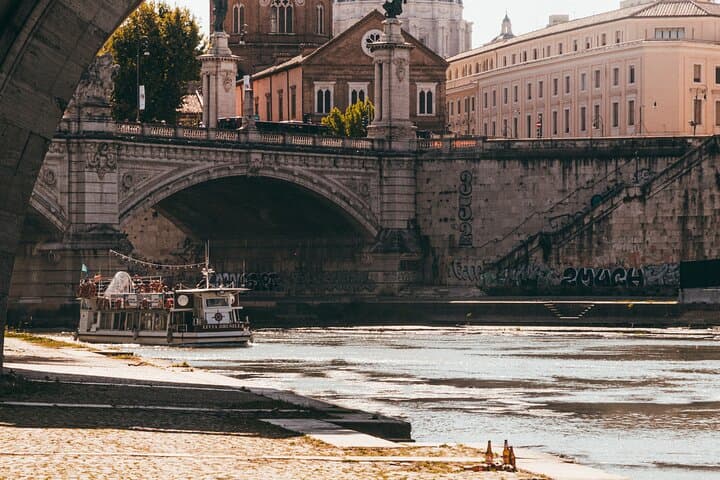
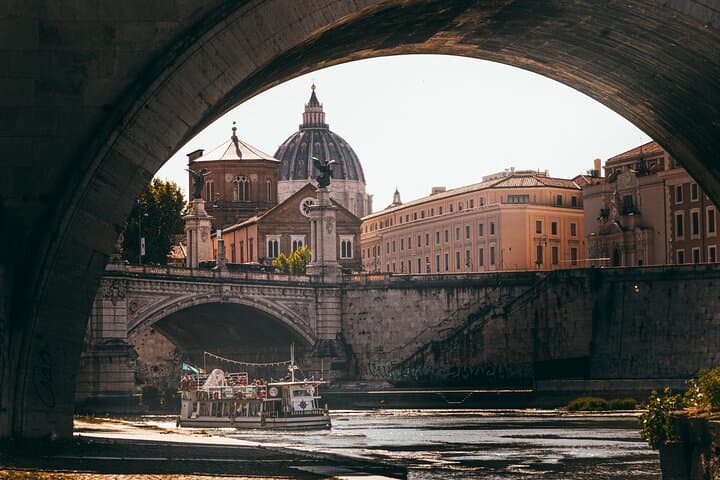
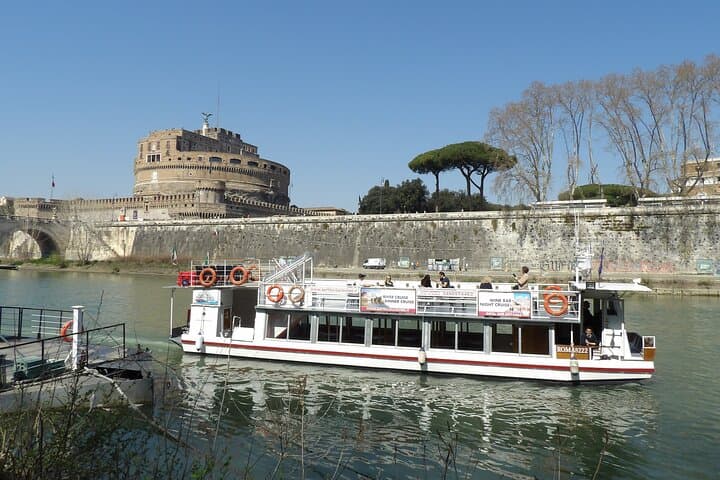
You step onto a low-slung boat and the city exhales. The Tiber slips past stone embankments, carrying the slow rhythm of Rome; bridges arc like worn pages and Castel Sant'Angelo looms, its fortress face softened by the river's reflection.
Verified experiences and guided adventures in the surrounding area.
Operated by ROME BOAT · Rome, Lazio
You step onto a low-slung boat and the city exhales. The Tiber slips past stone embankments, carrying the slow rhythm of Rome; bridges arc like worn pages and Castel Sant'Angelo looms, its fortress face softened by the river's reflection.
The Tiber has shaped Rome for millennia—an artery for trade in antiquity and a boundary for medieval neighborhoods. Geologically the river runs across an alluvial plain, its banks layered with silt and cobbles that record centuries of floods and city-building. Onboard commentary traces Roman engineering, papal riverworks, and modern conservation efforts while multilingual guides point to architectural stages in the city’s growth.
Culture here is visually immediate: anglers, students, and commuters share riverfront steps; festivals sometimes push bright boats and lanterns along the current. The ride gives a distinct vantage that streets don’t—Ponte Sant'Angelo framed low against the sky, the sculpted angels looking down, and the quieter facades of Trastevere revealing themselves from the water.
Practical guidance: trips run about 60 minutes and are physically easy and accessible; choose morning or late-afternoon departures for softer light and fewer crowds. Bring a compact jacket for breeze off the river, a camera with a small zoom for bridge and fortress details, and a reusable bottle—there’s minimal shelter on deck. Listen to the multilingual audioguide but watch for low bridges when standing. For travelers seeking a calm, informative hour of sightseeing that stitches Rome’s layers together, the Tiber cruise is a direct, low-effort window onto the city’s riverine heart.
easy.
1 hour.
Minimal fitness required; participants should be able to step on and off a low gangway and stand for short periods.
The standard trip lasts approximately 60 minutes and follows a loop past central landmarks like Castel Sant'Angelo and several historic bridges.
The service notes stroller accessibility and is suitable for guests with limited mobility, though boarding may involve a low gangway—check with the operator for wheelchair specifics.
Yes, the cruise offers multilingual audio commentary; confirm available languages when booking if you require a specific one.
Service animals are allowed; for other pets check the operator's policy before booking.
The Tiber has been central to Rome’s growth since antiquity, serving as a trade route and a defensive line; many bridges and embankments were rebuilt across centuries, reflecting Roman, medieval and papal eras.
River management and periodic cleanups aim to reduce pollution and maintain navigability; visitors are encouraged to avoid littering and to support local conservation initiatives.
ROME BOAT operates guided outdoor trips and adventures with an emphasis on safety, stewardship, and memorable experiences.
You step onto a low-slung boat and the city exhales. The Tiber slips past stone embankments, carrying the slow rhythm of Rome; bridges arc like worn pages and Castel Sant'Angelo looms, its fortress face softened by the river's reflection.
You step onto a low-slung boat and the city exhales. The Tiber slips past stone embankments, carrying the slow rhythm of Rome; bridges arc like worn pages and Castel Sant'Angelo looms, its fortress face softened by the river's reflection.
The Tiber has shaped Rome for millennia—an artery for trade in antiquity and a boundary for medieval neighborhoods. Geologically the river runs across an alluvial plain, its banks layered with silt and cobbles that record centuries of floods and city-building. Onboard commentary traces Roman engineering, papal riverworks, and modern conservation efforts while multilingual guides point to architectural stages in the city’s growth.
Culture here is visually immediate: anglers, students, and commuters share riverfront steps; festivals sometimes push bright boats and lanterns along the current. The ride gives a distinct vantage that streets don’t—Ponte Sant'Angelo framed low against the sky, the sculpted angels looking down, and the quieter facades of Trastevere revealing themselves from the water.
Practical guidance: trips run about 60 minutes and are physically easy and accessible; choose morning or late-afternoon departures for softer light and fewer crowds. Bring a compact jacket for breeze off the river, a camera with a small zoom for bridge and fortress details, and a reusable bottle—there’s minimal shelter on deck. Listen to the multilingual audioguide but watch for low bridges when standing. For travelers seeking a calm, informative hour of sightseeing that stitches Rome’s layers together, the Tiber cruise is a direct, low-effort window onto the city’s riverine heart.