THE ADVENTURE COLLECTIVE® · Independent discovery and booking for outdoor travel

A long day-trip from Kathmandu brings you to Charaundi and onto three hours of class II–III whitewater on the Trishuli River. Expect scenic valley drives, local village stops, and a fast, guide-led rafting run with lunch at Gaighat.
A long day-trip from Kathmandu brings you to Charaundi and onto three hours of class II–III whitewater on the Trishuli River. Expect scenic valley drives, local village stops, and a fast, guide-led rafting run with lunch at Gaighat.
A pre-dawn pick-up from Kathmandu and a coffee-stained highway set the tone: the road west unspools toward the Trishuli, a river that seems to sprint and then steady as it cuts through low Siwalik ridges. By Charaundi the guide reads the water and gives a clear briefing; within minutes the raft answers the current, and the first rapids—playful, punchy—invite paddles to bite.
Verified experiences and guided adventures in the surrounding area.
Operated by NBM Travel Company Pvt. Ltd. · Charaundi, Bagmati Province
A pre-dawn pick-up from Kathmandu and a coffee-stained highway set the tone: the road west unspools toward the Trishuli, a river that seems to sprint and then steady as it cuts through low Siwalik ridges. By Charaundi the guide reads the water and gives a clear briefing; within minutes the raft answers the current, and the first rapids—playful, punchy—invite paddles to bite.
The Trishuli takes its name from Shiva’s trident, and the valley carries a straightforward human history: riverside villages, fish markets at Malekhu, and trade routes that once linked Kathmandu to the western lowlands. Geologically the river has carved through young sedimentary hills, creating short gorges and exposed banks that bear the fingerprints of seasonal monsoon swell.
Culturally the route passes Tamang and Newar settlements where terraced fields plunge toward the water and roadside tea stalls offer steaming cups and fried fish. Guides will point out local temples and explain how the river supports irrigation and village life.
For practical planning expect a full day: roughly 3–3.5 hours each way by shared vehicle and about three hours on the river with a lunch stop at Gaighat. Rapids are typically class II–III depending on season; lifejackets and guides are provided. Bring river shoes, quick-dry clothes, sun protection, and a small dry bag for essentials. The operator allows hotel pickup in Kathmandu and requires basic health disclosures—avoid this trip if pregnant or if you have serious heart conditions. Late afternoon returns to Kathmandu give you time to rinse off and trade stories—and the river will already be daring you to come back.
moderate.
10–12 hours (including drive).
Moderate fitness for extended vehicle time and active paddling; basic swimming ability recommended
The shared vehicle drive to Charaundi takes about 3–3.5 hours each way depending on traffic and road conditions.
Typical runs are class II–III depending on river levels—exciting but suitable for people with no prior rafting experience under guide supervision.
Children may join but must be accompanied by an adult; operators often set minimum age limits—confirm at booking and disclose ages for safety planning.
Full refunds are usually available if you cancel at least 24 hours before departure; trips may be canceled for heavy rain or unsafe river conditions.
The Trishuli has long been a trade corridor linking Kathmandu to western Nepal; its name references Shiva’s trident and the river has cultural significance for nearby communities.
Carry out all plastic and use operator-provided trash disposal; sediment and plastic pollution have local impacts—choose guides who follow Leave No Trace practices.
NBM Travel Company Pvt. Ltd. operates guided outdoor trips and adventures with an emphasis on safety, stewardship, and memorable experiences.
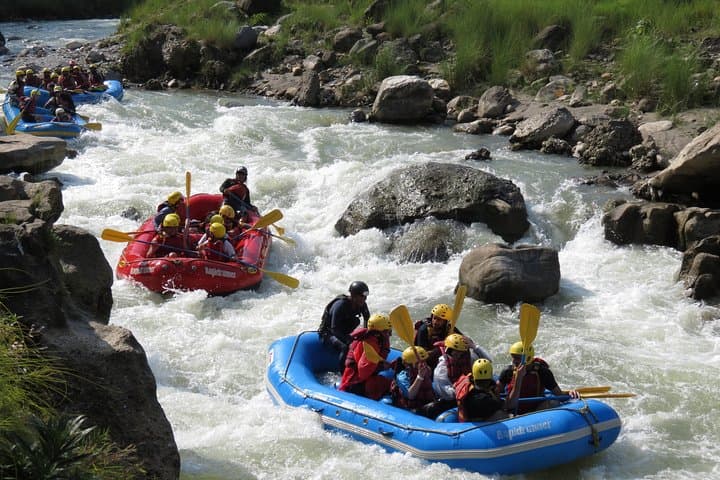
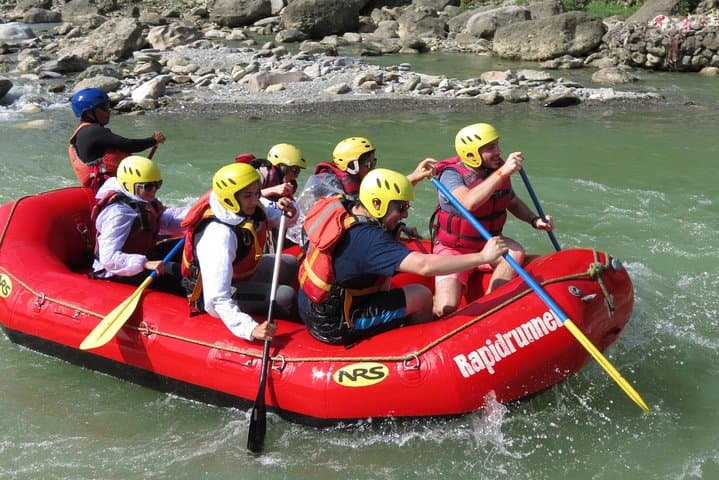
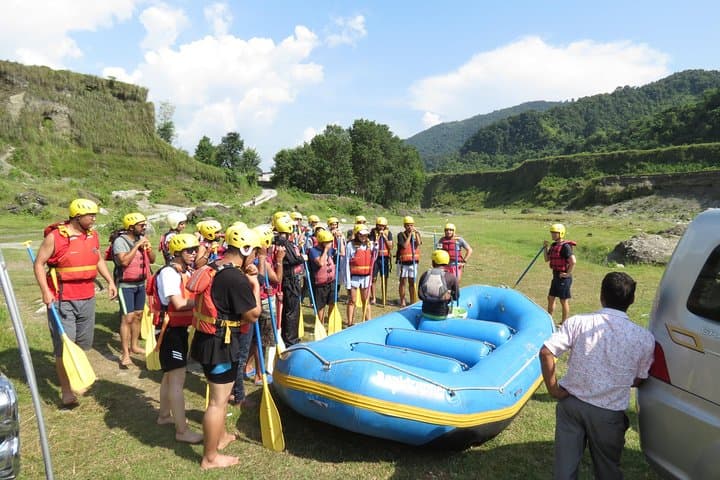
A pre-dawn pick-up from Kathmandu and a coffee-stained highway set the tone: the road west unspools toward the Trishuli, a river that seems to sprint and then steady as it cuts through low Siwalik ridges. By Charaundi the guide reads the water and gives a clear briefing; within minutes the raft answers the current, and the first rapids—playful, punchy—invite paddles to bite.
A pre-dawn pick-up from Kathmandu and a coffee-stained highway set the tone: the road west unspools toward the Trishuli, a river that seems to sprint and then steady as it cuts through low Siwalik ridges. By Charaundi the guide reads the water and gives a clear briefing; within minutes the raft answers the current, and the first rapids—playful, punchy—invite paddles to bite.
The Trishuli takes its name from Shiva’s trident, and the valley carries a straightforward human history: riverside villages, fish markets at Malekhu, and trade routes that once linked Kathmandu to the western lowlands. Geologically the river has carved through young sedimentary hills, creating short gorges and exposed banks that bear the fingerprints of seasonal monsoon swell.
Culturally the route passes Tamang and Newar settlements where terraced fields plunge toward the water and roadside tea stalls offer steaming cups and fried fish. Guides will point out local temples and explain how the river supports irrigation and village life.
For practical planning expect a full day: roughly 3–3.5 hours each way by shared vehicle and about three hours on the river with a lunch stop at Gaighat. Rapids are typically class II–III depending on season; lifejackets and guides are provided. Bring river shoes, quick-dry clothes, sun protection, and a small dry bag for essentials. The operator allows hotel pickup in Kathmandu and requires basic health disclosures—avoid this trip if pregnant or if you have serious heart conditions. Late afternoon returns to Kathmandu give you time to rinse off and trade stories—and the river will already be daring you to come back.