THE ADVENTURE COLLECTIVE® · Independent discovery and booking for outdoor travel

Hike three of Indonesia’s most dramatic volcanic craters over six days — sunrise ascents on Batur and Agung, a night climb to Ijen’s blue flame, and rustic camping between islands. Expect steep scree, early starts, and unforgettable crater views.
Hike three of Indonesia’s most dramatic volcanic craters over six days — sunrise ascents on Batur and Agung, a night climb to Ijen’s blue flame, and rustic camping between islands. Expect steep scree, early starts, and unforgettable crater views.
Dawn finds the group below a black rim of rock, headlamps bobbing like small constellations as the mountain exhales. On this six-day traverse, hikers move between Bali’s high gods and Java’s sulfur fire — a sequence of steep approaches, cold nights in tents, and crater rims that force you to look down and out at islands and sea.
Verified experiences and guided adventures in the surrounding area.
Operated by Viktor Bogodi · Kintamani, Bali
Dawn finds the group below a black rim of rock, headlamps bobbing like small constellations as the mountain exhales. On this six-day traverse, hikers move between Bali’s high gods and Java’s sulfur fire — a sequence of steep approaches, cold nights in tents, and crater rims that force you to look down and out at islands and sea.
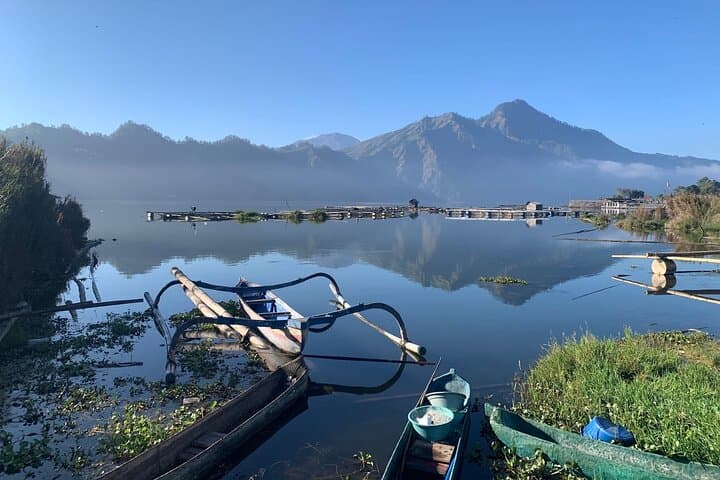
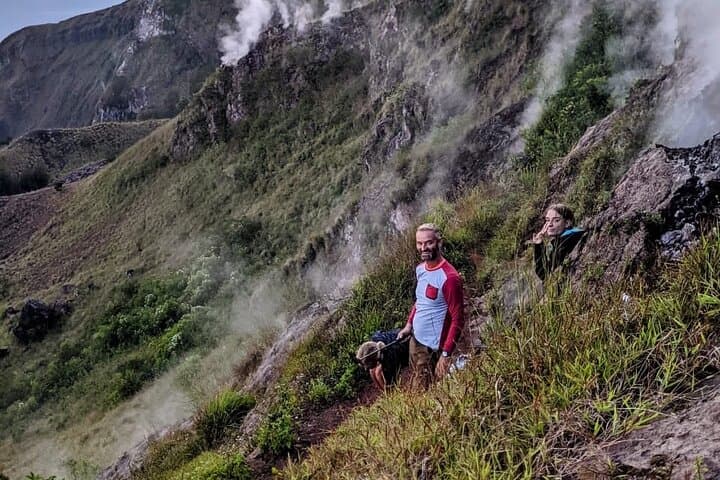
Geology writes the itinerary: Agung’s towering stratovolcano (3,031 m) still speaks in steam; Batur’s younger caldera offers walking on cooled lava and a shallow, tourist-frequented rim at ~1,700 m; Ijen’s valley on Java hosts the rare blue flame where sulfur combusts and a green acid lake sleeps below. Balinese culture threads the route — shrines, mountain offerings, and local guides who understand the spiritual weight of Agung.
Expect night starts, steep final pushes, and cold breakfasts on rocky craters. Terrain alternates between loose volcanic scree, packed trails, and uneven lava fields; cumulative elevation and repeated ascents make the trip physically demanding rather than technical. The Ijen descent requires a short, exposed drop into the crater to view the blue fire; sulfur fumes mean a mask is non-negotiable.
Practical edge: pace your hydration, carry layers for pre-dawn temperatures, and rely on local guides for route-finding and timing. Plan for early wake-ups (2–4 a.m.), limited cell signal in high country, and simple lodge or tent accommodations. This is an expedition-style sequence of day-and-night hikes — arrive rested, expect variable weather, and let the mountains set the rhythm.
challenging.
6 days.
Good aerobic fitness and prior experience with full-day hikes and steep ascents; able to carry a daypack and manage multiple early-morning climbs.
You should have regular aerobic fitness and experience with multi-hour hikes; the trip is strenuous due to repeated steep ascents and early starts.
Yes — the itinerary includes tent, mattress, sleeping bag and camp setup for overnight stays near the volcanoes.
Yes, but viewing requires a night hike and a short descent into fumes; proper masks and guide support are necessary for safety.
Dry season (April–October) offers more stable conditions and clearer summit views, though visits run year-round with higher rain risk in November–March.
Agung is central to Balinese cosmology and historically anchors temple ceremonies; Batur’s caldera formed in a major eruption that shaped local settlements.
These volcanic environments are fragile—stick to trails, avoid disturbing sulfur miners at Ijen, and minimize campfire and waste impacts.
Viktor Bogodi operates guided outdoor trips and adventures with an emphasis on safety, stewardship, and memorable experiences.
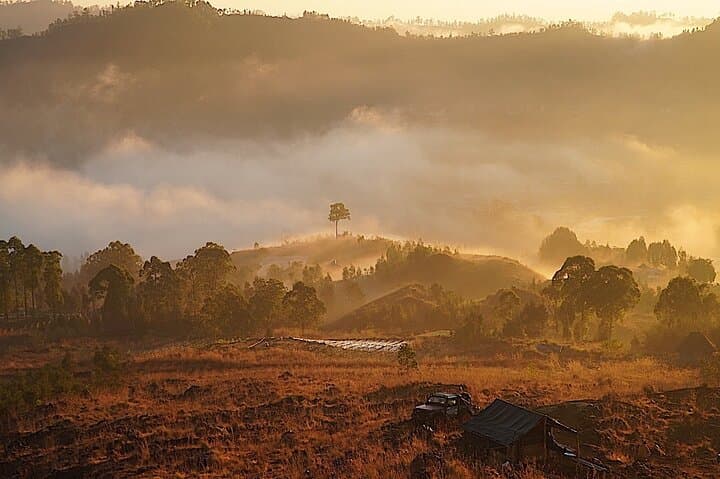
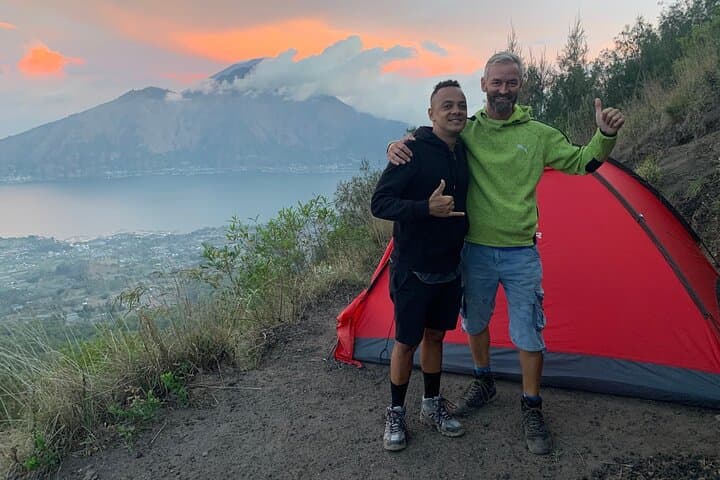
Dawn finds the group below a black rim of rock, headlamps bobbing like small constellations as the mountain exhales. On this six-day traverse, hikers move between Bali’s high gods and Java’s sulfur fire — a sequence of steep approaches, cold nights in tents, and crater rims that force you to look down and out at islands and sea.
Dawn finds the group below a black rim of rock, headlamps bobbing like small constellations as the mountain exhales. On this six-day traverse, hikers move between Bali’s high gods and Java’s sulfur fire — a sequence of steep approaches, cold nights in tents, and crater rims that force you to look down and out at islands and sea.
Geology writes the itinerary: Agung’s towering stratovolcano (3,031 m) still speaks in steam; Batur’s younger caldera offers walking on cooled lava and a shallow, tourist-frequented rim at ~1,700 m; Ijen’s valley on Java hosts the rare blue flame where sulfur combusts and a green acid lake sleeps below. Balinese culture threads the route — shrines, mountain offerings, and local guides who understand the spiritual weight of Agung.
Expect night starts, steep final pushes, and cold breakfasts on rocky craters. Terrain alternates between loose volcanic scree, packed trails, and uneven lava fields; cumulative elevation and repeated ascents make the trip physically demanding rather than technical. The Ijen descent requires a short, exposed drop into the crater to view the blue fire; sulfur fumes mean a mask is non-negotiable.
Practical edge: pace your hydration, carry layers for pre-dawn temperatures, and rely on local guides for route-finding and timing. Plan for early wake-ups (2–4 a.m.), limited cell signal in high country, and simple lodge or tent accommodations. This is an expedition-style sequence of day-and-night hikes — arrive rested, expect variable weather, and let the mountains set the rhythm.