THE ADVENTURE COLLECTIVE® · Independent discovery and booking for outdoor travel

A three-day trek from Marrakech through the High Atlas that links Berber villages, high mountain passes and waterfalls. Expect long days of varied terrain, nights in guesthouses, and sweeping views from 2,500m ridgelines.
A three-day trek from Marrakech through the High Atlas that links Berber villages, high mountain passes and waterfalls. Expect long days of varied terrain, nights in guesthouses, and sweeping views from 2,500m ridgelines.
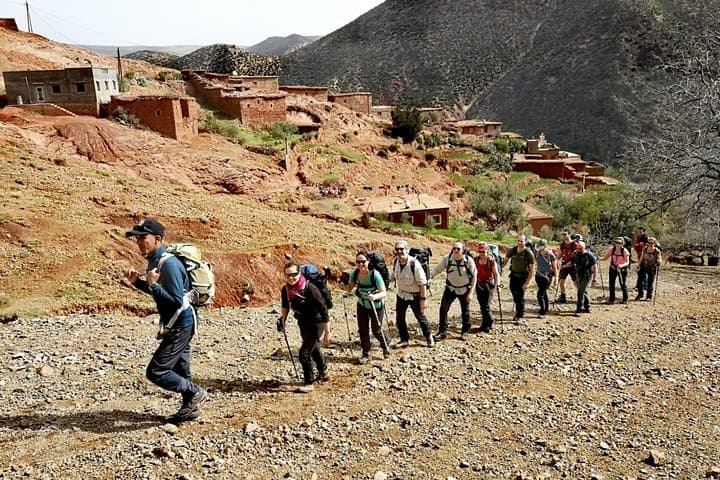
You step out of the van and mountain air cuts through Marrakech's dust — the High Atlas rises immediately, raw and brown, with gullies that dare you to climb. The track from Imlil begins under walnut trees; by midmorning the path narrows and the village roofs shrink behind you. Over three days you'll cross three valleys, saddle small passes, and descend into hamlets where terraces carve the slopes and children call out in Tamazight.
Verified experiences and guided adventures in the surrounding area.
Operated by Atlas Mountain Trekking · Imlil, Marrakesh-Safi
You step out of the van and mountain air cuts through Marrakech's dust — the High Atlas rises immediately, raw and brown, with gullies that dare you to climb. The track from Imlil begins under walnut trees; by midmorning the path narrows and the village roofs shrink behind you. Over three days you'll cross three valleys, saddle small passes, and descend into hamlets where terraces carve the slopes and children call out in Tamazight.
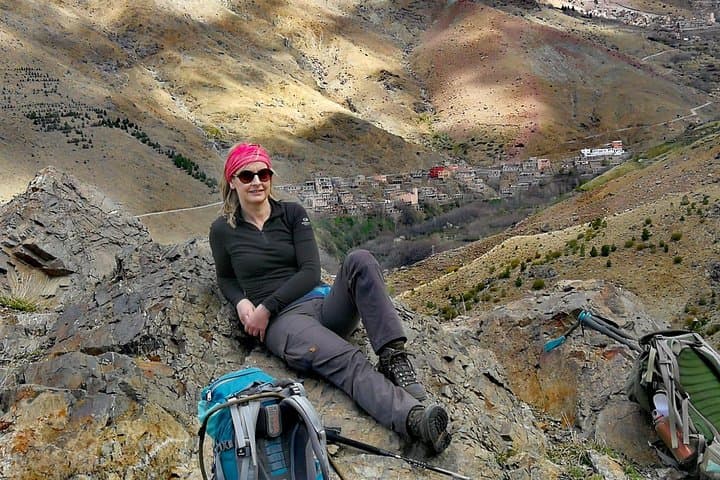
These ridgelines are part of the High Atlas, a young fold mountain range formed by the African and Eurasian plates. Villages here are predominantly Berber (Amazigh) communities whose stone houses and terraced fields reflect centuries of subsistence agriculture and pastoral life. Toubkal National Park protects the higher watershed and the waterfalls you visit on day three — seasonal cascades fed by winter snows.
Expect sustained walking: day one climbs from Imlil (≈1,740m) to Tizi n’ Tamaterte (≈2,300m); day two crosses Oudit Pass (~2,200m) and passes through remote hamlets; day three reaches the Mzik pass (~2,500m) before descending back to Imlil. Trail surfaces alternate between dirt tracks, rocky mule paths, and short scree sections. You’ll sleep in berber guesthouses (gites) and may use a mule for luggage.
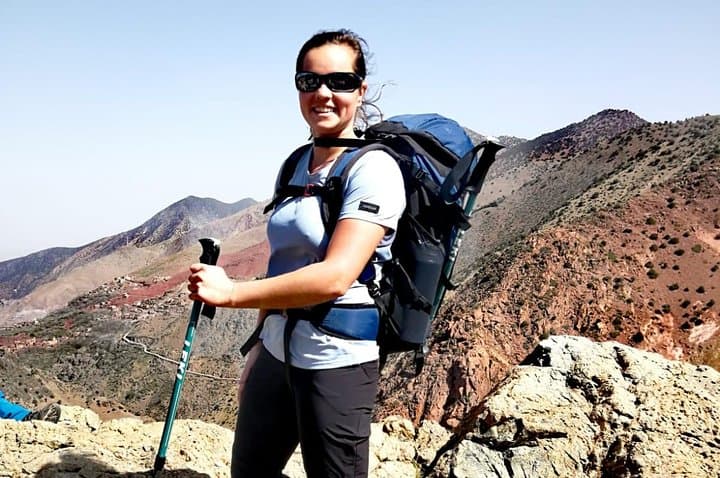
Practical tips: carry 2–3L water, layered clothing for rapid temperature swings, sturdy boots with ankle support, and sun protection. Allow time for steep sections at altitude, pace uphill to avoid breathlessness, and bring cash — remote villages accept little else. A local guide not only navigates but opens doors to hammams, shared meals, and authentic cultural exchange.
challenging.
3 days (approx. 15–20 hours walking total).
Good aerobic fitness with experience on sustained uphill and downhill hiking; ability to carry a daypack for long periods.
Moderate to good fitness is required — expect 5–8 hour walking days with sustained climbs up to ~2,500m; regular hill or stair training beforehand helps.
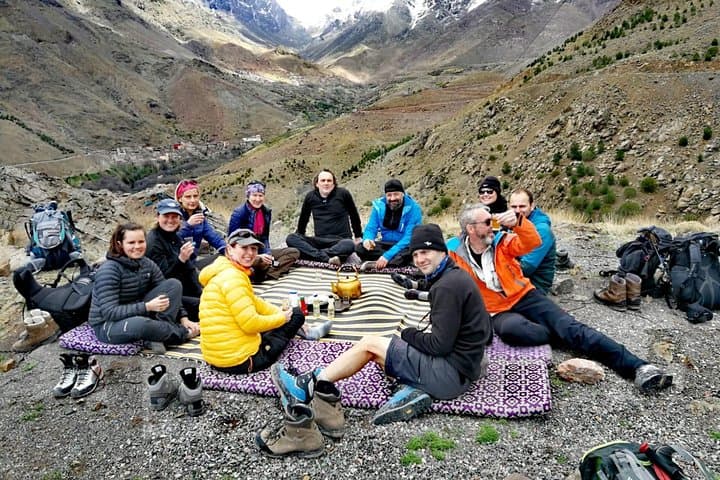
Nights are in local berber guesthouses (gites) with basic private or shared rooms and home-cooked meals; they prioritize warmth and authenticity over luxury.
The route reaches about 2,500m; most travelers acclimatize adequately with steady pacing and hydration, but know the symptoms and inform your guide of any issues.
Bring Moroccan dirhams in small bills — ATMs are in Imlil or Marrakech but limited in villages; mobile reception is spotty in valleys and passes.
The High Atlas has long been inhabited by Amazigh (Berber) communities whose terraces and irrigation channels reflect centuries of mountain agriculture and transhumance.
The area is sensitive to erosion and overgrazing; stick to established paths, avoid campfires, use local guides and support community-run guesthouses to reduce impact.
Atlas Mountain Trekking operates guided outdoor trips and adventures with an emphasis on safety, stewardship, and memorable experiences.
You step out of the van and mountain air cuts through Marrakech's dust — the High Atlas rises immediately, raw and brown, with gullies that dare you to climb. The track from Imlil begins under walnut trees; by midmorning the path narrows and the village roofs shrink behind you. Over three days you'll cross three valleys, saddle small passes, and descend into hamlets where terraces carve the slopes and children call out in Tamazight.
You step out of the van and mountain air cuts through Marrakech's dust — the High Atlas rises immediately, raw and brown, with gullies that dare you to climb. The track from Imlil begins under walnut trees; by midmorning the path narrows and the village roofs shrink behind you. Over three days you'll cross three valleys, saddle small passes, and descend into hamlets where terraces carve the slopes and children call out in Tamazight.
These ridgelines are part of the High Atlas, a young fold mountain range formed by the African and Eurasian plates. Villages here are predominantly Berber (Amazigh) communities whose stone houses and terraced fields reflect centuries of subsistence agriculture and pastoral life. Toubkal National Park protects the higher watershed and the waterfalls you visit on day three — seasonal cascades fed by winter snows.
Expect sustained walking: day one climbs from Imlil (≈1,740m) to Tizi n’ Tamaterte (≈2,300m); day two crosses Oudit Pass (~2,200m) and passes through remote hamlets; day three reaches the Mzik pass (~2,500m) before descending back to Imlil. Trail surfaces alternate between dirt tracks, rocky mule paths, and short scree sections. You’ll sleep in berber guesthouses (gites) and may use a mule for luggage.
Practical tips: carry 2–3L water, layered clothing for rapid temperature swings, sturdy boots with ankle support, and sun protection. Allow time for steep sections at altitude, pace uphill to avoid breathlessness, and bring cash — remote villages accept little else. A local guide not only navigates but opens doors to hammams, shared meals, and authentic cultural exchange.