THE ADVENTURE COLLECTIVE® · Independent discovery and booking for outdoor travel

Drive from Marrakech into the High Atlas to visit Lalla Takerkoust dam, Asni market towns and the Ourika Valley waterfalls. This eight-hour loop blends short village walks, riverside lunches and scenic viewpoints — a compact introduction to Atlas geology and Berber culture.
Drive from Marrakech into the High Atlas to visit Lalla Takerkoust dam, Asni market towns and the Ourika Valley waterfalls. This eight-hour loop blends short village walks, riverside lunches and scenic viewpoints — a compact introduction to Atlas geology and Berber culture.
The road peels away from Marrakech and climbs toward the High Atlas, olive groves and dry riverbeds sliding past the window while the peaks loom larger. On a full-day loop, the driver-guide threads you through Takerkoust’s reservoir light, the market-tiled streets around Asni and the river-carved gorge of the Ourika Valley until the foothills finally spill into Setti Fatma’s waterfalls.
Verified experiences and guided adventures in the surrounding area.
Operated by Zagora Desert Travel · Marrakech, Marrakesh-Safi
The road peels away from Marrakech and climbs toward the High Atlas, olive groves and dry riverbeds sliding past the window while the peaks loom larger. On a full-day loop, the driver-guide threads you through Takerkoust’s reservoir light, the market-tiled streets around Asni and the river-carved gorge of the Ourika Valley until the foothills finally spill into Setti Fatma’s waterfalls.
Geology here is readable: craggy schist and limestone folded by tectonic uplift, terraced slopes cut for centuries of cereal and olive farming. The valleys are cultural corridors — Berber villages with flat-roofed houses, teahouses where mint steam punctuates conversation, and markets in Tahanaout and Tnine Ourika that still trade by season.
Expect a mix of paved and secondary roads, short walks at viewpoints and a modest hike to several cascades in Setti Fatma. The Lalla Takerkoust dam offers a contrasting scene: open water reflecting the Atlas rim where locals fish and riders sometimes circle the shore.
Practical guidance: leave early to avoid mid-day heat, wear sturdy shoes for uneven village lanes and waterfall trails, and carry a reusable water bottle — bottled water is usually provided. Photography spots multiply once you drop below the ridgelines; keep valuables close and respect private yards and mosque boundaries. Lunch is typically a riverside tagine; if you have dietary needs, notify the operator in advance. This day trip balances easy logistics with layered experiences of geology, market life and mountain rivers — ideal for travelers who want a concentrated Atlas introduction without multi-day trekking.
easy.
8 hours.
Suitable for travelers in average physical condition; requires short walks of 10–30 minutes and light stair/hill climbs
The trip is about 8 hours (typically an early morning departure from Marrakech with return in the evening); confirm the exact pickup time when booking.
No technical hiking is required — expect short, sometimes steep trails and stone steps; good footwear is recommended.
Lunch and bottled water are typically included; if you have dietary restrictions, notify the operator ahead of time.
Yes — the tour is offered as a private vehicle with family-friendly options like infant seats available on request.
The High Atlas valleys have been populated by Amazigh (Berber) communities for millennia; terraces and dry-stone walls in the landscape reflect centuries of mountain agriculture and trade routes to Marrakech.
Water stress and visitor pressure are local concerns—pack out waste, use refillable bottles and avoid disturbing riverbanks to reduce erosion and litter.
Zagora Desert Travel operates guided outdoor trips and adventures with an emphasis on safety, stewardship, and memorable experiences.

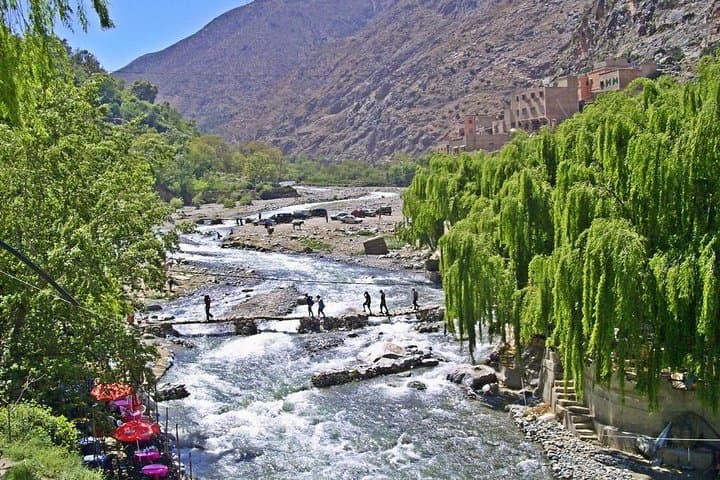

The road peels away from Marrakech and climbs toward the High Atlas, olive groves and dry riverbeds sliding past the window while the peaks loom larger. On a full-day loop, the driver-guide threads you through Takerkoust’s reservoir light, the market-tiled streets around Asni and the river-carved gorge of the Ourika Valley until the foothills finally spill into Setti Fatma’s waterfalls.
The road peels away from Marrakech and climbs toward the High Atlas, olive groves and dry riverbeds sliding past the window while the peaks loom larger. On a full-day loop, the driver-guide threads you through Takerkoust’s reservoir light, the market-tiled streets around Asni and the river-carved gorge of the Ourika Valley until the foothills finally spill into Setti Fatma’s waterfalls.
Geology here is readable: craggy schist and limestone folded by tectonic uplift, terraced slopes cut for centuries of cereal and olive farming. The valleys are cultural corridors — Berber villages with flat-roofed houses, teahouses where mint steam punctuates conversation, and markets in Tahanaout and Tnine Ourika that still trade by season.
Expect a mix of paved and secondary roads, short walks at viewpoints and a modest hike to several cascades in Setti Fatma. The Lalla Takerkoust dam offers a contrasting scene: open water reflecting the Atlas rim where locals fish and riders sometimes circle the shore.
Practical guidance: leave early to avoid mid-day heat, wear sturdy shoes for uneven village lanes and waterfall trails, and carry a reusable water bottle — bottled water is usually provided. Photography spots multiply once you drop below the ridgelines; keep valuables close and respect private yards and mosque boundaries. Lunch is typically a riverside tagine; if you have dietary needs, notify the operator in advance. This day trip balances easy logistics with layered experiences of geology, market life and mountain rivers — ideal for travelers who want a concentrated Atlas introduction without multi-day trekking.