THE ADVENTURE COLLECTIVE® · Independent discovery and booking for outdoor travel

Ride a slow caravan into the red-ochre dunes outside Douz for three days of camel trekking, night bivouacs, and shared meals with nomad camel drivers. This immersive trip balances steady desert walking with cultural exchange and simple camp comforts.
Ride a slow caravan into the red-ochre dunes outside Douz for three days of camel trekking, night bivouacs, and shared meals with nomad camel drivers. This immersive trip balances steady desert walking with cultural exchange and simple camp comforts.
The sun rises like a coin over the dunes as you climb onto a slow-moving dromedary and the desert begins to roll beneath you. Sand sighs at the camel’s feet; the caravan threads across red-ochre dunes while the wind sketches new ridgelines each hour. By afternoon the camp is set—simple tents, steaming tea, and a fire that gathers voices.
Verified experiences and guided adventures in the surrounding area.
Operated by Djerba-Sahara · Douz, Kebili Governorate
The sun rises like a coin over the dunes as you climb onto a slow-moving dromedary and the desert begins to roll beneath you. Sand sighs at the camel’s feet; the caravan threads across red-ochre dunes while the wind sketches new ridgelines each hour. By afternoon the camp is set—simple tents, steaming tea, and a fire that gathers voices.
This route runs out of Douz, the traditional gateway to Tunisia’s Sahara where nomadic routes and oases shaped local life for centuries. The dunes here are recent wind-formed deposits over older limestone and salt flats; geology explains why the sand glows so deeply at sunset. Cultural exchange is central: camel drivers share songs and recipes, and communal meals over coals are as much classroom as comfort.
Expect long, slow days—walking between dunes, alternating riding with walking, and setting up bivouac before dusk. Terrain is loose sand with steep dune faces; elevation changes are short but repeated. Water is provided but rationing and smart hydration are essential. Footwear should breathe and keep sand out; sun protection and layered evenings are necessary as desert nights drop sharply.
Practical notes: bring a high-SPF hat, a lightweight scarf to block windblown sand, and a small daypack for personal gear. Pace yourself on the dunes—camel pace conserves energy and lets you absorb the landscape. Mobile signal is patchy; embrace the disconnect. With basic fitness and an openness to simple living, three days here is as much a cultural immersion as an outdoor expedition.
moderate.
48–72 hours.
Moderate fitness — able to walk on unstable sand for a few hours and manage basic camp routines.
Moderate fitness is sufficient: expect a mix of riding and walking on sand for several hours per day plus basic campsite routines.
Facilities are basic to nonexistent in the dunes; camps are traditional bivouacs—expect open-air toilets and no showers until return to Douz.
You can alternate between riding and walking; guides typically allow riders to switch so everyone experiences both.
Check with the operator—camel treks can be rough; children and pregnant travelers should get medical advice and confirm specifics with the provider.
Douz has long been a crossroads for Saharan caravans; the area’s nomadic cultures developed around seasonal grazing and oasis water points.
Stick to established routes, avoid camping on fragile vegetation, and accept local waste management practices to minimize impact on this sensitive desert environment.
Djerba-Sahara operates guided outdoor trips and adventures with an emphasis on safety, stewardship, and memorable experiences.
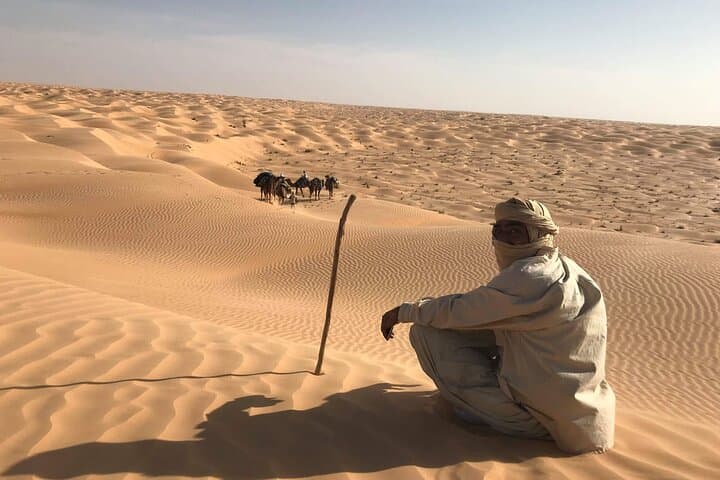
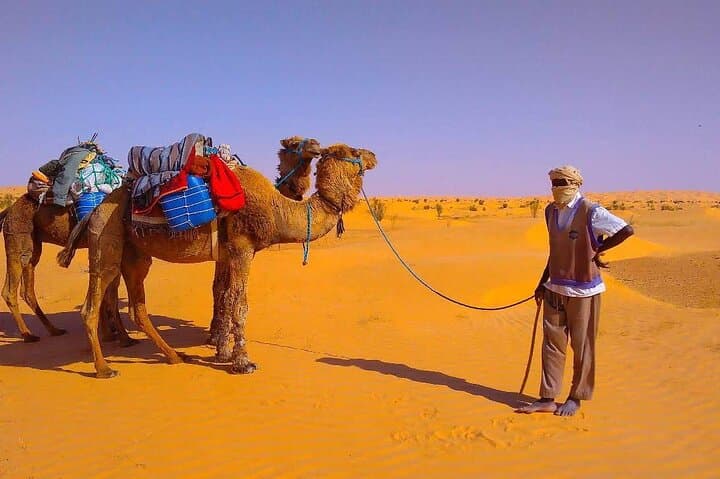
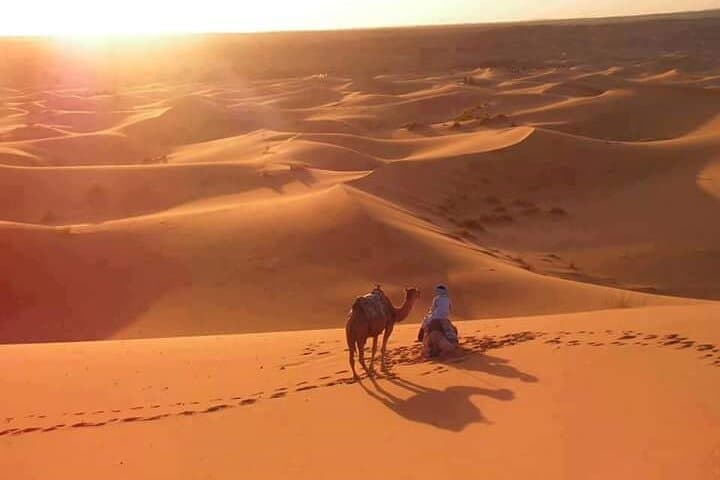
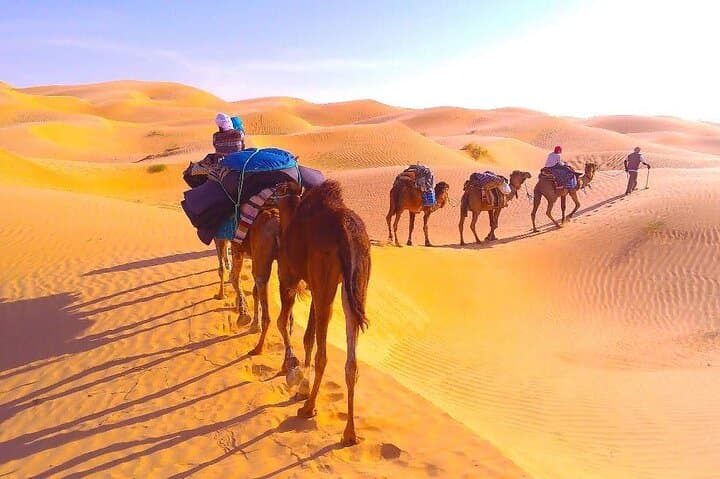
The sun rises like a coin over the dunes as you climb onto a slow-moving dromedary and the desert begins to roll beneath you. Sand sighs at the camel’s feet; the caravan threads across red-ochre dunes while the wind sketches new ridgelines each hour. By afternoon the camp is set—simple tents, steaming tea, and a fire that gathers voices.
The sun rises like a coin over the dunes as you climb onto a slow-moving dromedary and the desert begins to roll beneath you. Sand sighs at the camel’s feet; the caravan threads across red-ochre dunes while the wind sketches new ridgelines each hour. By afternoon the camp is set—simple tents, steaming tea, and a fire that gathers voices.
This route runs out of Douz, the traditional gateway to Tunisia’s Sahara where nomadic routes and oases shaped local life for centuries. The dunes here are recent wind-formed deposits over older limestone and salt flats; geology explains why the sand glows so deeply at sunset. Cultural exchange is central: camel drivers share songs and recipes, and communal meals over coals are as much classroom as comfort.
Expect long, slow days—walking between dunes, alternating riding with walking, and setting up bivouac before dusk. Terrain is loose sand with steep dune faces; elevation changes are short but repeated. Water is provided but rationing and smart hydration are essential. Footwear should breathe and keep sand out; sun protection and layered evenings are necessary as desert nights drop sharply.
Practical notes: bring a high-SPF hat, a lightweight scarf to block windblown sand, and a small daypack for personal gear. Pace yourself on the dunes—camel pace conserves energy and lets you absorb the landscape. Mobile signal is patchy; embrace the disconnect. With basic fitness and an openness to simple living, three days here is as much a cultural immersion as an outdoor expedition.