THE ADVENTURE COLLECTIVE® · Independent discovery and booking for outdoor travel

Watch the sunrise over Angkor Wat, trace the stone faces of Angkor Thom, and finish evenings with Apsara dance and Khmer food. This three-day itinerary balances early starts, cultural immersion and optional excursions to nearby jungle temples or Tonle Sap.
Watch the sunrise over Angkor Wat, trace the stone faces of Angkor Thom, and finish evenings with Apsara dance and Khmer food. This three-day itinerary balances early starts, cultural immersion and optional excursions to nearby jungle temples or Tonle Sap.
Before the sun clears the horizon, the pools in front of Angkor Wat mirror a sky that shifts from ink to gold, and the carved sanctuaries sit like weathered pages of a civilization’s story. On day one the city of Siem Reap ushers you in with riverfront evenings and Khmer flavors; by day two you trade the town’s bustle for shaded causeways and stone faces that gaze through roots and lianas.
Verified experiences and guided adventures in the surrounding area.
Operated by サザンブリーズ · Siem Reap, Siem Reap Province
Before the sun clears the horizon, the pools in front of Angkor Wat mirror a sky that shifts from ink to gold, and the carved sanctuaries sit like weathered pages of a civilization’s story. On day one the city of Siem Reap ushers you in with riverfront evenings and Khmer flavors; by day two you trade the town’s bustle for shaded causeways and stone faces that gaze through roots and lianas.
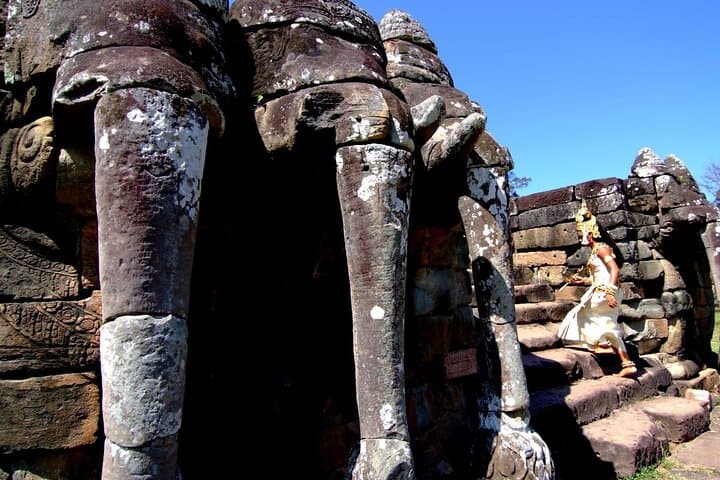
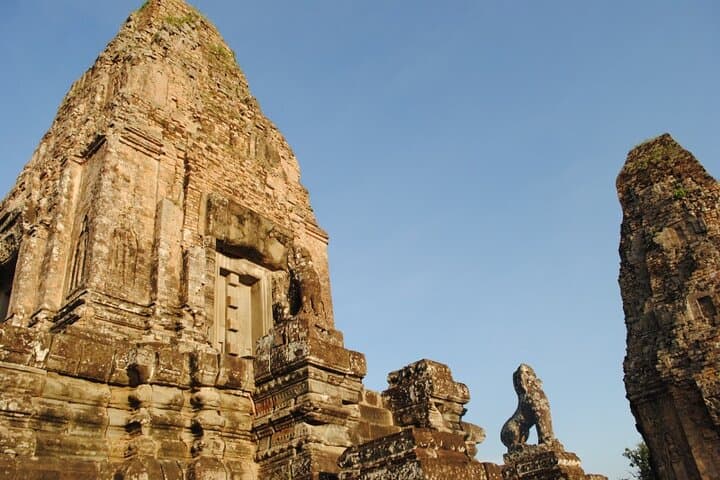
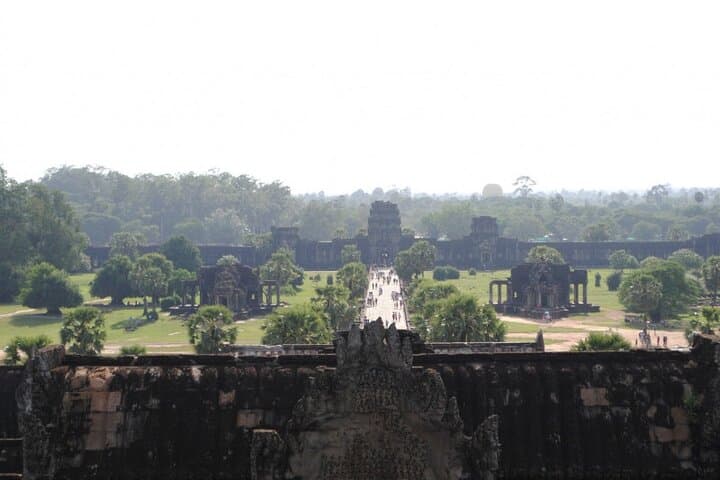
The temples are products of the Khmer Empire (9th–15th centuries), built from sandstone and laterite and oriented to cosmology; Angkor Wat itself was conceived as a funerary temple to Vishnu and later became a royal monument. Geologically the monuments rise from alluvial plains and ancient river channels; seasonal flooding shaped trade routes and the contemporary Tonle Sap’s ecology. Culture arrives through Apsara dance—precision, story and costume—performed over dinner, and through markets where local artisans sell lacquerware and scarves.
Practical guidance: sunrise viewing means a 4:00–5:00 AM start and a valid Angkor Pass—buy in advance to skip lines. Wear lightweight, knee- and shoulder-covering clothing for temple entry and slip-resistant shoes for uneven steps. Expect long walking days with occasional sun and sudden showers; hydrate and carry a small daypack. Consider the optional third-day excursions—Beng Mealea or a Tonle Sap cruise—if you want jungle-reclaimed ruins or bird-rich wetlands. Pace the itinerary: take breaks in shaded galleries, respect carved reliefs (no leaning or touching), and allow time to listen—birds, temple bells and distant water—while the sites do their slow work on memory.
easy.
3 days.
Suitable for travelers in average fitness who can walk 3–6 miles across uneven stone paths and steps over a day.
Yes—Angkor Pass (1-, 3- or 7-day) is required for temple entry; buy it at the official ticket center or online in advance to save time.
The itinerary includes two breakfasts, one lunch, and two dinners as noted; optional third-day excursions may not include meals depending on the choice.
The tour is marketed as suitable for all fitness levels, but uneven ground, steps and early starts make parts challenging for limited mobility—ask about vehicle access and shorter routes.
Yes—the third day offers optional Tonle Sap cruises or combined temple-and-lake excursions; these add boat time and a different ecological perspective.
Angkor was the political and religious heart of the Khmer Empire; its temples encode cosmology, royal power and hydraulic engineering across centuries.
Visitor impact is managed through regulated access and ticketing—avoid touching bas-reliefs, use marked paths, and carry reusable water to reduce plastic waste.
サザンブリーズ operates guided outdoor trips and adventures with an emphasis on safety, stewardship, and memorable experiences.
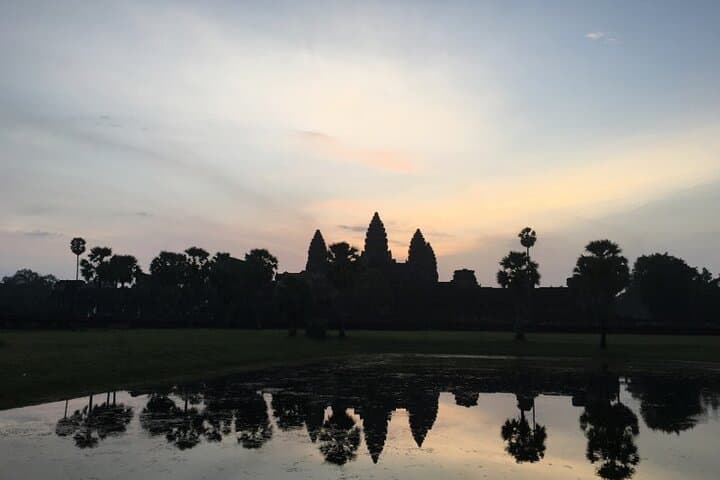
Before the sun clears the horizon, the pools in front of Angkor Wat mirror a sky that shifts from ink to gold, and the carved sanctuaries sit like weathered pages of a civilization’s story. On day one the city of Siem Reap ushers you in with riverfront evenings and Khmer flavors; by day two you trade the town’s bustle for shaded causeways and stone faces that gaze through roots and lianas.
Before the sun clears the horizon, the pools in front of Angkor Wat mirror a sky that shifts from ink to gold, and the carved sanctuaries sit like weathered pages of a civilization’s story. On day one the city of Siem Reap ushers you in with riverfront evenings and Khmer flavors; by day two you trade the town’s bustle for shaded causeways and stone faces that gaze through roots and lianas.
The temples are products of the Khmer Empire (9th–15th centuries), built from sandstone and laterite and oriented to cosmology; Angkor Wat itself was conceived as a funerary temple to Vishnu and later became a royal monument. Geologically the monuments rise from alluvial plains and ancient river channels; seasonal flooding shaped trade routes and the contemporary Tonle Sap’s ecology. Culture arrives through Apsara dance—precision, story and costume—performed over dinner, and through markets where local artisans sell lacquerware and scarves.
Practical guidance: sunrise viewing means a 4:00–5:00 AM start and a valid Angkor Pass—buy in advance to skip lines. Wear lightweight, knee- and shoulder-covering clothing for temple entry and slip-resistant shoes for uneven steps. Expect long walking days with occasional sun and sudden showers; hydrate and carry a small daypack. Consider the optional third-day excursions—Beng Mealea or a Tonle Sap cruise—if you want jungle-reclaimed ruins or bird-rich wetlands. Pace the itinerary: take breaks in shaded galleries, respect carved reliefs (no leaning or touching), and allow time to listen—birds, temple bells and distant water—while the sites do their slow work on memory.