THE ADVENTURE COLLECTIVE® · Independent discovery and booking for outdoor travel

Paddle three days down the Abel Tasman coast from Onetahuti to Marahau, camping on sheltered beaches and cruising past granite headlands and marine reserves. This unguided trip pairs practical gear and safety briefings with a coastal route designed to work with sea breezes and tides.
Paddle three days down the Abel Tasman coast from Onetahuti to Marahau, camping on sheltered beaches and cruising past granite headlands and marine reserves. This unguided trip pairs practical gear and safety briefings with a coastal route designed to work with sea breezes and tides.
Morning light sketches low cliffs as you push off from Onetahuti and the Tasman Sea eases you into a rhythm. This three-day, one-way paddle threads sandy coves, granite headlands and tidal estuaries as you work with the prevailing sea breeze toward Marahau. Each day opens and closes on a different beach campsite—Bark Bay, Observation Beach and smaller bays—so you move with the coastline rather than against it.
Verified experiences and guided adventures in the surrounding area.
Operated by Abel Tasman Kayaks · Marahau, Tasman
Morning light sketches low cliffs as you push off from Onetahuti and the Tasman Sea eases you into a rhythm. This three-day, one-way paddle threads sandy coves, granite headlands and tidal estuaries as you work with the prevailing sea breeze toward Marahau. Each day opens and closes on a different beach campsite—Bark Bay, Observation Beach and smaller bays—so you move with the coastline rather than against it.
The coastline carries layered history: Māori settlements and birding traditions, and the mapmaker Abel Tasman’s 1642 passage that gave the park its name. Geologically the coast is carved from hard granite and older metamorphic rocks, producing sheltered bays and abrupt headlands that shape predictable currents and wind funnels. Local culture leans practical—DOC-managed campsites, careful marine-reserve rules around Tonga Island, and small, service-oriented communities in Marahau and nearby Takaka.
Practically, expect sheltered open-water paddling with short exposed crossings; daily distances typically fall between 15–25 km depending on route choices and tides, with almost no elevation gain beyond carrying gear to camps. The operator provides buoyancy vests, spray skirts, paddle jackets, maps and emergency flares; you bring personal layers, food, water and a positive eye for changing weather. Time passages for low-tide sand-flat crossings, respect marine-reserve closures, and practice self-rescue during the on-water assessment. For paddlers who want coastal solitude and manageable navigation, this trip balances scenery, wildlife and straightforward logistics into a compact coastal journey.
moderate.
3 days (approx. 6–8 hours paddling per day).
Suitable for someone who can paddle continuously for several hours and carry a daypack to campsite, with basic stamina.
No advanced experience is required, but participants must complete an on-water assessment and be comfortable with basic paddling, self-rescue and navigation.
The trip includes kayak, buoyancy vest, spray skirt, paddle jacket, paddle, safety flares, waterproof map, water pump, spare paddle and a camp pass.
No; camping is restricted to DOC-approved campsites—this itinerary uses Bark Bay, Observation Beach/Te Pukatea and other designated sites to protect the environment and manage tides.
The operator may cancel for unsafe conditions; standard refunds apply if cancelled at least 24 hours before departure, but weather-based changes can be made on shorter notice for safety.
The coast lies within the traditional rohe of local iwi and carries a colonial-era name from Abel Tasman’s 1642 voyage; Māori used these bays for seasonal food gathering and travel.
Abel Tasman is managed by DOC with strict camping and marine reserve rules—pack out what you bring and avoid disturbing seal rookeries and nesting birds.
Abel Tasman Kayaks operates guided outdoor trips and adventures with an emphasis on safety, stewardship, and memorable experiences.
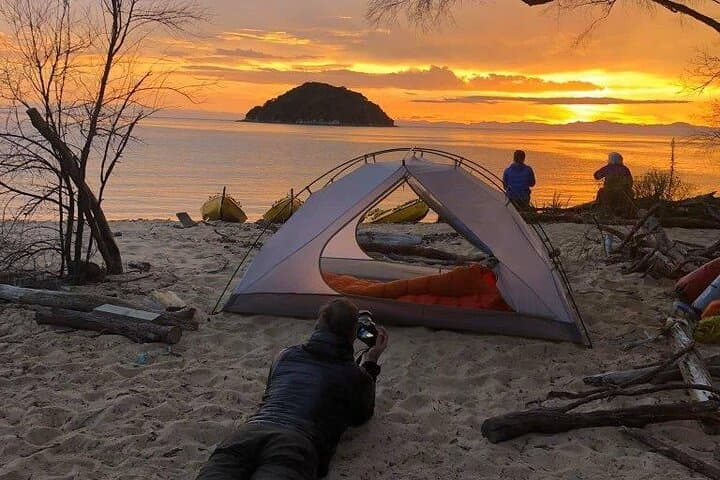
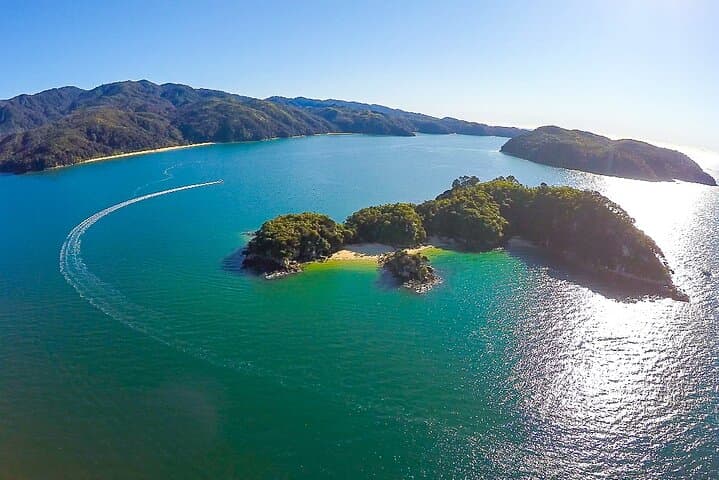
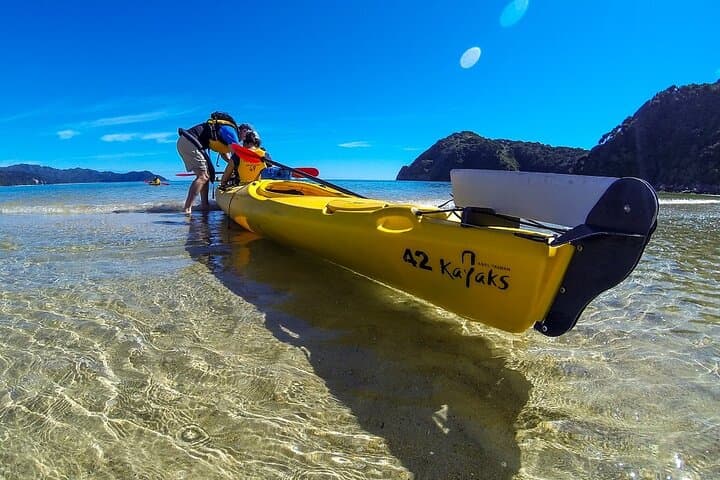
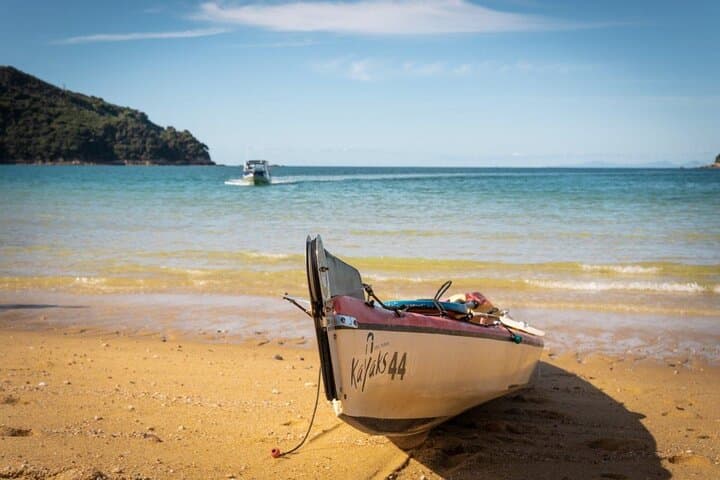
Morning light sketches low cliffs as you push off from Onetahuti and the Tasman Sea eases you into a rhythm. This three-day, one-way paddle threads sandy coves, granite headlands and tidal estuaries as you work with the prevailing sea breeze toward Marahau. Each day opens and closes on a different beach campsite—Bark Bay, Observation Beach and smaller bays—so you move with the coastline rather than against it.
Morning light sketches low cliffs as you push off from Onetahuti and the Tasman Sea eases you into a rhythm. This three-day, one-way paddle threads sandy coves, granite headlands and tidal estuaries as you work with the prevailing sea breeze toward Marahau. Each day opens and closes on a different beach campsite—Bark Bay, Observation Beach and smaller bays—so you move with the coastline rather than against it.
The coastline carries layered history: Māori settlements and birding traditions, and the mapmaker Abel Tasman’s 1642 passage that gave the park its name. Geologically the coast is carved from hard granite and older metamorphic rocks, producing sheltered bays and abrupt headlands that shape predictable currents and wind funnels. Local culture leans practical—DOC-managed campsites, careful marine-reserve rules around Tonga Island, and small, service-oriented communities in Marahau and nearby Takaka.
Practically, expect sheltered open-water paddling with short exposed crossings; daily distances typically fall between 15–25 km depending on route choices and tides, with almost no elevation gain beyond carrying gear to camps. The operator provides buoyancy vests, spray skirts, paddle jackets, maps and emergency flares; you bring personal layers, food, water and a positive eye for changing weather. Time passages for low-tide sand-flat crossings, respect marine-reserve closures, and practice self-rescue during the on-water assessment. For paddlers who want coastal solitude and manageable navigation, this trip balances scenery, wildlife and straightforward logistics into a compact coastal journey.