THE ADVENTURE COLLECTIVE® · Independent discovery and booking for outdoor travel

A three‑day 4x4 circuit across the world’s largest salt flat, visiting Incahuasi Island, high‑altitude lagoons and geysers. Expect dramatic light, cold nights and cultural stops in small Andean towns.
A three‑day 4x4 circuit across the world’s largest salt flat, visiting Incahuasi Island, high‑altitude lagoons and geysers. Expect dramatic light, cold nights and cultural stops in small Andean towns.
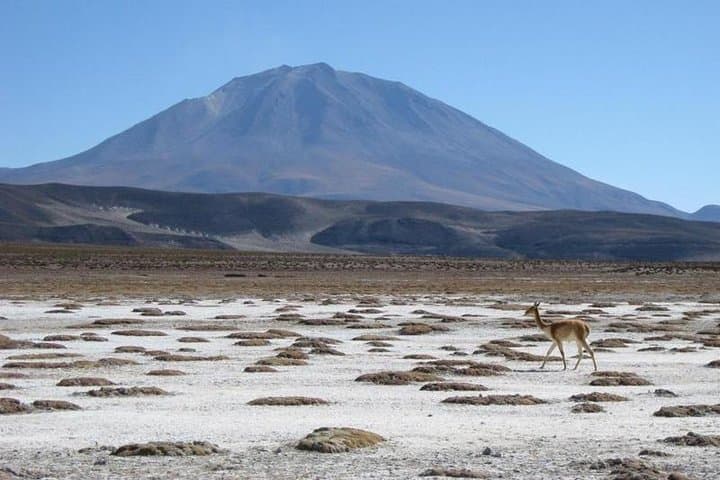
Dawn opens across a white plain so vast the sky seems an afterthought. A 4x4 rumbles across the salt crust and the desert breathes—crunching under tires, throwing up crystalline dust that sparkles in the thin Andean light. Drivers point out cacti-studded Incahuasi Island rising like an island of fossils in an ocean of salt; later the horizon fills with distant volcanoes and the pink curving shapes of flamingos in highland lagoons.
Verified experiences and guided adventures in the surrounding area.
Operated by Intiraymi Expediciones · Uyuni, Potosí
Dawn opens across a white plain so vast the sky seems an afterthought. A 4x4 rumbles across the salt crust and the desert breathes—crunching under tires, throwing up crystalline dust that sparkles in the thin Andean light. Drivers point out cacti-studded Incahuasi Island rising like an island of fossils in an ocean of salt; later the horizon fills with distant volcanoes and the pink curving shapes of flamingos in highland lagoons.
This route threads natural history and human industry: the train cemetery recalls the 19th‑century mining boom, Colchani’s salt workshops show local craft traditions, and the Salar itself is the exposed bed of a prehistoric lake whose evaporites formed an immense salt pan at roughly 3,650–3,800 m elevation. Geology here is blunt—wind-carved rock, borax crusts, geysers and mineral-rich lagoons that stain the landscape with red and green.
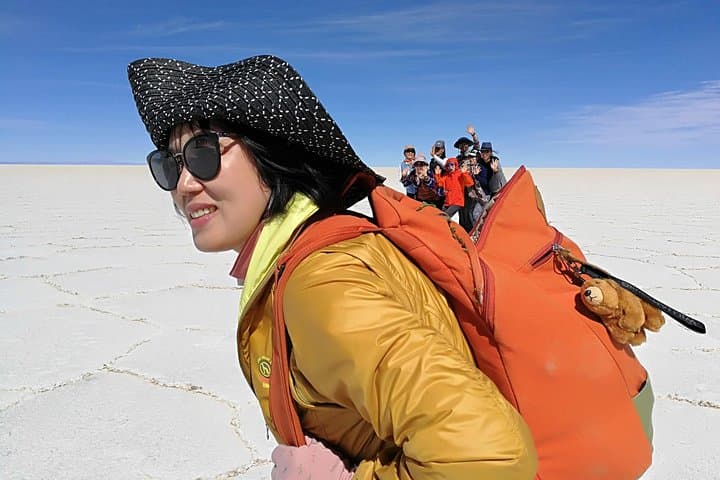
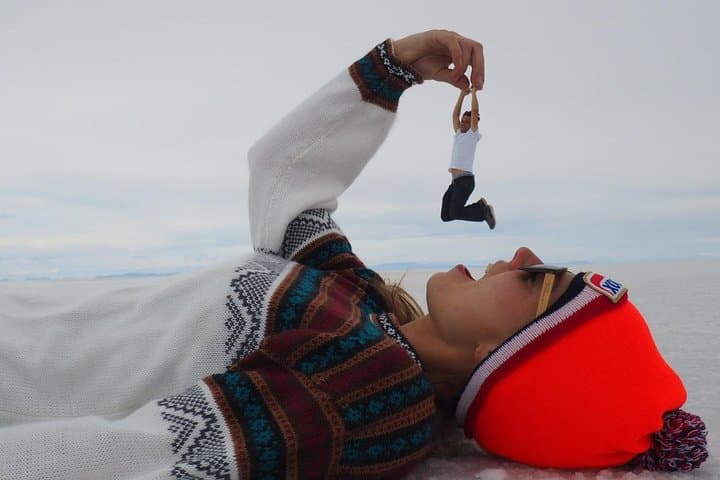
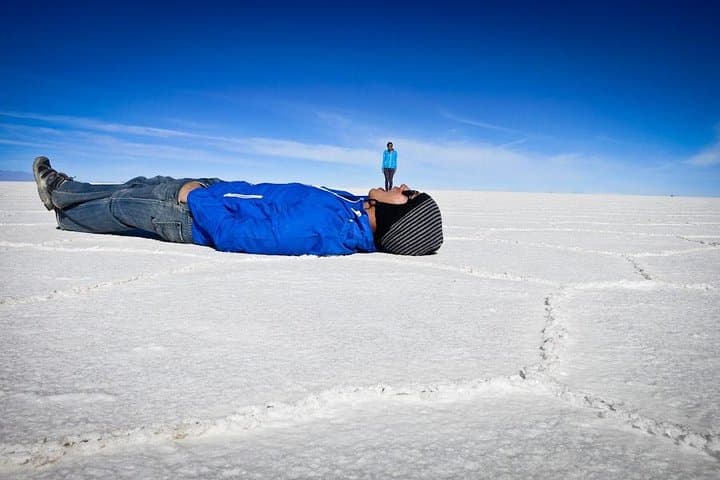
Culturally, the tour crosses Aymara and Quechua communities; guides often share stories about salt extraction, llama herding, and regional festivals. Expect long days in the vehicle punctuated by short hikes, photo stops with optical-perspective opportunities, and simple mountain lodging that keeps you warm against sharp nights.
Practically: pack for cold mornings and strong sun, pace yourself for altitude, and bring reusable water and a small trash kit. Photography planning (sunrise on the Salar, late‑afternoon lagoon light) makes the most of each day. With basic fitness and good layers, travelers can focus on the landscape—its harshness, its surprises, and the quiet way it tests and rewards attention.
moderate.
3 days.
Suitable for travellers with basic fitness; you should handle several hours of light walking and long vehicle days at high altitude.
Yes—the route reaches around 5,000 m in places; acclimatize in Uyuni or nearby towns, hydrate, avoid alcohol, and notify guides of symptoms.
After rains during the austral summer (Dec–Feb) when a thin film of water covers the cut salt, typically after storms and in calm morning light.
Facilities are basic—some lodges have bathrooms, but expect pit or simple toilets at remote stops; bring hand sanitizer and toilet paper.
Some itineraries finish near the border and can drop passengers in San Pedro de Atacama (Chile) with proper documentation; confirm border‑crossing options with the operator.
The Salar sits on the bed of the prehistoric Lake Minchin; salt extraction and 19th‑century mining shaped regional towns and the rusting locomotives at the Train Cemetery.
This high‑altitude ecosystem is fragile—stay on established tracks, avoid disturbing wildlife, and pack out all waste to protect flamingo breeding lagoons.
Intiraymi Expediciones operates guided outdoor trips and adventures with an emphasis on safety, stewardship, and memorable experiences.
Dawn opens across a white plain so vast the sky seems an afterthought. A 4x4 rumbles across the salt crust and the desert breathes—crunching under tires, throwing up crystalline dust that sparkles in the thin Andean light. Drivers point out cacti-studded Incahuasi Island rising like an island of fossils in an ocean of salt; later the horizon fills with distant volcanoes and the pink curving shapes of flamingos in highland lagoons.
Dawn opens across a white plain so vast the sky seems an afterthought. A 4x4 rumbles across the salt crust and the desert breathes—crunching under tires, throwing up crystalline dust that sparkles in the thin Andean light. Drivers point out cacti-studded Incahuasi Island rising like an island of fossils in an ocean of salt; later the horizon fills with distant volcanoes and the pink curving shapes of flamingos in highland lagoons.
This route threads natural history and human industry: the train cemetery recalls the 19th‑century mining boom, Colchani’s salt workshops show local craft traditions, and the Salar itself is the exposed bed of a prehistoric lake whose evaporites formed an immense salt pan at roughly 3,650–3,800 m elevation. Geology here is blunt—wind-carved rock, borax crusts, geysers and mineral-rich lagoons that stain the landscape with red and green.
Culturally, the tour crosses Aymara and Quechua communities; guides often share stories about salt extraction, llama herding, and regional festivals. Expect long days in the vehicle punctuated by short hikes, photo stops with optical-perspective opportunities, and simple mountain lodging that keeps you warm against sharp nights.
Practically: pack for cold mornings and strong sun, pace yourself for altitude, and bring reusable water and a small trash kit. Photography planning (sunrise on the Salar, late‑afternoon lagoon light) makes the most of each day. With basic fitness and good layers, travelers can focus on the landscape—its harshness, its surprises, and the quiet way it tests and rewards attention.