THE ADVENTURE COLLECTIVE® · Independent discovery and booking for outdoor travel

A compact three-day circuit from Fez to the Sahara and on to Marrakech, this tour pairs camel rides and luxury desert tents with visits to Todra Gorge and the iconic kasbahs of southern Morocco. Expect long but scenic drives, dramatic dunes, and cultural stops through Berber country.
A compact three-day circuit from Fez to the Sahara and on to Marrakech, this tour pairs camel rides and luxury desert tents with visits to Todra Gorge and the iconic kasbahs of southern Morocco. Expect long but scenic drives, dramatic dunes, and cultural stops through Berber country.
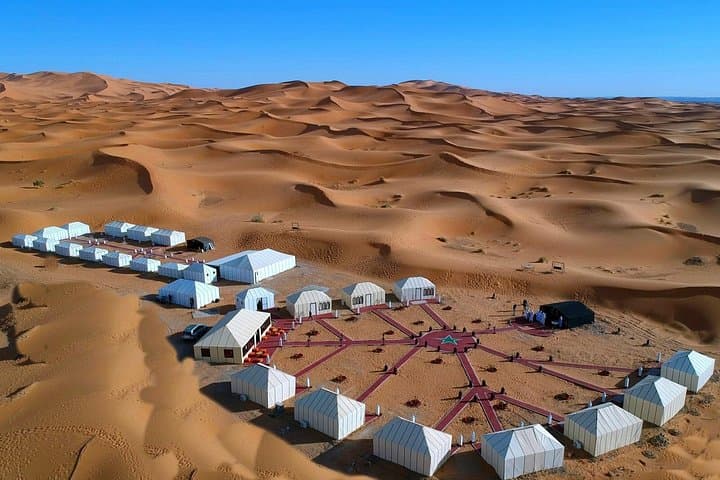
Dust lifts from the road as the minibus leaves Fez at first light and the Middle Atlas pushes you toward open desert. By midafternoon the land thins to ochre and wind-sculpted dunes; Erg Chebbi rises like a living wall that shifts with every gust, daring you to climb its crest.
Verified experiences and guided adventures in the surrounding area.
Operated by Travelers To Morocco · Merzouga, Drâa-Tafilalet
Dust lifts from the road as the minibus leaves Fez at first light and the Middle Atlas pushes you toward open desert. By midafternoon the land thins to ochre and wind-sculpted dunes; Erg Chebbi rises like a living wall that shifts with every gust, daring you to climb its crest.
This route threads through Ifrane and Azrou — towns marked by cedar forests and Barbary macaques — then follows the historic caravan corridors of the Ziz Valley into Erfoud and Merzouga. Geologically the Erg Chebbi dunes are late-Holocene sand fields fed by ancient river systems; culturally the region is a crossroads of Berber, Arab and Saharan traditions, visible in kasbah architecture at Ait Ben Haddou and the mud-brick fortifications along the Route of a Thousand Kasbahs.
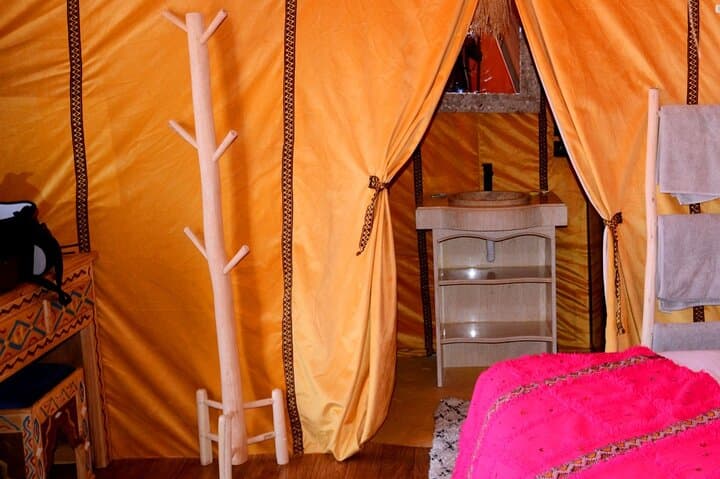
Over three days you'll watch sunrise from a camel’s back, sleep in a luxury desert tent under an expansive sky, trace the Todra Gorge’s limestone walls on a short stroll, and cross the High Atlas via the Tizi n’Tichka pass (2,260 m) into Marrakech.
Practical edge: expect long drives broken by purposeful stops — wear layers for large day-night temperature swings, carry cash (small denominations), and bring a headlamp for camp. Hydrate before and during desert walks; the sand reflects heat and sun protection is non-negotiable. Book with operators offering responsible camps and local guides to ensure comfortable transfers, cultural insight, and lower impact on fragile oasis environments.
moderate.
3 days.
Suitable for travelers in good general health who can manage short walks, camel rides, and multi-hour transfers.
Expect sections of 4–6 hours on days between Fez, Merzouga, Ouarzazate and Marrakech, with scheduled stops for sights and meals.
Yes; operators provide trained camels and local guides who brief riders and lead the procession to camp.
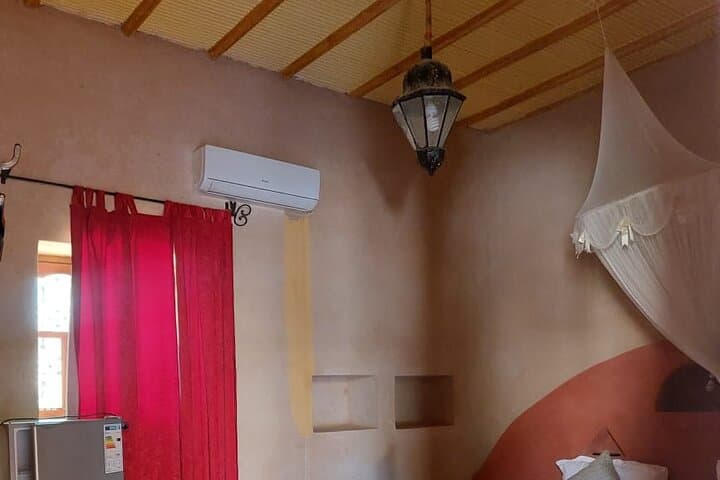
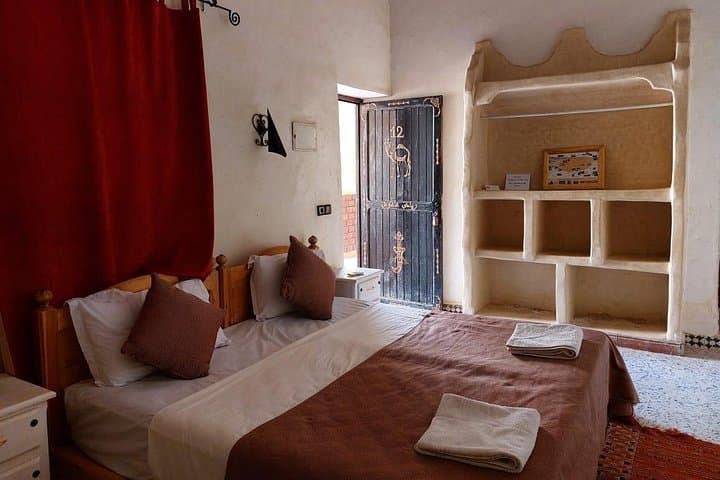
Luxury desert tents typically include beds, linens, and communal dining; confirm exact amenities with the operator.
Some parts are accessible (vehicle transfers, hotel stays), but camel rides and dune walking require basic mobility; check accessibility details before booking.
Ait Ben Haddou sits on historic trans-Saharan routes and is a UNESCO-listed ksar; the region's kasbahs grew from caravan trade and tribal settlements.
The Saharan edge is sensitive to water use and waste; choose operators who minimize single-use plastics and support local communities to reduce impact.
Travelers To Morocco operates guided outdoor trips and adventures with an emphasis on safety, stewardship, and memorable experiences.
Dust lifts from the road as the minibus leaves Fez at first light and the Middle Atlas pushes you toward open desert. By midafternoon the land thins to ochre and wind-sculpted dunes; Erg Chebbi rises like a living wall that shifts with every gust, daring you to climb its crest.
Dust lifts from the road as the minibus leaves Fez at first light and the Middle Atlas pushes you toward open desert. By midafternoon the land thins to ochre and wind-sculpted dunes; Erg Chebbi rises like a living wall that shifts with every gust, daring you to climb its crest.
This route threads through Ifrane and Azrou — towns marked by cedar forests and Barbary macaques — then follows the historic caravan corridors of the Ziz Valley into Erfoud and Merzouga. Geologically the Erg Chebbi dunes are late-Holocene sand fields fed by ancient river systems; culturally the region is a crossroads of Berber, Arab and Saharan traditions, visible in kasbah architecture at Ait Ben Haddou and the mud-brick fortifications along the Route of a Thousand Kasbahs.
Over three days you'll watch sunrise from a camel’s back, sleep in a luxury desert tent under an expansive sky, trace the Todra Gorge’s limestone walls on a short stroll, and cross the High Atlas via the Tizi n’Tichka pass (2,260 m) into Marrakech.
Practical edge: expect long drives broken by purposeful stops — wear layers for large day-night temperature swings, carry cash (small denominations), and bring a headlamp for camp. Hydrate before and during desert walks; the sand reflects heat and sun protection is non-negotiable. Book with operators offering responsible camps and local guides to ensure comfortable transfers, cultural insight, and lower impact on fragile oasis environments.