THE ADVENTURE COLLECTIVE® · Independent discovery and booking for outdoor travel

A concise, three-day route from Marrakech to the Erg Chebbi dunes that pairs High Atlas passes and gorges with a night under the stars in a luxury Berber camp. Expect long drives, dramatic vistas, and a camel trek into the heart of the Sahara.
A concise, three-day route from Marrakech to the Erg Chebbi dunes that pairs High Atlas passes and gorges with a night under the stars in a luxury Berber camp. Expect long drives, dramatic vistas, and a camel trek into the heart of the Sahara.
The sun breaks over the High Atlas as the minivan threads Tizi n’Tichka, dust lifting like breath from the road. Passengers glance up at honey-colored villages clinging to slopes, then settle in for long stretches of landscape that change from terraced fields to ochre kasbahs and, finally, the gold sweep of Erg Chebbi.
Verified experiences and guided adventures in the surrounding area.
Operated by GetExcursion · Merzouga, Drâa-Tafilalet
The sun breaks over the High Atlas as the minivan threads Tizi n’Tichka, dust lifting like breath from the road. Passengers glance up at honey-colored villages clinging to slopes, then settle in for long stretches of landscape that change from terraced fields to ochre kasbahs and, finally, the gold sweep of Erg Chebbi.
This three-day loop links Marrakech’s imperial gates with the Sahara’s shifting ridgelines via Ait Ben Haddou and the Dades and Todra gorges. Ait Ben Haddou’s earthen kasbahs recall caravan trade routes and the architecture of caravanserais; Ouarzazate earned the nickname “gate of the desert” as a film location because its light and forms read like a set.
Geology is obvious: volcanic and sedimentary rocks sculpt the passing passes, then sand dunes pile into living sculptures driven by seasonal wind. Local culture is Berber, visible in small mud-brick villages, rose valleys where rosewater is distilled, and campfire evenings in nomad-style tents.
Practical guidance: expect long drives—plan motion-sickness remedies and stretches at scenic lookouts. Camel transfers cross soft sand and are steady but brief; bring sturdy shoes for dune crests and the Todra gorges’ short canyon walks. Desert nights drop sharply in temperature—pack warm layers and a headlamp. Hydrate frequently; potable water is provided but carry a refillable bottle. If travelling with children or mobility issues, consider the four-day extension to reduce long driving days.
This itinerary balances iconic photo moments—sunset from a dune, sunrise close to the camp—with straightforward logistics: hotel nights en route, a luxury Berber camp stay, and guided transfers. For travelers who want accessible desert immersion without technical hiking, it’s an efficiently staged desert introduction.
moderate.
3 days.
Suitable for travelers in average fitness; requires ability to handle short walks on uneven desert sand and canyon paths, plus tolerance for extended vehicle time.
The camel ride to the camp is generally 45–60 minutes at a steady, slow pace—suitable for most travelers though those with severe back issues should avoid it.
Most visitors to Morocco require a passport valid for the duration of stay; visa requirements depend on nationality—check Moroccan consular guidance before travel.
Breakfasts and dinners are included as described—typically two hotel breakfasts and camp dinners; bring snacks for long driving days.
Yes, but the itinerary involves long drives; the operator recommends the four-day version for families with young children to reduce daily travel time.
The route follows old caravan corridors and displays fortified ksars built from rammed earth that reflect centuries of trans-Saharan trade and local defensive architecture.
Erg Chebbi’s dune systems are fragile and shift with wind—stick to marked paths around camps, avoid driving on dunes, and favor local guides who practice water conservation and waste management.
GetExcursion operates guided outdoor trips and adventures with an emphasis on safety, stewardship, and memorable experiences.


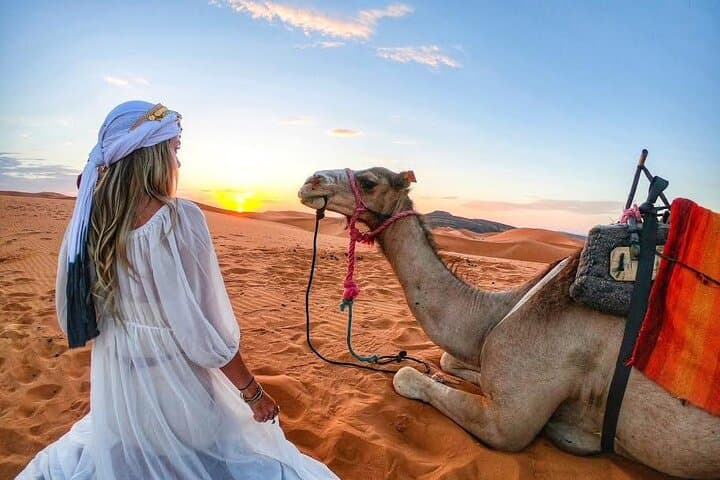
The sun breaks over the High Atlas as the minivan threads Tizi n’Tichka, dust lifting like breath from the road. Passengers glance up at honey-colored villages clinging to slopes, then settle in for long stretches of landscape that change from terraced fields to ochre kasbahs and, finally, the gold sweep of Erg Chebbi.
The sun breaks over the High Atlas as the minivan threads Tizi n’Tichka, dust lifting like breath from the road. Passengers glance up at honey-colored villages clinging to slopes, then settle in for long stretches of landscape that change from terraced fields to ochre kasbahs and, finally, the gold sweep of Erg Chebbi.
This three-day loop links Marrakech’s imperial gates with the Sahara’s shifting ridgelines via Ait Ben Haddou and the Dades and Todra gorges. Ait Ben Haddou’s earthen kasbahs recall caravan trade routes and the architecture of caravanserais; Ouarzazate earned the nickname “gate of the desert” as a film location because its light and forms read like a set.
Geology is obvious: volcanic and sedimentary rocks sculpt the passing passes, then sand dunes pile into living sculptures driven by seasonal wind. Local culture is Berber, visible in small mud-brick villages, rose valleys where rosewater is distilled, and campfire evenings in nomad-style tents.
Practical guidance: expect long drives—plan motion-sickness remedies and stretches at scenic lookouts. Camel transfers cross soft sand and are steady but brief; bring sturdy shoes for dune crests and the Todra gorges’ short canyon walks. Desert nights drop sharply in temperature—pack warm layers and a headlamp. Hydrate frequently; potable water is provided but carry a refillable bottle. If travelling with children or mobility issues, consider the four-day extension to reduce long driving days.
This itinerary balances iconic photo moments—sunset from a dune, sunrise close to the camp—with straightforward logistics: hotel nights en route, a luxury Berber camp stay, and guided transfers. For travelers who want accessible desert immersion without technical hiking, it’s an efficiently staged desert introduction.