THE ADVENTURE COLLECTIVE® · Independent discovery and booking for outdoor travel

A compact three-day route from Marrakech to Merzouga that pairs High Atlas passes, UNESCO kasbahs and towering Erg Chebbi dunes. Expect long drives, short gorge walks and an overnight under desert stars after a camel transfer.
A compact three-day route from Marrakech to Merzouga that pairs High Atlas passes, UNESCO kasbahs and towering Erg Chebbi dunes. Expect long drives, short gorge walks and an overnight under desert stars after a camel transfer.
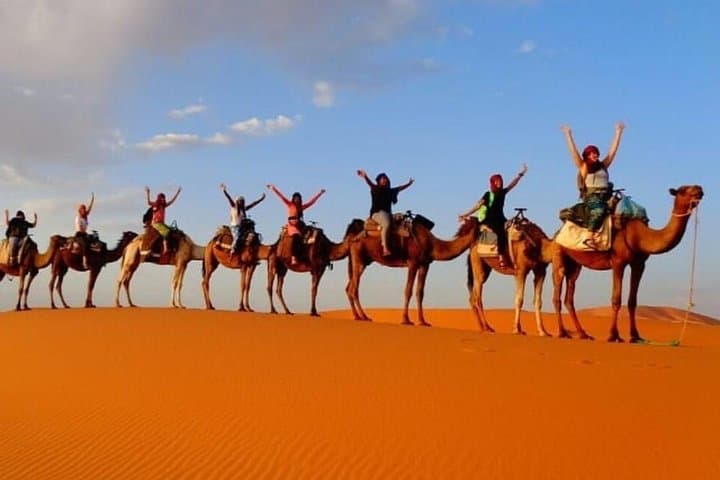
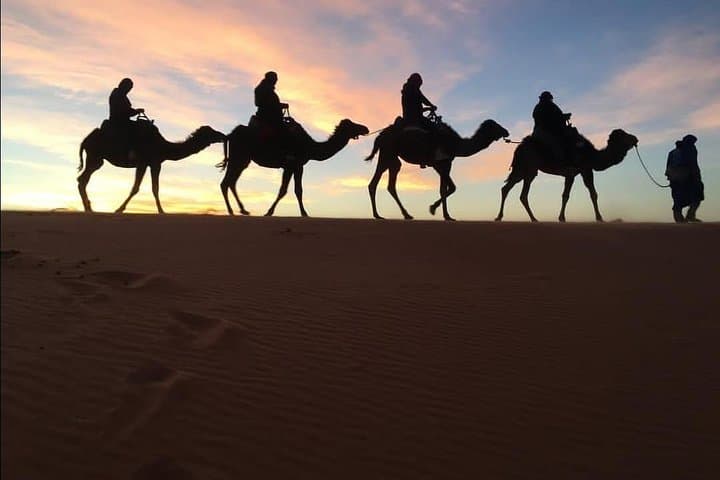
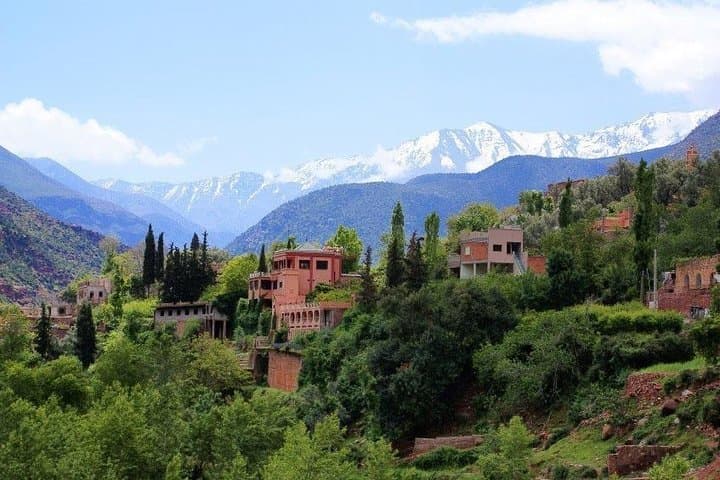
Dawn eases out of Marrakech as the minibus climbs the Tizi n'Tichka pass, the High Atlas folding away beneath a pale light. You feel the landscape change—olive terraces give way to red rock canyons and, eventually, the pale, rippling sea of sand at Erg Chebbi. By the second day you trade wheels for a camel’s sway, an old, deliberate rhythm that pushes you toward a Bedouin camp where stars open like a map.
Verified experiences and guided adventures in the surrounding area.
Operated by Shared Desert Tours · Merzouga, Drâa-Tafilalet
Dawn eases out of Marrakech as the minibus climbs the Tizi n'Tichka pass, the High Atlas folding away beneath a pale light. You feel the landscape change—olive terraces give way to red rock canyons and, eventually, the pale, rippling sea of sand at Erg Chebbi. By the second day you trade wheels for a camel’s sway, an old, deliberate rhythm that pushes you toward a Bedouin camp where stars open like a map.
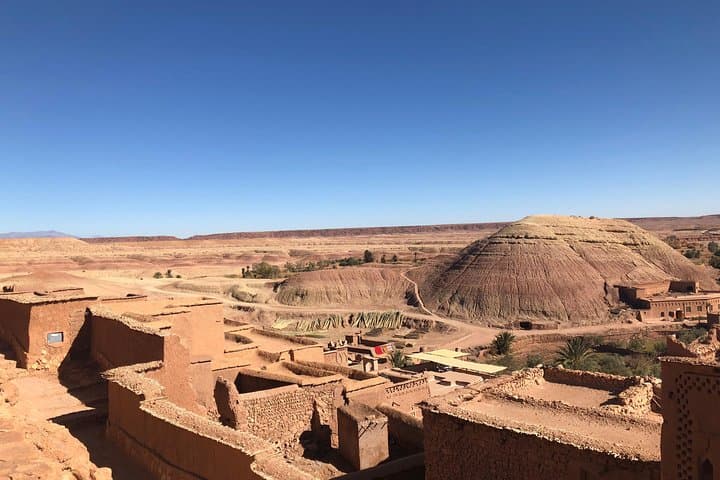
This route threads key cultural and geologic landmarks: the UNESCO ksar of Aït Benhaddou, the sculpted Dadès and Todgha gorges carved by rivers cutting resistant limestone, and the palm oases of the Tafilalet that supported caravan routes for centuries. Merzouga’s dunes are aeolian — wind-built ridges that shift seasonally — and nearby Erfoud is known for fossil-bearing limestone from ancient seas.
Practical snapshot: the tour covers roughly 1,000 km round-trip with long driving legs (4–8 hours on some days) and shorter walking stops (30–90 minutes) in gorges and oases. Tizi n'Tichka reaches about 2,260 m; expect dramatic temperature swings—hot days and cool nights. Accommodations usually include one hotel night, one night in a desert camp, two breakfasts and two dinners, English-speaking driver/guide, and a camel transfer to camp.
Pack layered clothing for day-to-night shifts, sun protection, and a 2L water bottle; timing your desert walk for sunset and sunrise yields the best light and cooler temperatures. Respect local customs in villages, keep to established tracks on dunes, and bring cash for small market purchases—this trip is as much about the travel between places as the dunes themselves.
moderate.
3 days (approx. 72 hours).
Suitable for travelers in reasonable shape who can tolerate long vehicle transfers, short hikes (30–90 minutes) and a 1–2 hour camel ride.
Camel transfers to the camp are typically 1–2 hours depending on the final camp location; shorter rides are available at some camps.
The tour lists ‘suitable for all fitness levels’ but involves camel rides and uneven ground; contact provider about accessibility and child arrangements.
Typically one hotel night and one desert camp night are provided, with two breakfasts and two dinners included—confirm any dietary needs in advance.
Mobile coverage is limited near Erg Chebbi; expect patchy or no service at the camp—plan accordingly for offline maps and emergency contacts.
The route follows historic caravan corridors; Aït Benhaddou is a hilltop ksar that grew wealthy on trans-Saharan trade and is now a UNESCO site and film location.
Dune ecosystems are fragile—stick to established tracks, avoid camping on active dunes, and minimize plastic waste; many camps support local communities when run responsibly.
Shared Desert Tours operates guided outdoor trips and adventures with an emphasis on safety, stewardship, and memorable experiences.
Dawn eases out of Marrakech as the minibus climbs the Tizi n'Tichka pass, the High Atlas folding away beneath a pale light. You feel the landscape change—olive terraces give way to red rock canyons and, eventually, the pale, rippling sea of sand at Erg Chebbi. By the second day you trade wheels for a camel’s sway, an old, deliberate rhythm that pushes you toward a Bedouin camp where stars open like a map.
Dawn eases out of Marrakech as the minibus climbs the Tizi n'Tichka pass, the High Atlas folding away beneath a pale light. You feel the landscape change—olive terraces give way to red rock canyons and, eventually, the pale, rippling sea of sand at Erg Chebbi. By the second day you trade wheels for a camel’s sway, an old, deliberate rhythm that pushes you toward a Bedouin camp where stars open like a map.
This route threads key cultural and geologic landmarks: the UNESCO ksar of Aït Benhaddou, the sculpted Dadès and Todgha gorges carved by rivers cutting resistant limestone, and the palm oases of the Tafilalet that supported caravan routes for centuries. Merzouga’s dunes are aeolian — wind-built ridges that shift seasonally — and nearby Erfoud is known for fossil-bearing limestone from ancient seas.
Practical snapshot: the tour covers roughly 1,000 km round-trip with long driving legs (4–8 hours on some days) and shorter walking stops (30–90 minutes) in gorges and oases. Tizi n'Tichka reaches about 2,260 m; expect dramatic temperature swings—hot days and cool nights. Accommodations usually include one hotel night, one night in a desert camp, two breakfasts and two dinners, English-speaking driver/guide, and a camel transfer to camp.
Pack layered clothing for day-to-night shifts, sun protection, and a 2L water bottle; timing your desert walk for sunset and sunrise yields the best light and cooler temperatures. Respect local customs in villages, keep to established tracks on dunes, and bring cash for small market purchases—this trip is as much about the travel between places as the dunes themselves.