THE ADVENTURE COLLECTIVE® · Independent discovery and booking for outdoor travel

Cross the High Atlas, explore kasbahs and wander into dunes on a private three-day loop from Marrakech. Expect sunset camel treks, a night under the stars and hands-on cultural stops in oases and fossil towns.
Cross the High Atlas, explore kasbahs and wander into dunes on a private three-day loop from Marrakech. Expect sunset camel treks, a night under the stars and hands-on cultural stops in oases and fossil towns.
A wind-scrubbed horizon opens as you leave Marrakech, the road climbing to Tizi n'Tichka at roughly 2,260 m where Berber villages cling to steep terraces and fruit trees follow the water. The landscape quickly shifts—red earth gives way to ochre gorges, palm oases and finally the tall, sculpted dunes of the Sahara that rise 100–150 m above the plain.
Verified experiences and guided adventures in the surrounding area.
Operated by Truly Morocco · Marrakech, Marrakesh-Safi
A wind-scrubbed horizon opens as you leave Marrakech, the road climbing to Tizi n'Tichka at roughly 2,260 m where Berber villages cling to steep terraces and fruit trees follow the water. The landscape quickly shifts—red earth gives way to ochre gorges, palm oases and finally the tall, sculpted dunes of the Sahara that rise 100–150 m above the plain.
This private three-day itinerary threads history and geology: Ait Ben Haddou’s earthen ksar stands on an old caravan route; nearby Ouarzazate and its Taourirt Kasbah point to French-era control and modern film crews; the High Atlas records tectonic uplift that created dramatic passes. In the Todra and Dades gorges you’ll feel the scale of river-carved cliffs and see irrigation systems that sustained settlements for centuries. Fossil workshops around Erfoud illustrate a time when the Sahara was a shallow sea.
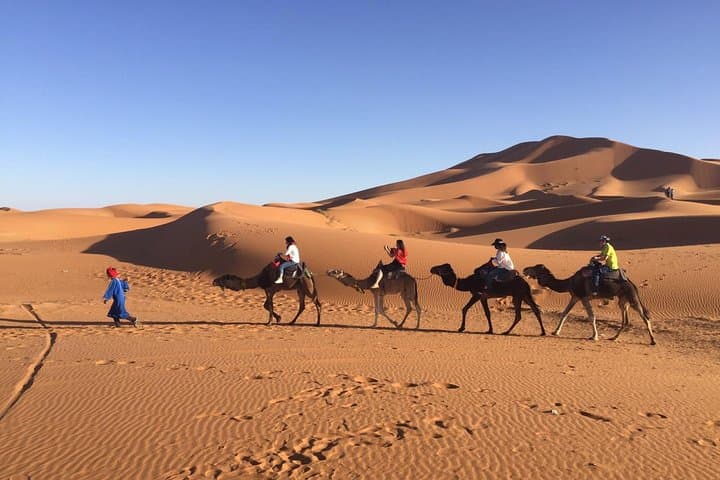
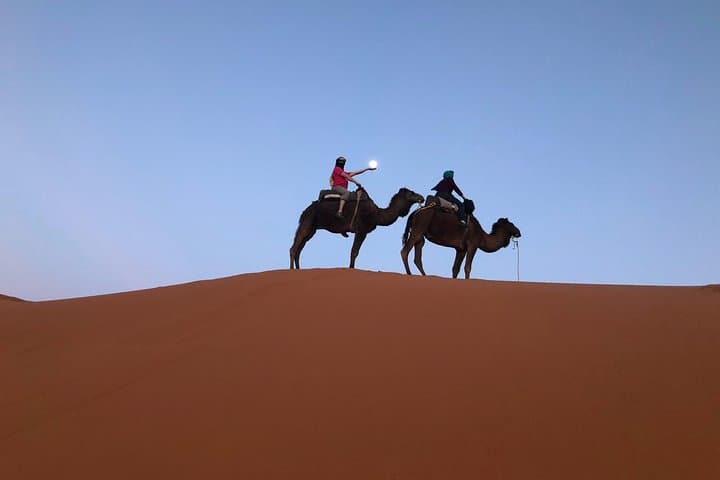
Practically, expect long drives (Marrakech–desert runs of 8–10 hours round-trip with stops), 1–2 hour camel treks at sunset into Erg Chebbi-style dunes, and a night in a desert camp with basic to comfort-level facilities. Temperatures swing hard—hot days, cold nights—so layer and plan treks for late afternoon and dawn. Hydration, sun protection and sturdy footwear matter more than fitness; camel rides are accessible but can strain the lower back. Engage local guides, sample Berber tea, and leave no trace on fragile dune edges. With modest planning this trip delivers dramatic desert light, star-filled skies and a compact sweep of southern Morocco’s culture and geology.
moderate.
3 days.
Suitable for most travelers in reasonable health; able to manage short camel rides, dune walking and day-long transfers.
Camel rides to the desert camp are typically 1–2 hours; you can dismount for short walks on the dunes but large ascents on foot are optional.
Options range from standard family-style desert camps to upgraded 'glamping' tents with private facilities—confirm level at booking.
Children often join but infants must sit on laps for transport; the provider does not recommend travel for pregnant guests or those with serious spinal or cardiovascular conditions.
Two breakfasts and two dinners are included along with private transport and an English-speaking driver; pickup from Marrakech is typically offered—confirm exact pickup location when booking.
The route follows historic caravan and trade corridors; Ait Ben Haddou developed as a fortified caravan ksar and later featured in international film productions.
Water scarcity and fragile dune ecosystems make low-impact travel essential—use local guides, avoid driving on dune crests and take all waste out of camps.
Truly Morocco operates guided outdoor trips and adventures with an emphasis on safety, stewardship, and memorable experiences.
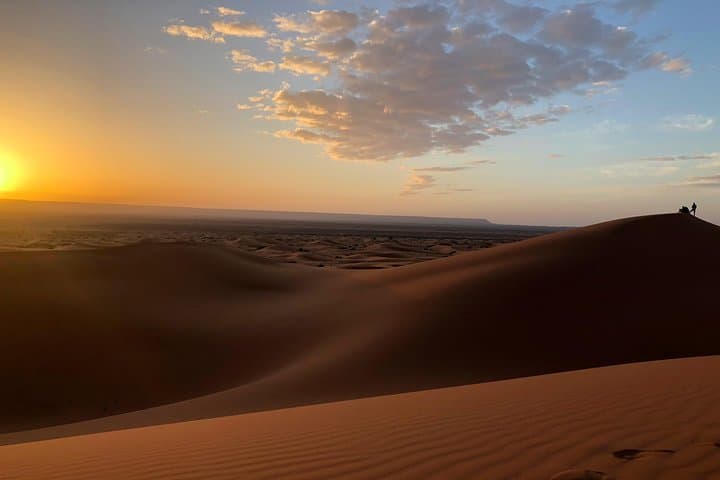
A wind-scrubbed horizon opens as you leave Marrakech, the road climbing to Tizi n'Tichka at roughly 2,260 m where Berber villages cling to steep terraces and fruit trees follow the water. The landscape quickly shifts—red earth gives way to ochre gorges, palm oases and finally the tall, sculpted dunes of the Sahara that rise 100–150 m above the plain.
A wind-scrubbed horizon opens as you leave Marrakech, the road climbing to Tizi n'Tichka at roughly 2,260 m where Berber villages cling to steep terraces and fruit trees follow the water. The landscape quickly shifts—red earth gives way to ochre gorges, palm oases and finally the tall, sculpted dunes of the Sahara that rise 100–150 m above the plain.
This private three-day itinerary threads history and geology: Ait Ben Haddou’s earthen ksar stands on an old caravan route; nearby Ouarzazate and its Taourirt Kasbah point to French-era control and modern film crews; the High Atlas records tectonic uplift that created dramatic passes. In the Todra and Dades gorges you’ll feel the scale of river-carved cliffs and see irrigation systems that sustained settlements for centuries. Fossil workshops around Erfoud illustrate a time when the Sahara was a shallow sea.
Practically, expect long drives (Marrakech–desert runs of 8–10 hours round-trip with stops), 1–2 hour camel treks at sunset into Erg Chebbi-style dunes, and a night in a desert camp with basic to comfort-level facilities. Temperatures swing hard—hot days, cold nights—so layer and plan treks for late afternoon and dawn. Hydration, sun protection and sturdy footwear matter more than fitness; camel rides are accessible but can strain the lower back. Engage local guides, sample Berber tea, and leave no trace on fragile dune edges. With modest planning this trip delivers dramatic desert light, star-filled skies and a compact sweep of southern Morocco’s culture and geology.