THE ADVENTURE COLLECTIVE® · Independent discovery and booking for outdoor travel

A compact overland route that transforms coastal Morocco into Sahara horizon lines in three days. Expect long driving days, historic kasbahs, palm oases and a night under the dunes at Merzouga.
A compact overland route that transforms coastal Morocco into Sahara horizon lines in three days. Expect long driving days, historic kasbahs, palm oases and a night under the dunes at Merzouga.
Dust lifts on the highway as the minivan peels away from Agadir at first light, palms and market stalls shrinking behind you while the road threads up into stony foothills. By afternoon the route opens to kasbahs and river valleys; by the second night the sand takes over—big, wind-sculpted dunes that throw long shadows at sunset.
Verified experiences and guided adventures in the surrounding area.
Operated by The craftsman of your trip · Agadir, Souss-Massa
Dust lifts on the highway as the minivan peels away from Agadir at first light, palms and market stalls shrinking behind you while the road threads up into stony foothills. By afternoon the route opens to kasbahs and river valleys; by the second night the sand takes over—big, wind-sculpted dunes that throw long shadows at sunset.
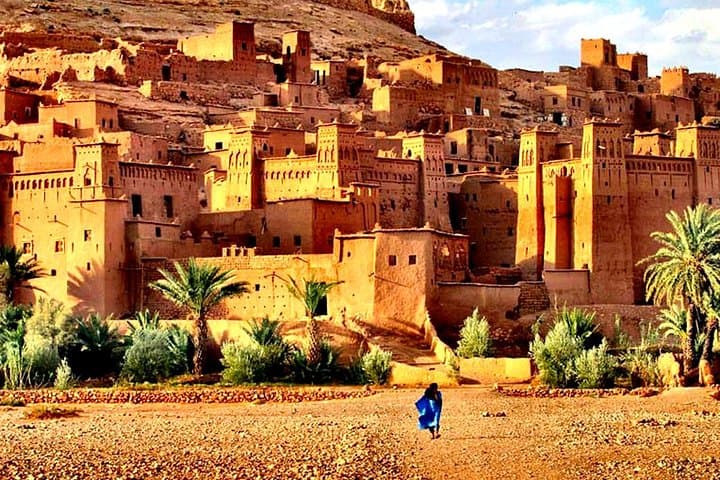
This three-day circuit links two Moroccan worlds: Atlantic coastal plains and the Erg Chebbi dunes on the edge of the Sahara. Along the way visitors pass Taroudant’s ramparts, the UNESCO-listed Ait Ben Haddou (a landmark of southern caravan routes and film sets), the palm-fed Draa Valley and the dramatic Todra Gorges carved into limestone. Geologically the journey moves from folded Anti-Atlas outcrops to alluvial plains and the aeolian deposits that form Merzouga’s dunes—some rising over 100 meters.
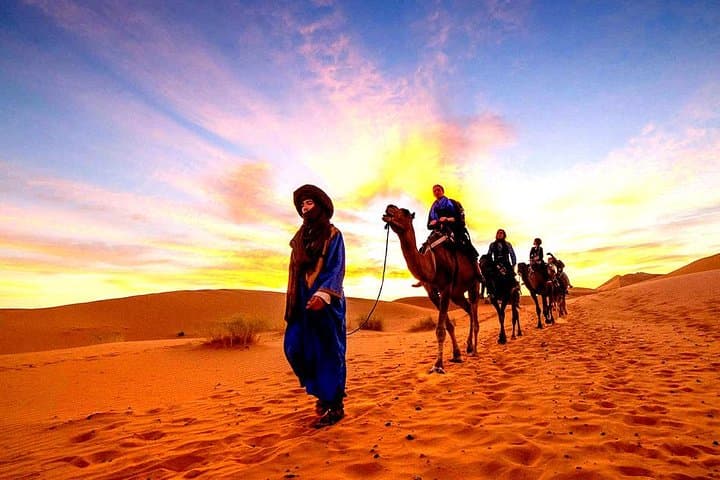
Culturally the trip touches Amazigh (Berber) villages, oasis agriculture, and nomadic camel traditions; expect simple guesthouses and a desert camp where local musicians may play after dinner.
Practical guidance: pack light layers for hot days and cool nights, bring sun protection and a refillable water bottle, and plan for several hours of driving each day (this itinerary covers long road sections). Camel transfers to the camp are typically 1–2 hours; sandboarding is optional. Confirm pick-up points in Agadir and notify operators of mobility needs. For the best light and quieter dunes, schedule travel to catch sunrise or sunset at Erg Chebbi.
moderate.
3 days.
Suitable for travelers in average shape who can handle short dune hikes and camel rides; not strenuous but involves prolonged sitting and some walking on sand.
Typical camel transfers to the Erg Chebbi camp are about 1–2 hours depending on pace and campsite location; vehicles may also reach nearby camp access points.
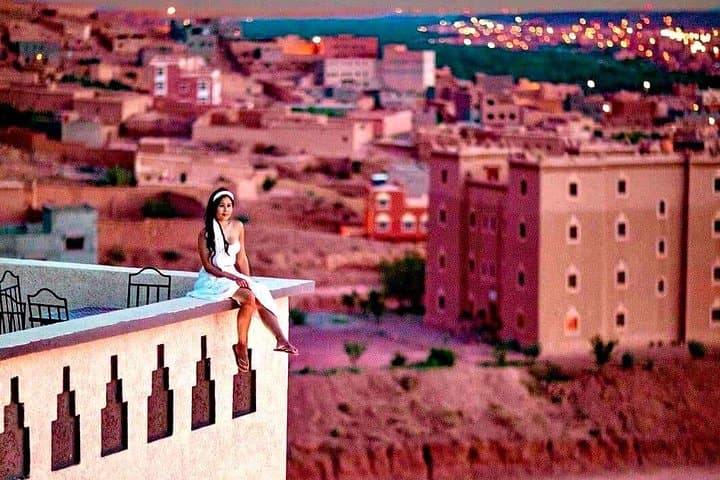
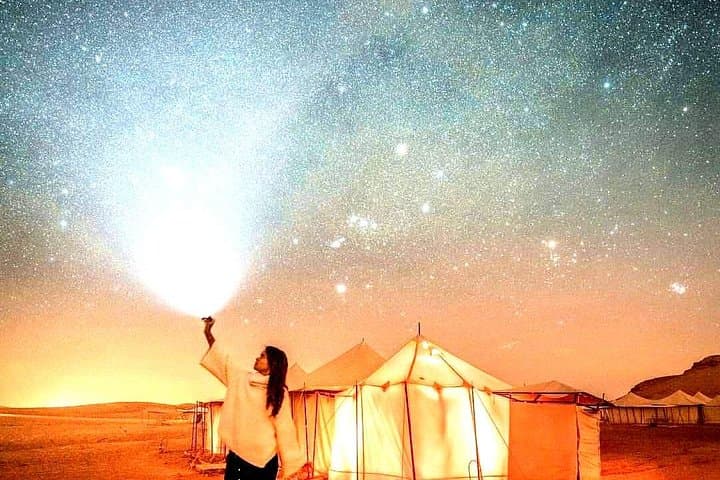
Yes—this itinerary includes one night in a Dades-valley guesthouse and one night in a Merzouga desert camp or similar accommodation, plus breakfasts and dinners specified by the operator.
Families often travel this route; camel rides and easy walking in dunes are generally accessible, but discuss infant seat or stroller needs with the operator when booking.
Cell service is intermittent in remote stretches; many camps provide basic Wi‑Fi, but plan for offline navigation and limited connectivity in Merzouga and between towns.
The route follows historic trans-Saharan corridors used for salt and goods exchange; Ait Ben Haddou is a fortified ksar that exemplifies southern Moroccan earthen architecture.
Respect dune vegetation and avoid driving on fragile interdunal areas; support local guides and camps that use solar power and water-conservation practices.
The craftsman of your trip operates guided outdoor trips and adventures with an emphasis on safety, stewardship, and memorable experiences.
Dust lifts on the highway as the minivan peels away from Agadir at first light, palms and market stalls shrinking behind you while the road threads up into stony foothills. By afternoon the route opens to kasbahs and river valleys; by the second night the sand takes over—big, wind-sculpted dunes that throw long shadows at sunset.
Dust lifts on the highway as the minivan peels away from Agadir at first light, palms and market stalls shrinking behind you while the road threads up into stony foothills. By afternoon the route opens to kasbahs and river valleys; by the second night the sand takes over—big, wind-sculpted dunes that throw long shadows at sunset.
This three-day circuit links two Moroccan worlds: Atlantic coastal plains and the Erg Chebbi dunes on the edge of the Sahara. Along the way visitors pass Taroudant’s ramparts, the UNESCO-listed Ait Ben Haddou (a landmark of southern caravan routes and film sets), the palm-fed Draa Valley and the dramatic Todra Gorges carved into limestone. Geologically the journey moves from folded Anti-Atlas outcrops to alluvial plains and the aeolian deposits that form Merzouga’s dunes—some rising over 100 meters.
Culturally the trip touches Amazigh (Berber) villages, oasis agriculture, and nomadic camel traditions; expect simple guesthouses and a desert camp where local musicians may play after dinner.
Practical guidance: pack light layers for hot days and cool nights, bring sun protection and a refillable water bottle, and plan for several hours of driving each day (this itinerary covers long road sections). Camel transfers to the camp are typically 1–2 hours; sandboarding is optional. Confirm pick-up points in Agadir and notify operators of mobility needs. For the best light and quieter dunes, schedule travel to catch sunrise or sunset at Erg Chebbi.