THE ADVENTURE COLLECTIVE® · Independent discovery and booking for outdoor travel

Three days of private touring through Angkor’s major temples and Tonle Sap floating villages. Expect close-up archaeology, vehicle transfers between sites, and early starts to beat heat and crowds.
Three days of private touring through Angkor’s major temples and Tonle Sap floating villages. Expect close-up archaeology, vehicle transfers between sites, and early starts to beat heat and crowds.
You arrive before sunrise, lowered into a cool, humid air that makes the stone glow. A private guide steers you through avenues of crumbling gopuras and fig trees that have taken the temples into their roots; silence is punctured by frogs at the moat and the soft hum of tuk-tuks on distant roads.
Verified experiences and guided adventures in the surrounding area.
Operated by Private Tour Guide-Cambodia · Siem Reap, Siem Reap Province
You arrive before sunrise, lowered into a cool, humid air that makes the stone glow. A private guide steers you through avenues of crumbling gopuras and fig trees that have taken the temples into their roots; silence is punctured by frogs at the moat and the soft hum of tuk-tuks on distant roads.
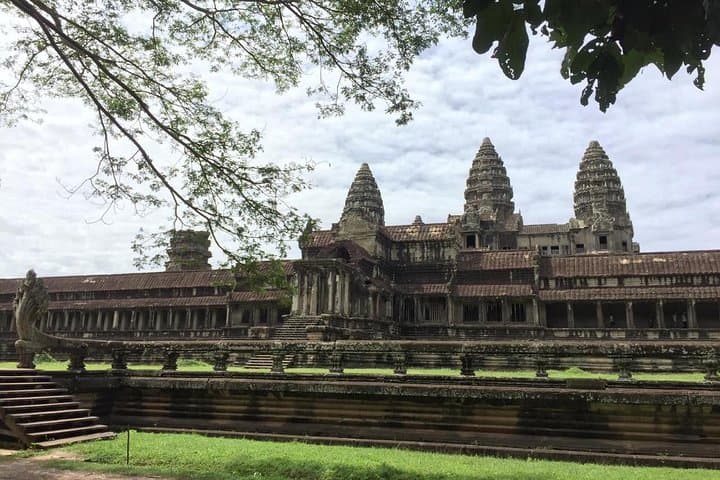
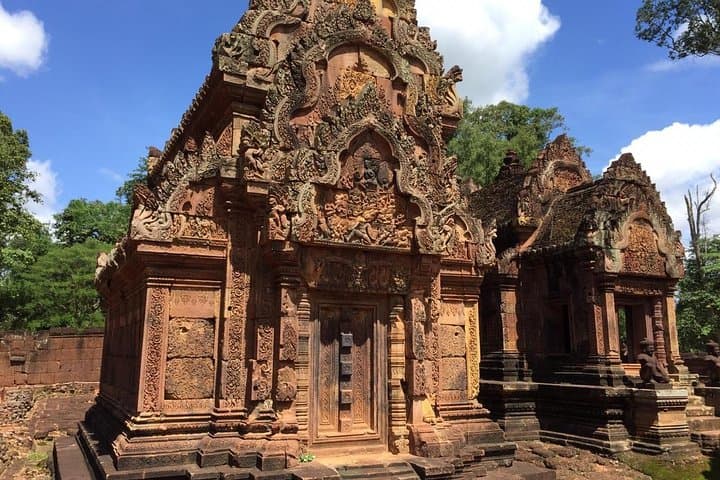
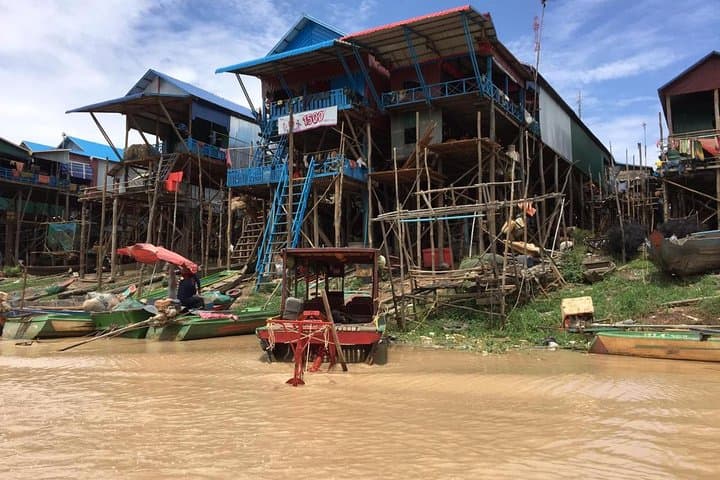
Over three days this private tour threads the highlights of the Angkor archaeological park—Banteay Srei’s pink sandstone carvings, the layered galleries of Angkor Wat, the enigmatic faces of Bayon, and the root-choked chambers of Ta Prohm—ending with the floating houses and flooded forests of Tonle Sap.
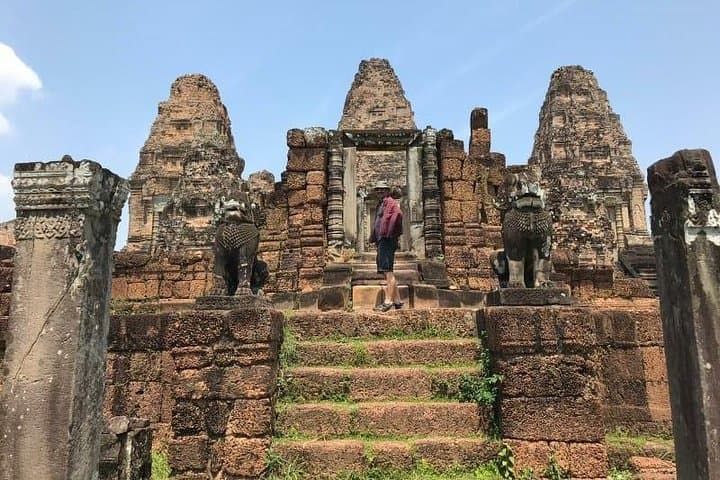
Geology and empire are visible at every turn: laterite and sandstone quarried and stacked into galleries, bas-reliefs that narrate 12th-century cosmology, and reservoirs (barays) that underline Khmer hydraulic engineering. The cultural stakes are immediate—temples shifted from Hindu to Buddhist use, and local villages maintain living crafts and boat-based economies on the lake.
Practical guide: this is mainly low-impact walking between sites, but expect uneven stone, loose sand, and short stair sections; distances between temple clusters can be several kilometers, so the included air-conditioned transport is useful. Carry 2–3 liters of water, sunscreen, and modest clothing for temple entry. Start early to avoid heat and crowds; your guide will handle permits and timings. Bring cash for entrance fees, local vendors, and a respectful tip for your guide. These three days balance immersive archaeology and manageable logistics, letting you move deliberately through one of Southeast Asia’s most compelling outdoor museums.
easy.
3 days.
Light fitness; able to walk 2–5 km per day on uneven ground and climb short stair sections
Entrance fees are not included in most private tours; your guide will advise on where to buy a 1-, 3-, or 7-day Angkor Pass at the official ticket center.
Walking is moderate: expect short loops around temple complexes of 1–3 km and additional distances between clusters covered by vehicle.
Some major sites have flat approaches, but many inner towers have steep stairs and uneven thresholds; notify the operator to tailor the itinerary and vehicles.
Yes—organized boat trips use licensed boats operated by local communities; confirm lifejackets and seasonal water levels that affect boat routes.
Angkor was the capital of the Khmer Empire (9th–15th centuries); its temples reflect shifts from Hindu cosmology to Buddhist practice and sophisticated water management systems.
Visitor pressure is monitored; stick to marked paths, avoid touching bas-reliefs, and support community-run boat tours to ensure local economic benefits.
Private Tour Guide-Cambodia operates guided outdoor trips and adventures with an emphasis on safety, stewardship, and memorable experiences.
You arrive before sunrise, lowered into a cool, humid air that makes the stone glow. A private guide steers you through avenues of crumbling gopuras and fig trees that have taken the temples into their roots; silence is punctured by frogs at the moat and the soft hum of tuk-tuks on distant roads.
You arrive before sunrise, lowered into a cool, humid air that makes the stone glow. A private guide steers you through avenues of crumbling gopuras and fig trees that have taken the temples into their roots; silence is punctured by frogs at the moat and the soft hum of tuk-tuks on distant roads.
Over three days this private tour threads the highlights of the Angkor archaeological park—Banteay Srei’s pink sandstone carvings, the layered galleries of Angkor Wat, the enigmatic faces of Bayon, and the root-choked chambers of Ta Prohm—ending with the floating houses and flooded forests of Tonle Sap.
Geology and empire are visible at every turn: laterite and sandstone quarried and stacked into galleries, bas-reliefs that narrate 12th-century cosmology, and reservoirs (barays) that underline Khmer hydraulic engineering. The cultural stakes are immediate—temples shifted from Hindu to Buddhist use, and local villages maintain living crafts and boat-based economies on the lake.
Practical guide: this is mainly low-impact walking between sites, but expect uneven stone, loose sand, and short stair sections; distances between temple clusters can be several kilometers, so the included air-conditioned transport is useful. Carry 2–3 liters of water, sunscreen, and modest clothing for temple entry. Start early to avoid heat and crowds; your guide will handle permits and timings. Bring cash for entrance fees, local vendors, and a respectful tip for your guide. These three days balance immersive archaeology and manageable logistics, letting you move deliberately through one of Southeast Asia’s most compelling outdoor museums.