THE ADVENTURE COLLECTIVE® · Independent discovery and booking for outdoor travel

Cross the High Atlas, explore Aït Ben Haddou, trace the Draa Valley’s palm oases, and sleep beneath the stars in Erg Chegaga. This private three-day circuit blends short hikes, camel rides and cultural stops for an accessible slice of the Sahara.
Cross the High Atlas, explore Aït Ben Haddou, trace the Draa Valley’s palm oases, and sleep beneath the stars in Erg Chegaga. This private three-day circuit blends short hikes, camel rides and cultural stops for an accessible slice of the Sahara.
The morning air snaps cold and clear as a private vehicle climbs Tizi n'Tichka, and the High Atlas folds away into ochre plains. By midday the mud-brick walls of Aït Ben Haddou appear, sun-baked and severe, a living crossroads where caravan trade once threaded North Africa to sub-Saharan routes.
Verified experiences and guided adventures in the surrounding area.
Operated by The Alternative Morocco · Zagora, Drâa-Tafilalet
The morning air snaps cold and clear as a private vehicle climbs Tizi n'Tichka, and the High Atlas folds away into ochre plains. By midday the mud-brick walls of Aït Ben Haddou appear, sun-baked and severe, a living crossroads where caravan trade once threaded North Africa to sub-Saharan routes.
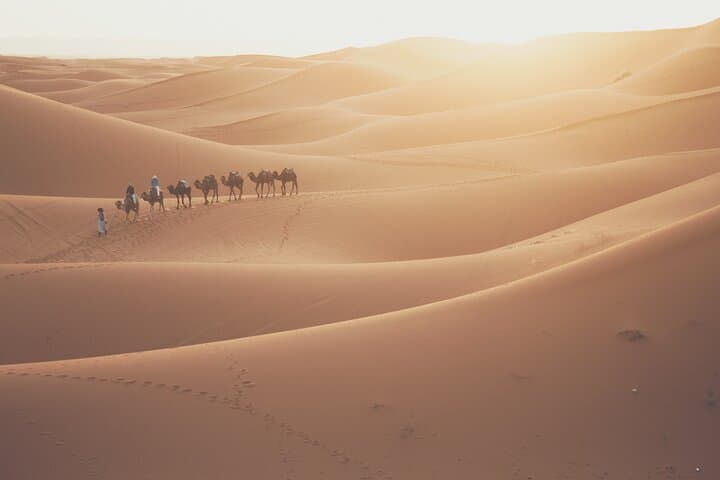
This three-day circuit moves from mountain passes to the palm-lined Draa Valley, then into the wide, wind-sculpted dunes of Erg Chegaga and the remote M'Hamid basin. Geologically the region is driven by ancient uplift and erosional plateaus; sand here is not a single endless sea but a mosaic of megadunes, interdunal hammada, and gravel plains that shift with every wind. Culturally the route traces Amazigh (Berber) and Saharan caravan history—kasbahs and ksour that sheltered salt and date caravans for centuries.
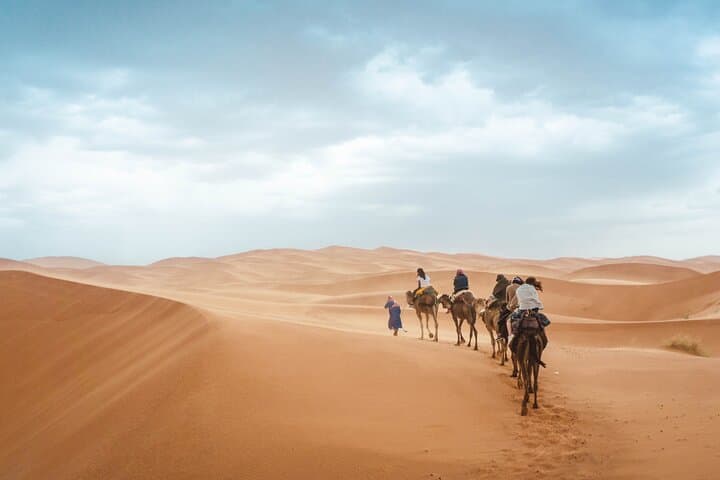
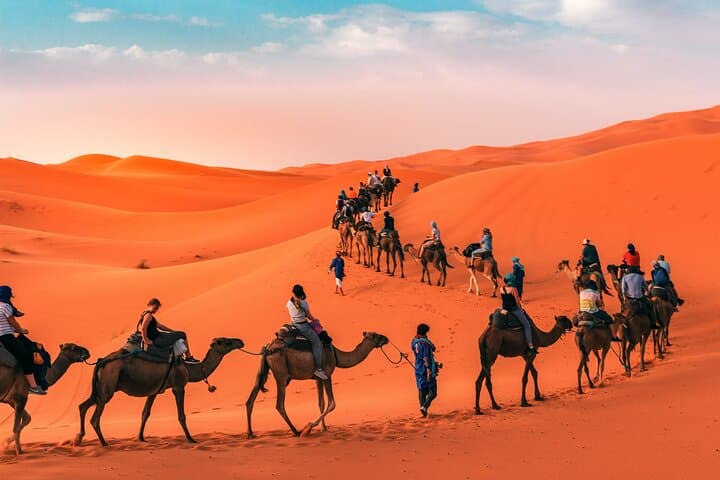
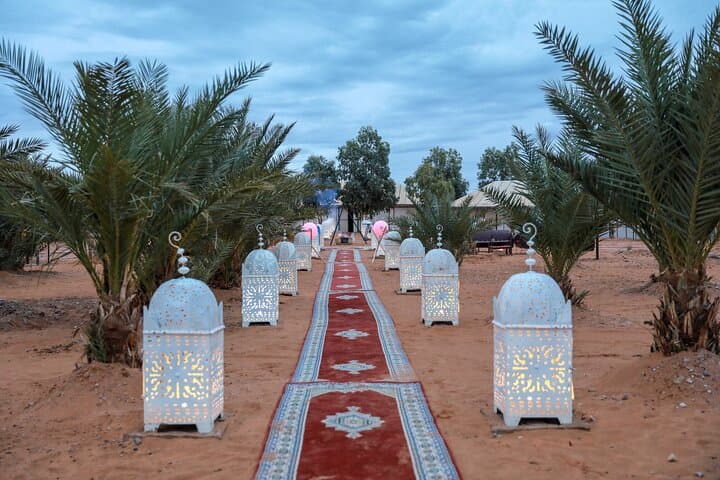
Travelers can expect a mix of paved drives and rough tracks, short village walks, sunset and sunrise camel rides, and a night in a private eco-tented camp under a glass-black sky. Nature often feels like a companion: the dunes press and release with wind, the palm oases hum with insects and birds. Practicalities matter—bring sun protection, layered clothing for big diurnal swings, and comfortable boots for walking on unstable sand. Local guides manage navigation and cultural access; respect water scarcity and local customs by conserving resources and asking before photographing people. This is a compact, accessible immersion into Morocco’s southern edge—equal parts geology, history, and desert clarity.
moderate.
3 days.
Light to moderate fitness; able to manage short camel rides, dune walking, and getting in/out of vehicles.
Rides are typically short (30–60 minutes) over dunes and are suitable for beginners; guides help mount and dismount safely.
Service is intermittent in remote areas—expect connectivity gaps; your guide will carry emergency comms when necessary.
Yes; breakfasts, lunches and dinners described in the itinerary and overnight stays in riads and a private desert camp are included.
Travel insurance that covers evacuation is recommended; routine vaccinations are generally sufficient—check current health advisories before travel.
The route follows former trans-Saharan caravan corridors; Aït Ben Haddou and the kasbahs reflect centuries of caravan trade and Amazigh architecture.
The southern desert is ecologically fragile—minimize litter, use local guides who follow low-impact camp practices, and avoid disturbing vegetation and archaeological sites.
The Alternative Morocco operates guided outdoor trips and adventures with an emphasis on safety, stewardship, and memorable experiences.
The morning air snaps cold and clear as a private vehicle climbs Tizi n'Tichka, and the High Atlas folds away into ochre plains. By midday the mud-brick walls of Aït Ben Haddou appear, sun-baked and severe, a living crossroads where caravan trade once threaded North Africa to sub-Saharan routes.
The morning air snaps cold and clear as a private vehicle climbs Tizi n'Tichka, and the High Atlas folds away into ochre plains. By midday the mud-brick walls of Aït Ben Haddou appear, sun-baked and severe, a living crossroads where caravan trade once threaded North Africa to sub-Saharan routes.
This three-day circuit moves from mountain passes to the palm-lined Draa Valley, then into the wide, wind-sculpted dunes of Erg Chegaga and the remote M'Hamid basin. Geologically the region is driven by ancient uplift and erosional plateaus; sand here is not a single endless sea but a mosaic of megadunes, interdunal hammada, and gravel plains that shift with every wind. Culturally the route traces Amazigh (Berber) and Saharan caravan history—kasbahs and ksour that sheltered salt and date caravans for centuries.
Travelers can expect a mix of paved drives and rough tracks, short village walks, sunset and sunrise camel rides, and a night in a private eco-tented camp under a glass-black sky. Nature often feels like a companion: the dunes press and release with wind, the palm oases hum with insects and birds. Practicalities matter—bring sun protection, layered clothing for big diurnal swings, and comfortable boots for walking on unstable sand. Local guides manage navigation and cultural access; respect water scarcity and local customs by conserving resources and asking before photographing people. This is a compact, accessible immersion into Morocco’s southern edge—equal parts geology, history, and desert clarity.