THE ADVENTURE COLLECTIVE® · Independent discovery and booking for outdoor travel

A private, three-day circuit from Marrakech to the Erg Chebbi dunes combines High Atlas passes, UNESCO-listed Ait Benhaddou, dramatic gorges and a camel-led night in the Sahara. Expect long drives, dramatic light on red-orange dunes, and a blend of Berber culture with simple desert comforts.
A private, three-day circuit from Marrakech to the Erg Chebbi dunes combines High Atlas passes, UNESCO-listed Ait Benhaddou, dramatic gorges and a camel-led night in the Sahara. Expect long drives, dramatic light on red-orange dunes, and a blend of Berber culture with simple desert comforts.
You leave Marrakech before dawn and climb the High Atlas, the road carving through rock and switchback until the Tizi n’Tichka pass opens out at 2,260 m. The landscape changes as you descend: terraced fields and ochre villages give way to palm groves, kasbahs and a horizon that seems to tilt toward sand.
Verified experiences and guided adventures in the surrounding area.
Operated by Deep South Travel Marrakech · Merzouga, Drâa-Tafilalet
You leave Marrakech before dawn and climb the High Atlas, the road carving through rock and switchback until the Tizi n’Tichka pass opens out at 2,260 m. The landscape changes as you descend: terraced fields and ochre villages give way to palm groves, kasbahs and a horizon that seems to tilt toward sand.
Day one moves through Ait Benhaddou, where compact earthen towers rise from a dried riverbed — a UNESCO ksar shaped by centuries of caravan traffic and modern film crews. The next day the road threads the Dades and Todra gorges, where canyon walls can push the air cool and still, then finally the bright, wind-sculpted ridges of Erg Chebbi appear in deep red-orange.
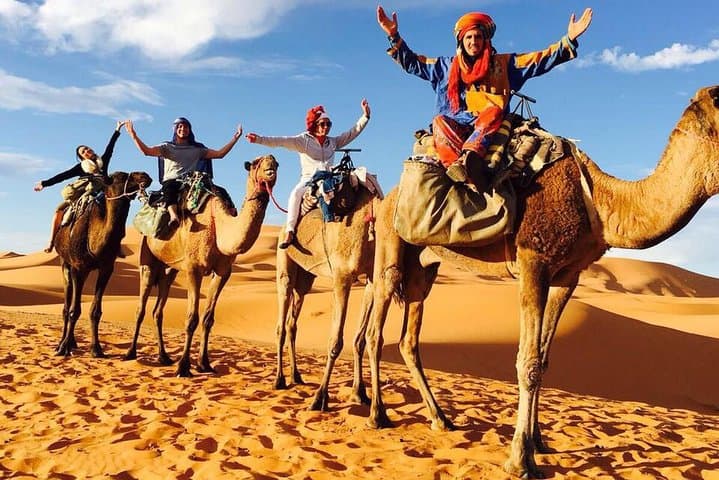
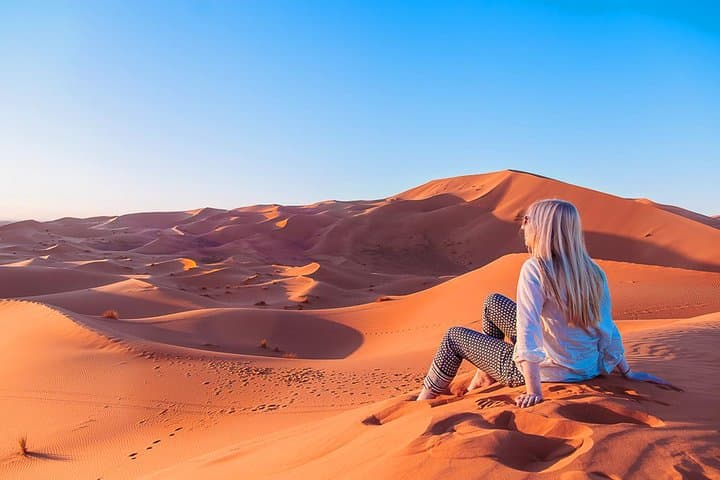
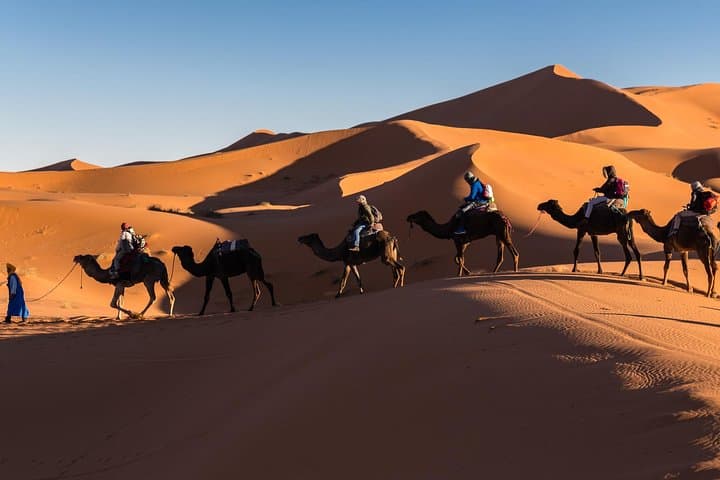
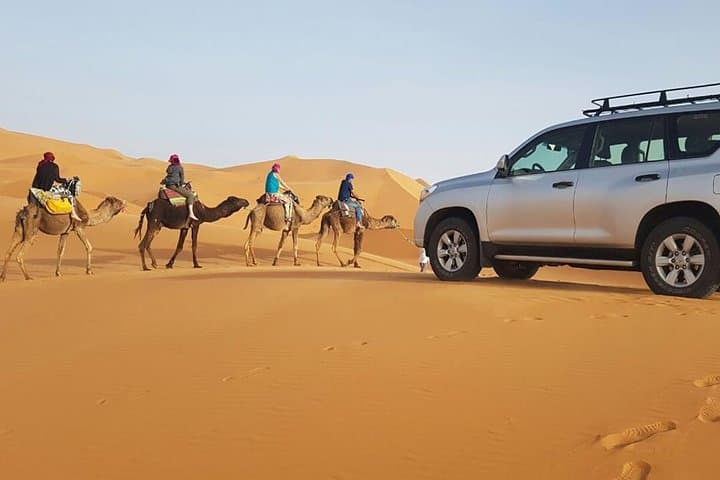
The heart of the trip is simple: a private vehicle with an English-speaking driver-guide, a sunset camel ride across rolling dunes, and an overnight in a desert bivouac — options range from traditional nomad tents to private luxury tents with bathrooms. Sunrise on the dunes is elemental: the slope throws long shadows, the sand feels alive underfoot, and the camp’s small fire invites music and mint tea.
Practical notes: expect long drives between stops (plan for comfort breaks), large temperature swings from hot days to cold desert nights, and sandy terrain that makes walking and driving slow. Bring layered clothing, sun protection, cash for small purchases in villages, and be prepared for basic facilities at traditional camps. For most travelers the trip is accessible but be ready for dusty conditions and moderate physical demands from short hikes and mounting a camel.
moderate.
3 days.
Suitable for travelers in average fitness: able to board a camel, walk short sandy slopes and climb steps at kasbah viewpoints.
Expect multiple hours of driving between highlights—day one and day three include long stretches over the Atlas passes; plan for comfort breaks and scenic stops.
Yes; local handlers guide camels and the ride is slow-paced, but let the crew know if you have mobility issues so they can assist mounting and dismounting.
Options range from traditional nomad tents with basic facilities to private luxury tents with en-suite bathrooms, depending on the package chosen.
The provider notes it is not recommended for pregnant travelers; children are often welcome but check with the operator about age limits and camel-ride safety.
Ait Benhaddou was a fortified caravan ksar on trans-Saharan trade routes and later doubled as a cinematic location; the route follows old trade axes linking the Atlas to the Sahara.
Erg Chebbi’s dune system is sensitive to off-track vehicles and camp impacts—respect marked paths, pack out trash, and use camp facilities to limit water and fuel use.
Deep South Travel Marrakech operates guided outdoor trips and adventures with an emphasis on safety, stewardship, and memorable experiences.
You leave Marrakech before dawn and climb the High Atlas, the road carving through rock and switchback until the Tizi n’Tichka pass opens out at 2,260 m. The landscape changes as you descend: terraced fields and ochre villages give way to palm groves, kasbahs and a horizon that seems to tilt toward sand.
You leave Marrakech before dawn and climb the High Atlas, the road carving through rock and switchback until the Tizi n’Tichka pass opens out at 2,260 m. The landscape changes as you descend: terraced fields and ochre villages give way to palm groves, kasbahs and a horizon that seems to tilt toward sand.
Day one moves through Ait Benhaddou, where compact earthen towers rise from a dried riverbed — a UNESCO ksar shaped by centuries of caravan traffic and modern film crews. The next day the road threads the Dades and Todra gorges, where canyon walls can push the air cool and still, then finally the bright, wind-sculpted ridges of Erg Chebbi appear in deep red-orange.
The heart of the trip is simple: a private vehicle with an English-speaking driver-guide, a sunset camel ride across rolling dunes, and an overnight in a desert bivouac — options range from traditional nomad tents to private luxury tents with bathrooms. Sunrise on the dunes is elemental: the slope throws long shadows, the sand feels alive underfoot, and the camp’s small fire invites music and mint tea.
Practical notes: expect long drives between stops (plan for comfort breaks), large temperature swings from hot days to cold desert nights, and sandy terrain that makes walking and driving slow. Bring layered clothing, sun protection, cash for small purchases in villages, and be prepared for basic facilities at traditional camps. For most travelers the trip is accessible but be ready for dusty conditions and moderate physical demands from short hikes and mounting a camel.