THE ADVENTURE COLLECTIVE® · Independent discovery and booking for outdoor travel

A focused three-day private tour that pairs the main Angkor monuments with a boat trip through Tonle Sap’s stilt villages. Expect full days, varied terrain, and intimate cultural encounters.
A focused three-day private tour that pairs the main Angkor monuments with a boat trip through Tonle Sap’s stilt villages. Expect full days, varied terrain, and intimate cultural encounters.
Dawn spreads soft light across sandstone; the temple towers of Angkor Wat silhouette like guardians and the air hums with distant motorbikes and temple bells.
Verified experiences and guided adventures in the surrounding area.
Operated by Bayon Guide · Siem Reap, Siem Reap Province
Dawn spreads soft light across sandstone; the temple towers of Angkor Wat silhouette like guardians and the air hums with distant motorbikes and temple bells.
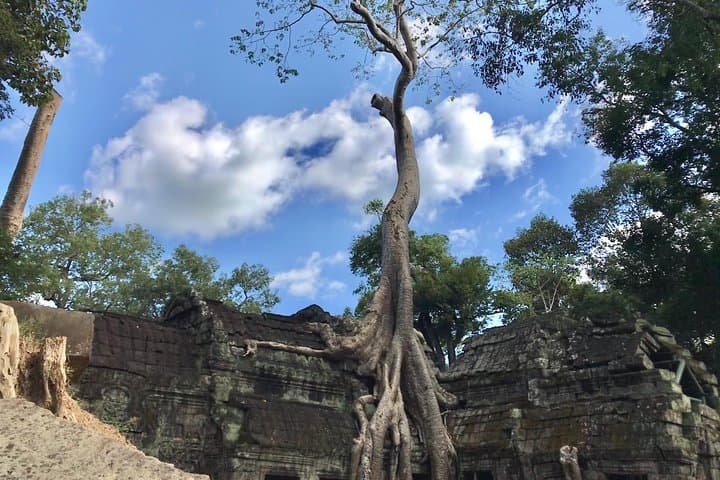
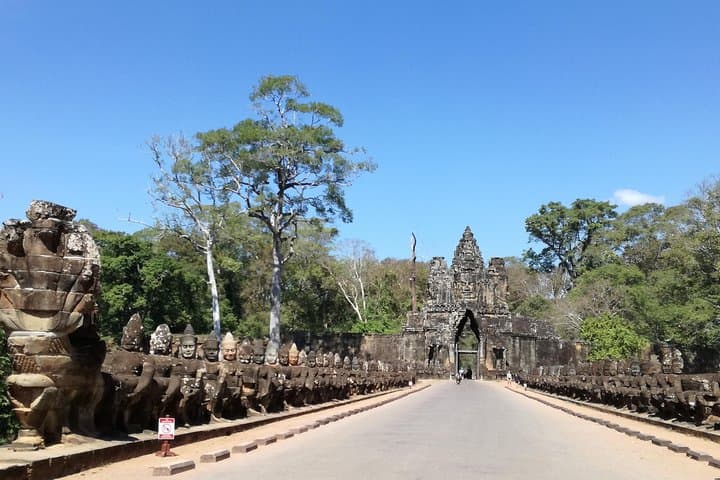
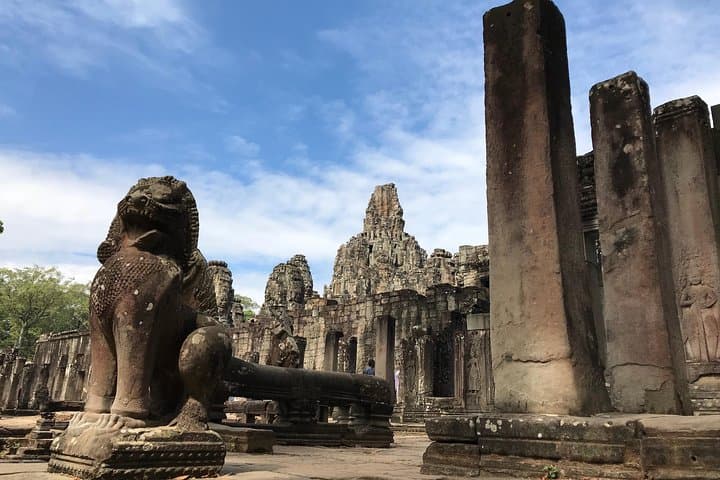
This three-day private circuit moves from the root-entangled rooms of Ta Prohm to the carved faces of Bayon, then out to rural waterlines where wooden boats push through flooded forests on Tonle Sap. The itinerary stitches together Khmer history — Angkor Wat’s 12th-century sandstone perfection, the Bayon’s enigmatic faces from the later Angkor Thom capital, and the 9th-century Roluos group that marks the empire’s early urbanism.
Geology here is literal: laterite and soft sandstone were quarried and shaped into towering galleries; erosion and tropical growth continue to reorder the ruins. On Tonle Sap the lake breathes with the seasons — expanding in the wet months to flood villages on stilts and contracting in the dry months to expose mudflats.
Culturally the tour balances carved Hindu-Buddhist iconography and modern life—Apsara dance after dinner, fishing families casting nets by low sun, and temple guides explaining inscriptions.
Practical guidance: expect long days on uneven stone and quiet treks (Kbal Spean involves a short uphill walk). Bring breathable clothing that covers shoulders and knees for sacred sites; carry cash for temple passes and small stalls; plan sunrise or late afternoon visits to reduce heat and crowds. Hydrate, set a comfortable pace, and leave no trace—these sites keep their dignity when visitors do the same.
moderate.
3 days (full-day activities each day).
Moderate fitness; comfortable with several hours walking on uneven surfaces and short uphill treks (Kbal Spean).
No. Angkor Park tickets are purchased separately at the official ticket office in Siem Reap; your guide will advise on where and when to buy them.
Yes—the listed itinerary is run as a private tour with your group and guide, which allows flexible timing and personalized pacing.
November to February is the coolest and driest period and generally the most comfortable for full-day touring and clear photography.
Children can join but operators note infants should sit on laps; some sites have uneven stairs and intense heat, so plan accordingly.
Angkor was the heart of the Khmer Empire (9th–15th centuries); Angkor Wat was built in the 12th century under King Suryavarman II as a state temple and mausoleum.
High visitation stresses fragile sandstone and local ecosystems; follow path restrictions, avoid touching carvings, and minimize plastic use to reduce impact.
Bayon Guide operates guided outdoor trips and adventures with an emphasis on safety, stewardship, and memorable experiences.
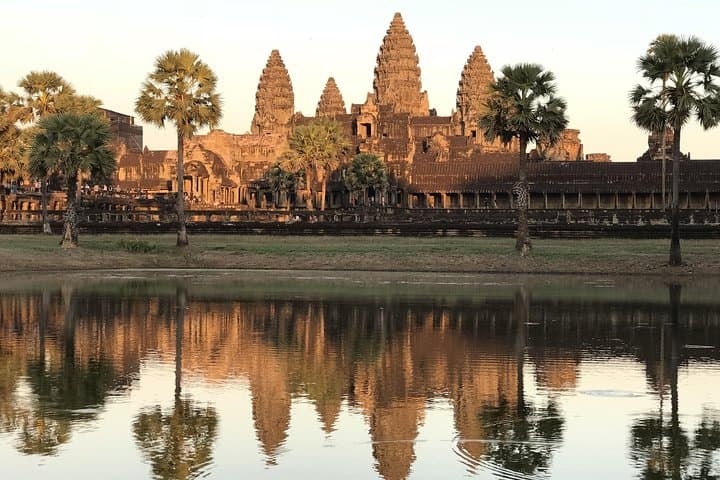
Dawn spreads soft light across sandstone; the temple towers of Angkor Wat silhouette like guardians and the air hums with distant motorbikes and temple bells.
Dawn spreads soft light across sandstone; the temple towers of Angkor Wat silhouette like guardians and the air hums with distant motorbikes and temple bells.
This three-day private circuit moves from the root-entangled rooms of Ta Prohm to the carved faces of Bayon, then out to rural waterlines where wooden boats push through flooded forests on Tonle Sap. The itinerary stitches together Khmer history — Angkor Wat’s 12th-century sandstone perfection, the Bayon’s enigmatic faces from the later Angkor Thom capital, and the 9th-century Roluos group that marks the empire’s early urbanism.
Geology here is literal: laterite and soft sandstone were quarried and shaped into towering galleries; erosion and tropical growth continue to reorder the ruins. On Tonle Sap the lake breathes with the seasons — expanding in the wet months to flood villages on stilts and contracting in the dry months to expose mudflats.
Culturally the tour balances carved Hindu-Buddhist iconography and modern life—Apsara dance after dinner, fishing families casting nets by low sun, and temple guides explaining inscriptions.
Practical guidance: expect long days on uneven stone and quiet treks (Kbal Spean involves a short uphill walk). Bring breathable clothing that covers shoulders and knees for sacred sites; carry cash for temple passes and small stalls; plan sunrise or late afternoon visits to reduce heat and crowds. Hydrate, set a comfortable pace, and leave no trace—these sites keep their dignity when visitors do the same.