THE ADVENTURE COLLECTIVE® · Independent discovery and booking for outdoor travel

Spend three days exploring Angkor’s major temples with a private guide — from the sunrise ramps of Angkor Wat to Ta Prohm’s tree‑struck galleries and a boat ride on Tonle Sap. This practical guide outlines what to expect, how to prepare, and where to find quieter corners.
Spend three days exploring Angkor’s major temples with a private guide — from the sunrise ramps of Angkor Wat to Ta Prohm’s tree‑struck galleries and a boat ride on Tonle Sap. This practical guide outlines what to expect, how to prepare, and where to find quieter corners.
You step out before dawn onto cracked laterite and polished sandstone, the air already humid and alive with the calls of kingfishers over the baray. For three days the region around Siem Reap unfolds like a layered map of history: quiet courtyards, enormous face towers, and jungle roots prying at stone.
Verified experiences and guided adventures in the surrounding area.
Operated by Private Tour Guide-Cambodia · Siem Reap, Siem Reap Province
You step out before dawn onto cracked laterite and polished sandstone, the air already humid and alive with the calls of kingfishers over the baray. For three days the region around Siem Reap unfolds like a layered map of history: quiet courtyards, enormous face towers, and jungle roots prying at stone.
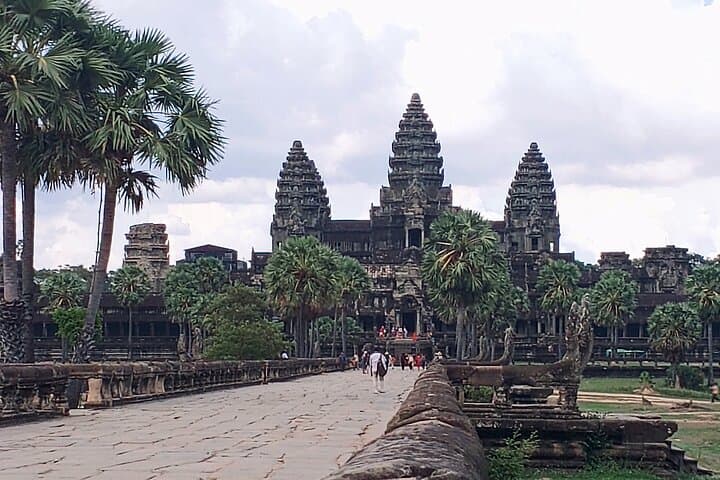
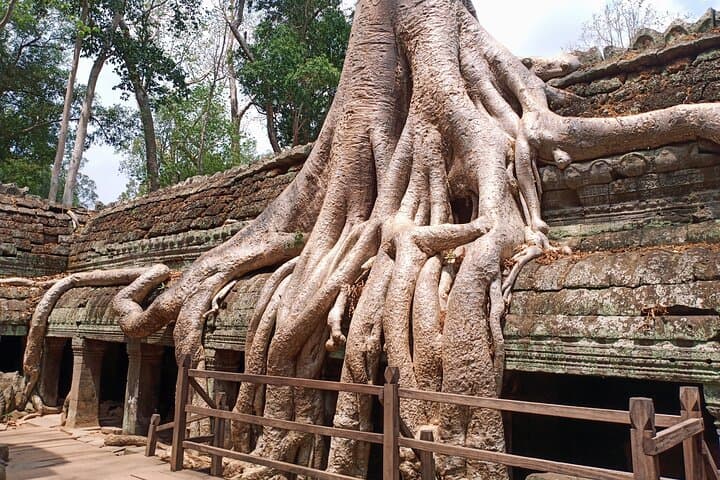
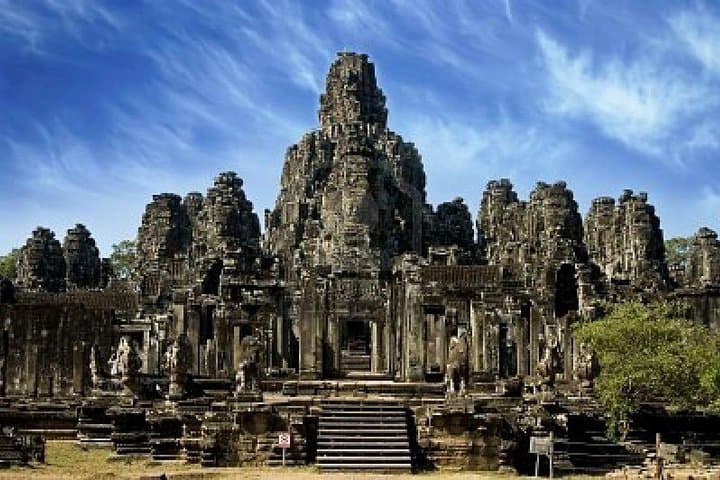
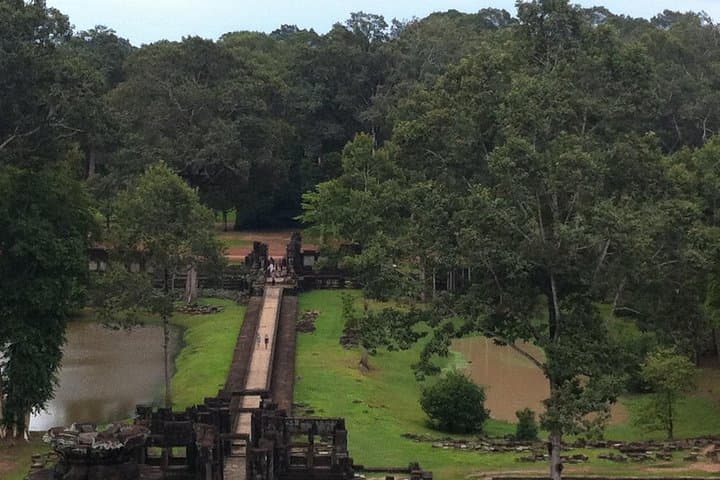
The route covers Angkor Wat — the 12th‑century Vishnu temple built by Suryavarman II — Angkor Thom’s Bayon with its carved faces, Ta Prohm’s fig and banyan roots, and quieter sites such as Banteay Srei and Neak Pean. Geologically, the temples sit on compacted alluvial plains fed by the Tonle Sap basin; many structures are pink sandstone or laterite, materials that give carvings a warm, tactile quality. Culturally, the complex records the Khmer Empire’s shift between Hindu and Buddhist practice and remains integral to Cambodian identity.
Practically: expect long, mostly flat walks across uneven stone and compacted earth, intermittent shaded pavilions, and stretches exposed to sun. Mornings are cooler and ideal for photography; late afternoon can bring sudden tropical showers. Guides commonly explain bas‑reliefs of market scenes, irrigation engineering, and local temple legends.
Plan to secure an Angkor Pass in advance, carry sun protection and a refillable water bottle, and wear sturdy shoes with good grip; many causeways and steps are worn smooth. Respect temple etiquette — shoulders and knees covered — and give yourself time at lesser‑visited shrines for quiet observation. With a private guide and air‑conditioned transport, the three‑day pace balances highlights and off‑beat corners of Angkor for both first‑timers and returning travelers.
moderate.
3 days (approx. 7–8 hours per day).
Moderate fitness recommended — expect multiple hours of walking on uneven, sometimes steep steps in hot, humid conditions.
The Angkor Pass is typically not included; purchase it separately at the Angkor ticket center or online before arrival.
This private trip includes a licensed English‑speaking guide and air‑conditioned private transportation with hotel pickup and drop‑off.
Parts of the tour and transport options are wheelchair accessible, but many temple interiors have steps and uneven terrain — check specific access needs with the operator in advance.
Yes — the itinerary includes a boat ride to view Chong Kneas or similar floating communities; small boat fees or community donations may apply locally.
The Angkor complex reflects the Khmer Empire’s peak (9th–13th centuries), with Angkor Wat built by Suryavarman II in the early 12th century as a state temple and mausoleum.
Heavy visitor loads stress fragile stonework and groundwater systems; stick to marked paths, avoid touching carvings, and support local guides and conservation fees where offered.
Private Tour Guide-Cambodia operates guided outdoor trips and adventures with an emphasis on safety, stewardship, and memorable experiences.
You step out before dawn onto cracked laterite and polished sandstone, the air already humid and alive with the calls of kingfishers over the baray. For three days the region around Siem Reap unfolds like a layered map of history: quiet courtyards, enormous face towers, and jungle roots prying at stone.
You step out before dawn onto cracked laterite and polished sandstone, the air already humid and alive with the calls of kingfishers over the baray. For three days the region around Siem Reap unfolds like a layered map of history: quiet courtyards, enormous face towers, and jungle roots prying at stone.
The route covers Angkor Wat — the 12th‑century Vishnu temple built by Suryavarman II — Angkor Thom’s Bayon with its carved faces, Ta Prohm’s fig and banyan roots, and quieter sites such as Banteay Srei and Neak Pean. Geologically, the temples sit on compacted alluvial plains fed by the Tonle Sap basin; many structures are pink sandstone or laterite, materials that give carvings a warm, tactile quality. Culturally, the complex records the Khmer Empire’s shift between Hindu and Buddhist practice and remains integral to Cambodian identity.
Practically: expect long, mostly flat walks across uneven stone and compacted earth, intermittent shaded pavilions, and stretches exposed to sun. Mornings are cooler and ideal for photography; late afternoon can bring sudden tropical showers. Guides commonly explain bas‑reliefs of market scenes, irrigation engineering, and local temple legends.
Plan to secure an Angkor Pass in advance, carry sun protection and a refillable water bottle, and wear sturdy shoes with good grip; many causeways and steps are worn smooth. Respect temple etiquette — shoulders and knees covered — and give yourself time at lesser‑visited shrines for quiet observation. With a private guide and air‑conditioned transport, the three‑day pace balances highlights and off‑beat corners of Angkor for both first‑timers and returning travelers.