THE ADVENTURE COLLECTIVE® · Independent discovery and booking for outdoor travel

A private three-day circuit through Angkor’s greatest temples and the floating communities of Tonle Sap. Expect intimate ruin visits, a day trip to the pink sandstone of Banteay Srei, and practical local insights for pacing and preparation.
A private three-day circuit through Angkor’s greatest temples and the floating communities of Tonle Sap. Expect intimate ruin visits, a day trip to the pink sandstone of Banteay Srei, and practical local insights for pacing and preparation.
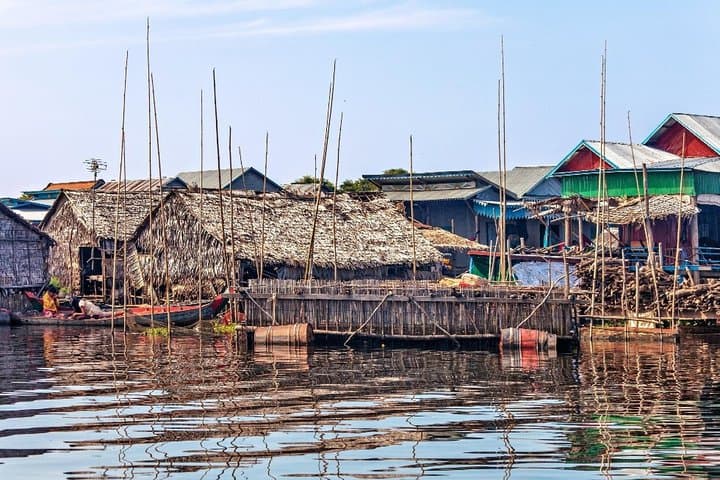
Dawn in Siem Reap arrives as a humid hush broken by the soft clatter of motorbikes and the river’s slow breath. On a private three-day route you move from the wooden rafts of Tonle Sap to stone courtyards where roots hug lintels, each day a layer peeled back from Khmer history.
Verified experiences and guided adventures in the surrounding area.
Operated by Bravo Indochina Tours · Siem Reap, Siem Reap Province
Dawn in Siem Reap arrives as a humid hush broken by the soft clatter of motorbikes and the river’s slow breath. On a private three-day route you move from the wooden rafts of Tonle Sap to stone courtyards where roots hug lintels, each day a layer peeled back from Khmer history.
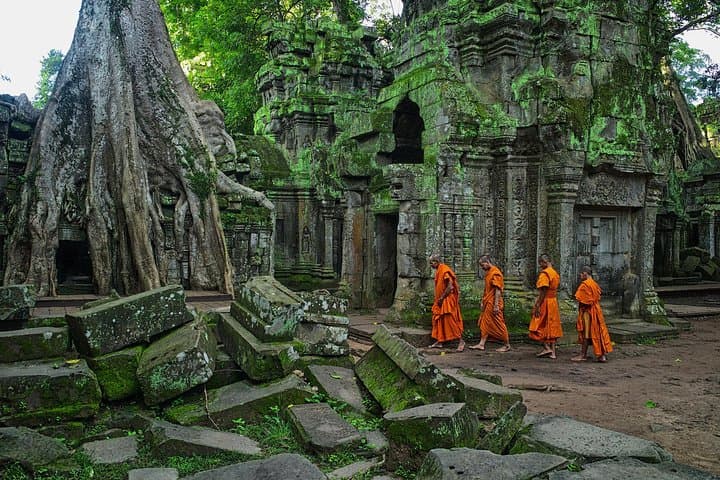
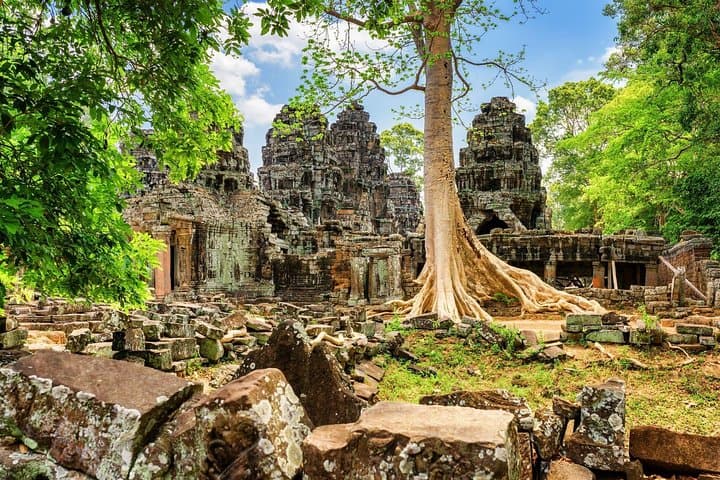
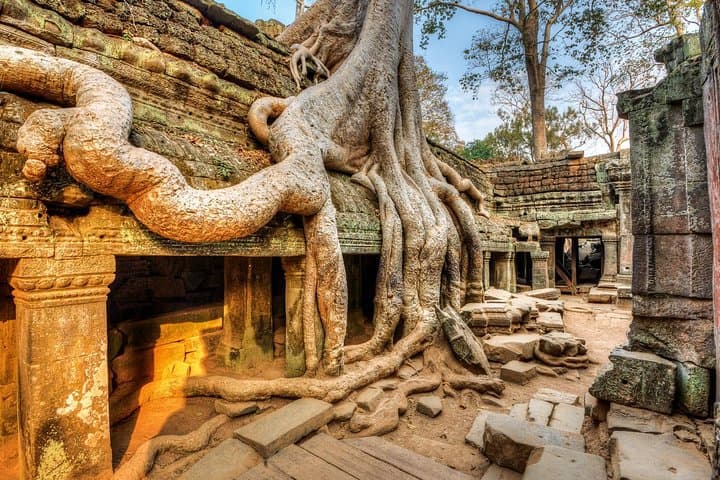
The itinerary threads well-known monuments—Angkor Wat’s bas‑reliefs, Bayon’s forest of carved heads, Ta Prohm’s kapok-rooted galleries—and a longer run east to Banteay Srei, about 45 km from town, carved in pink sandstone and celebrated for delicate sculpture. Geologically the plain sits on flat sedimentary deposits fed by the Tonle Sap and Mekong; elevation changes are minimal but the scale of artificial barays and moats defines the landscape. Culturally, the tour sketches the Khmer Empire’s 9th–12th century reach and the living lakeside communities whose livelihoods rise and fall with the seasons.
Practicalities are straightforward: private transport, English guide, two lunches and 3‑star lodging are commonly included. Expect long days on uneven stone steps and compacted dirt paths—comfortable, supportive footwear matters more than stamina. Carry water, sun protection, and small local currency for markets and tips. Respect temple rules (no touching carvings, modest dress) and time your Angkor hill sunsets or Phnom Krom for clearer skies.
This is a cultural trekking rhythm—slow mornings at floating villages, focused afternoons among ruins, and evenings tasting Mekong freshwater fish—where history is tangible and the landscape keeps nudging you forward.
easy.
3 days (approx. 6–8 hours per day).
Suitable for travelers in average health who can walk on uneven temple stones and climb short staircases.
Most private tours require you to purchase Angkor Park passes separately; confirm with the operator whether passes are arranged or if you must buy them on arrival.
Some transport and main roads are accessible but many temple areas have steps and uneven ground; accessibility varies by site—ask the operator for specific arrangements.
US dollars are widely accepted in Siem Reap alongside Cambodian riel; bring small USD notes for tipping and local purchases.
November to February offers cooler, drier conditions and clearer skies; shoulder seasons reduce crowds but expect hot afternoons almost year‑round.
The Angkor complex was the political and religious heart of the Khmer Empire from the 9th to 15th centuries; Angkor Wat itself was built in the 12th century under Suryavarman II and dedicated to Vishnu.
Visitor pressure and changes to Tonle Sap’s hydrology strain local ecosystems; support licensed guides, avoid touching carvings, and minimize plastic use to lessen impact.
Bravo Indochina Tours operates guided outdoor trips and adventures with an emphasis on safety, stewardship, and memorable experiences.
Dawn in Siem Reap arrives as a humid hush broken by the soft clatter of motorbikes and the river’s slow breath. On a private three-day route you move from the wooden rafts of Tonle Sap to stone courtyards where roots hug lintels, each day a layer peeled back from Khmer history.
Dawn in Siem Reap arrives as a humid hush broken by the soft clatter of motorbikes and the river’s slow breath. On a private three-day route you move from the wooden rafts of Tonle Sap to stone courtyards where roots hug lintels, each day a layer peeled back from Khmer history.
The itinerary threads well-known monuments—Angkor Wat’s bas‑reliefs, Bayon’s forest of carved heads, Ta Prohm’s kapok-rooted galleries—and a longer run east to Banteay Srei, about 45 km from town, carved in pink sandstone and celebrated for delicate sculpture. Geologically the plain sits on flat sedimentary deposits fed by the Tonle Sap and Mekong; elevation changes are minimal but the scale of artificial barays and moats defines the landscape. Culturally, the tour sketches the Khmer Empire’s 9th–12th century reach and the living lakeside communities whose livelihoods rise and fall with the seasons.
Practicalities are straightforward: private transport, English guide, two lunches and 3‑star lodging are commonly included. Expect long days on uneven stone steps and compacted dirt paths—comfortable, supportive footwear matters more than stamina. Carry water, sun protection, and small local currency for markets and tips. Respect temple rules (no touching carvings, modest dress) and time your Angkor hill sunsets or Phnom Krom for clearer skies.
This is a cultural trekking rhythm—slow mornings at floating villages, focused afternoons among ruins, and evenings tasting Mekong freshwater fish—where history is tangible and the landscape keeps nudging you forward.