THE ADVENTURE COLLECTIVE® · Independent discovery and booking for outdoor travel

Drift from Aswan to Luxor over three days aboard a Nile cruise that pairs on-deck ease with guided visits to Philae, Kom Ombo, Edfu, the Valley of the Kings and optional Abu Simbel. Early starts, stone steps and Egyptian sun reward travelers with intimate encounters with ancient monuments.
Drift from Aswan to Luxor over three days aboard a Nile cruise that pairs on-deck ease with guided visits to Philae, Kom Ombo, Edfu, the Valley of the Kings and optional Abu Simbel. Early starts, stone steps and Egyptian sun reward travelers with intimate encounters with ancient monuments.
You step onto the cruise's teak deck before dawn and the Nile is a glass ribbon under a pastel sky—villagers tend small gardens, a heron ghosts past, and the river pushes you downstream toward millennia of stone.
Verified experiences and guided adventures in the surrounding area.
Operated by Fly in Minute · Aswan, Aswan Governorate
You step onto the cruise's teak deck before dawn and the Nile is a glass ribbon under a pastel sky—villagers tend small gardens, a heron ghosts past, and the river pushes you downstream toward millennia of stone.
This three-day Aswan–Luxor cruise threads Egypt's New Kingdom heartland. Day one brings the island temple of Philae and the modern bulk of the Aswan High Dam; day two can include a predawn transfer to Abu Simbel—Ramesses II’s relocated rock temples—and a stop at the double temple of Kom Ombo, before sailing to Edfu; day three covers Edfu’s Horus temple, the Valley of the Kings, Hatshepsut’s mortuary temple and the vast Karnak complex near Luxor.
Geology and history are inseparable here: the Nile carved a narrow, fertile corridor through hard sandstone cliffs, and pharaohs cut tombs and temples into that stone. In the 1960s, Abu Simbel was dismantled and rebuilt to survive the Aswan High Dam’s reservoir—an engineering chapter that explains modern conservation efforts along the river.
Practically, expect short guided walks on uneven stone, many steps, and long coach transfers if you opt for Abu Simbel. The cruise provides full board, transfers by air-conditioned vehicle and an English-speaking guide; entrances to listed sites are included. Plan early starts, sun protection, lightweight layers and steady footwear. Hydrate between site visits and allow time on deck to watch the river change light—these are the moments that turn an efficient itinerary into a memorable passage through living history.
moderate.
3 days.
Suitable for travelers in average physical condition who can walk on uneven surfaces and climb stairs; minimal endurance required but expect full days and early mornings.
Abu Simbel is an optional early-morning excursion; it requires a separate long transfer and is typically offered at additional cost or may be included depending on the booking option.
The cruise includes entrance fees to listed sights and full board on the boat for the two overnight cruise nights, plus some meals during the itinerary as described.
The operator lists wheelchair accessibility for many areas and transport, but temple sites and tombs have steep steps and uneven surfaces—discuss specific needs with the provider before booking.
October through April offer milder temperatures and clearer conditions; summers can be intensely hot, especially during midday site visits.
Many temples date to the New Kingdom and Ptolemaic periods; notable modern history includes the 1960s relocation of Abu Simbel to save it from Lake Nasser.
Large dams and tourism affect the Nile's ecology; travelers are encouraged to reduce single-use plastics, respect site rules and support local conservation initiatives when available.
Fly in Minute operates guided outdoor trips and adventures with an emphasis on safety, stewardship, and memorable experiences.
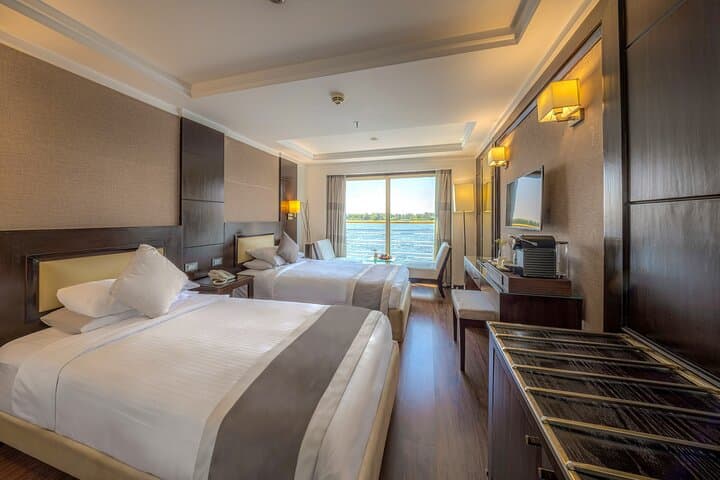
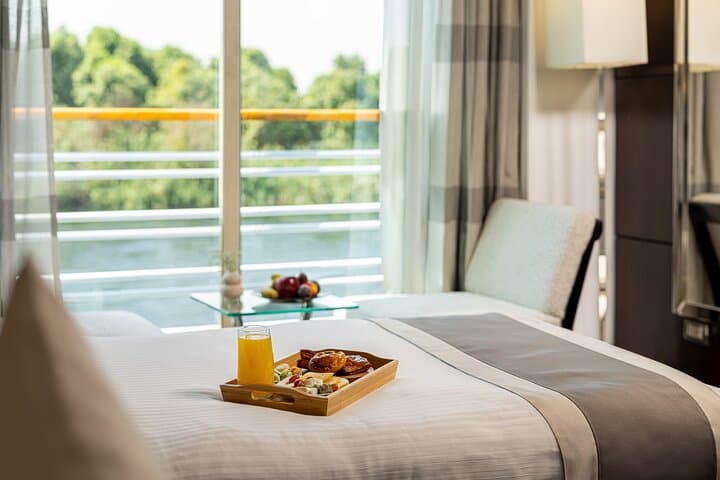
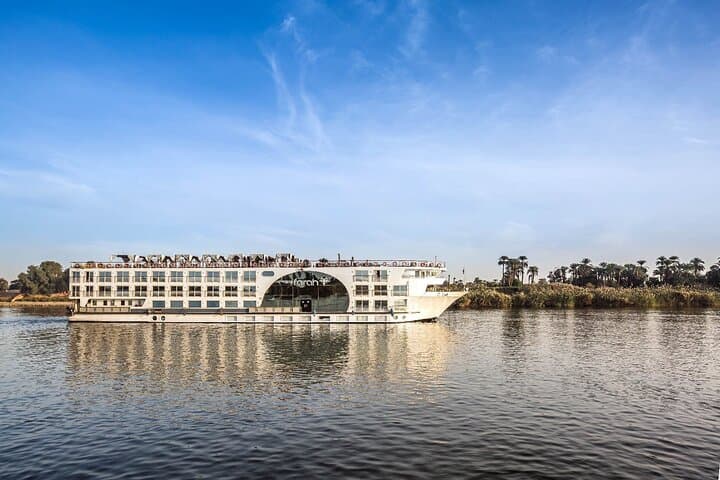
You step onto the cruise's teak deck before dawn and the Nile is a glass ribbon under a pastel sky—villagers tend small gardens, a heron ghosts past, and the river pushes you downstream toward millennia of stone.
You step onto the cruise's teak deck before dawn and the Nile is a glass ribbon under a pastel sky—villagers tend small gardens, a heron ghosts past, and the river pushes you downstream toward millennia of stone.
This three-day Aswan–Luxor cruise threads Egypt's New Kingdom heartland. Day one brings the island temple of Philae and the modern bulk of the Aswan High Dam; day two can include a predawn transfer to Abu Simbel—Ramesses II’s relocated rock temples—and a stop at the double temple of Kom Ombo, before sailing to Edfu; day three covers Edfu’s Horus temple, the Valley of the Kings, Hatshepsut’s mortuary temple and the vast Karnak complex near Luxor.
Geology and history are inseparable here: the Nile carved a narrow, fertile corridor through hard sandstone cliffs, and pharaohs cut tombs and temples into that stone. In the 1960s, Abu Simbel was dismantled and rebuilt to survive the Aswan High Dam’s reservoir—an engineering chapter that explains modern conservation efforts along the river.
Practically, expect short guided walks on uneven stone, many steps, and long coach transfers if you opt for Abu Simbel. The cruise provides full board, transfers by air-conditioned vehicle and an English-speaking guide; entrances to listed sites are included. Plan early starts, sun protection, lightweight layers and steady footwear. Hydrate between site visits and allow time on deck to watch the river change light—these are the moments that turn an efficient itinerary into a memorable passage through living history.