THE ADVENTURE COLLECTIVE® · Independent discovery and booking for outdoor travel

Cross mountain passes, explore UNESCO kasbahs and ride camels into Erg Chebbi on this three-day loop from Agadir to Marrakesh via Merzouga. Expect long drives, dramatic geology and one night in a desert bivouac under the stars.
Cross mountain passes, explore UNESCO kasbahs and ride camels into Erg Chebbi on this three-day loop from Agadir to Marrakesh via Merzouga. Expect long drives, dramatic geology and one night in a desert bivouac under the stars.
The first light on day one slices across the Anti-Atlas as your vehicle climbs out of Agadir, the coastline falling away to orange ridgelines and blue-sky distance. By afternoon you’re winding past saffron fields and the fortified red earth of Ait Ben Haddou, and the desert’s silence begins to press in: palms, kasbahs and a horizon that insists you slow down.
Verified experiences and guided adventures in the surrounding area.
Operated by Starry Morocco Tours · Merzouga, Drâa-Tafilalet
The first light on day one slices across the Anti-Atlas as your vehicle climbs out of Agadir, the coastline falling away to orange ridgelines and blue-sky distance. By afternoon you’re winding past saffron fields and the fortified red earth of Ait Ben Haddou, and the desert’s silence begins to press in: palms, kasbahs and a horizon that insists you slow down.
This circuit traces geology and human routes—the High Atlas and Anti-Atlas uplifted by tectonic collision, river-carved gorges at Todra, and the wind-sculpted Erg Chebbi dunes that mark the Sahara’s edge. Cultural highlights are tangible: UNESCO-listed kasbah architecture in Ait Ben Haddou, Berber villages perched above palm groves, and caravan-era markets in Rissani where trade routes once funneled goods south.
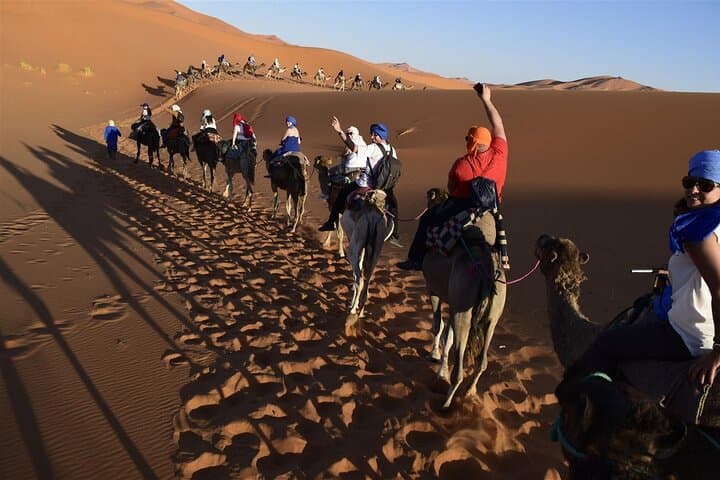
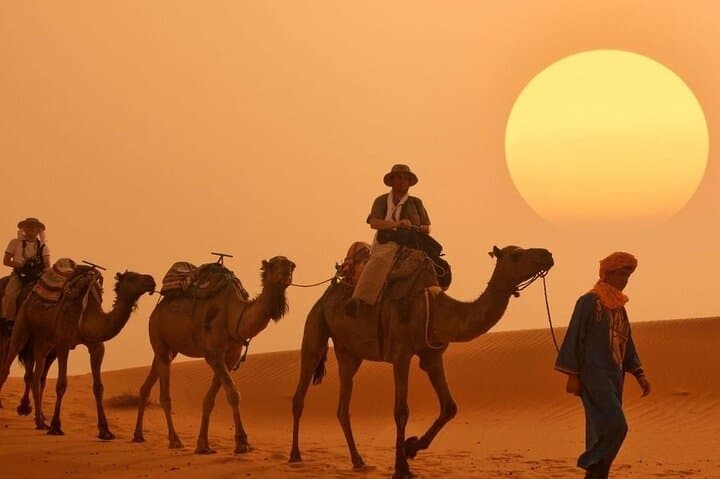
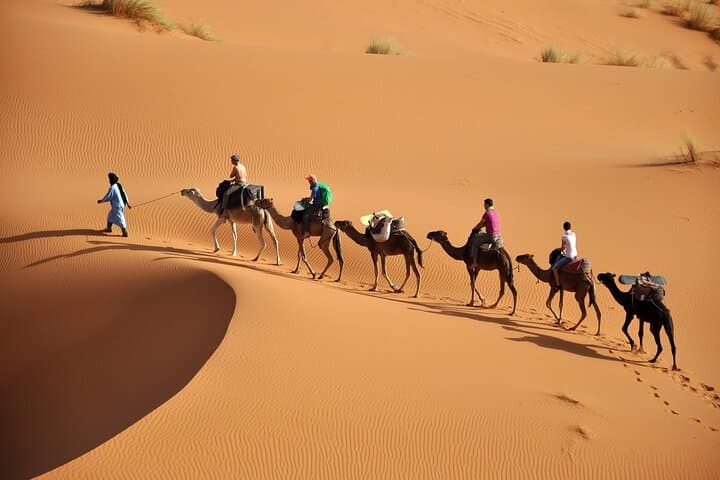
Practical travel beats throughout the trip: expect long driving days broken with targeted stops, a camel trek across soft dune crests at sunset, and one night in a luxury bivouac beneath an enormous sky. Temperatures swing sharply—hot afternoons, cool desert nights—so pack layers, sun protection and a small daypack for short walks at gorges and oasis. Hydrate before and during dune walks; let your guide set the camel rotation and route.
This is an accessible, immersive desert loop best scheduled in shoulder seasons for milder days. Bring a camera with spare batteries, carry cash for small purchases in villages, and plan for early starts to make the most of light, photo stops and cooler travel windows.
moderate.
3 days (approx. 72 hours).
Suitable for travelers in average fitness; camel riding and short walks require basic mobility and balance.
Camel rides are gentle and guided—most people manage without prior experience; dune walks can be tiring on soft sand but typically last under an hour and are optional.
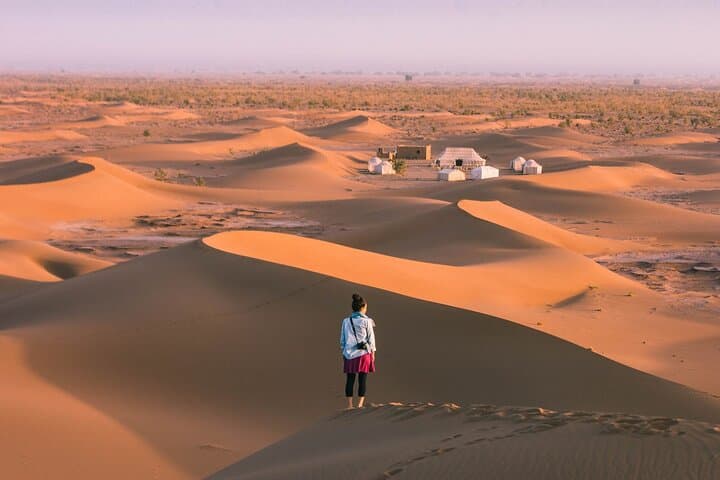
Luxury desert camps offer mattress bedding, shared or private wash facilities and dinner around a campfire, but expect simple amenities and cooler night temperatures.
Signal is intermittent in remote valleys and on the dunes; towns like Ouarzazate and Merzouga have coverage—plan accordingly for offline maps and communications.
The itinerary notes suitability for all fitness levels and provides infant seats; however, consider long vehicle transfers and nighttime temperatures when traveling with very young children.
The route follows ancient caravan corridors and features Ait Ben Haddou, a fortified ksar that controlled trade between the Sahara and Atlantic plains and later became a film location.
Stick to marked tracks around dunes and avoid disturbing fragile desert vegetation; responsible camps limit firewood use and manage waste to protect the fragile ecosystem.
Starry Morocco Tours operates guided outdoor trips and adventures with an emphasis on safety, stewardship, and memorable experiences.
The first light on day one slices across the Anti-Atlas as your vehicle climbs out of Agadir, the coastline falling away to orange ridgelines and blue-sky distance. By afternoon you’re winding past saffron fields and the fortified red earth of Ait Ben Haddou, and the desert’s silence begins to press in: palms, kasbahs and a horizon that insists you slow down.
The first light on day one slices across the Anti-Atlas as your vehicle climbs out of Agadir, the coastline falling away to orange ridgelines and blue-sky distance. By afternoon you’re winding past saffron fields and the fortified red earth of Ait Ben Haddou, and the desert’s silence begins to press in: palms, kasbahs and a horizon that insists you slow down.
This circuit traces geology and human routes—the High Atlas and Anti-Atlas uplifted by tectonic collision, river-carved gorges at Todra, and the wind-sculpted Erg Chebbi dunes that mark the Sahara’s edge. Cultural highlights are tangible: UNESCO-listed kasbah architecture in Ait Ben Haddou, Berber villages perched above palm groves, and caravan-era markets in Rissani where trade routes once funneled goods south.
Practical travel beats throughout the trip: expect long driving days broken with targeted stops, a camel trek across soft dune crests at sunset, and one night in a luxury bivouac beneath an enormous sky. Temperatures swing sharply—hot afternoons, cool desert nights—so pack layers, sun protection and a small daypack for short walks at gorges and oasis. Hydrate before and during dune walks; let your guide set the camel rotation and route.
This is an accessible, immersive desert loop best scheduled in shoulder seasons for milder days. Bring a camera with spare batteries, carry cash for small purchases in villages, and plan for early starts to make the most of light, photo stops and cooler travel windows.