THE ADVENTURE COLLECTIVE® · Independent discovery and booking for outdoor travel

Cross the High Atlas and follow caravan trails to Erg Chebbi on this three-day journey from Marrakech. Ride camels into the dunes, sleep in a Bedouin-style camp, and explore Todgha’s limestone gorges.
Cross the High Atlas and follow caravan trails to Erg Chebbi on this three-day journey from Marrakech. Ride camels into the dunes, sleep in a Bedouin-style camp, and explore Todgha’s limestone gorges.
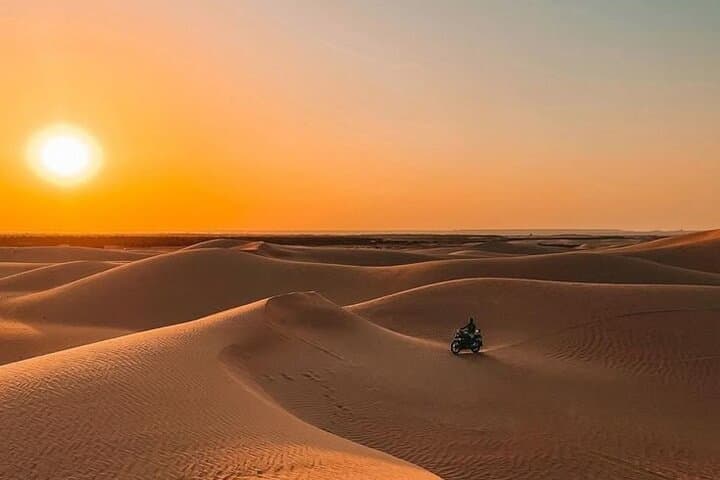
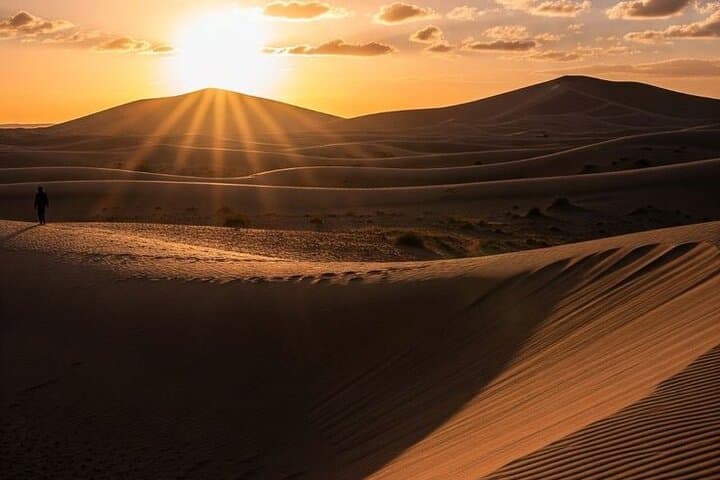
The sun leans low over giant orange dunes as your camel caravan threads a slow, salty line toward camp; the wide silence of Erg Chebbi presses and refreshes at once.
Verified experiences and guided adventures in the surrounding area.
Operated by Afro Marrakech Tours · Merzouga, Drâa-Tafilalet
The sun leans low over giant orange dunes as your camel caravan threads a slow, salty line toward camp; the wide silence of Erg Chebbi presses and refreshes at once.
This three-day loop from Marrakech crosses the High Atlas, passes Ait Ben Haddou’s timeworn kasbahs and the sculpted Dades Valley, then narrows into the Todgha Gorges’ sheer limestone walls before opening to the Sahara’s rolling sands at Merzouga. Geologically, the Erg Chebbi dunes are wind-built dunes of quartz and iron-rich sand that shift with seasonal winds, while Todgha records ancient river erosion in vertical bands.
Culturally, the route follows historic caravan corridors and contemporary Berber communities; Ait Ben Haddou’s UNESCO mudbrick fortress points to centuries of trade and film fame, while desert camps keep nomadic music and drumming alive after dark.
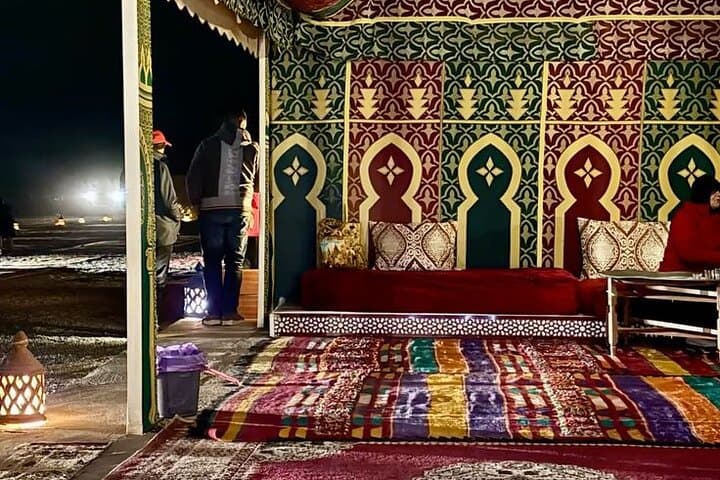
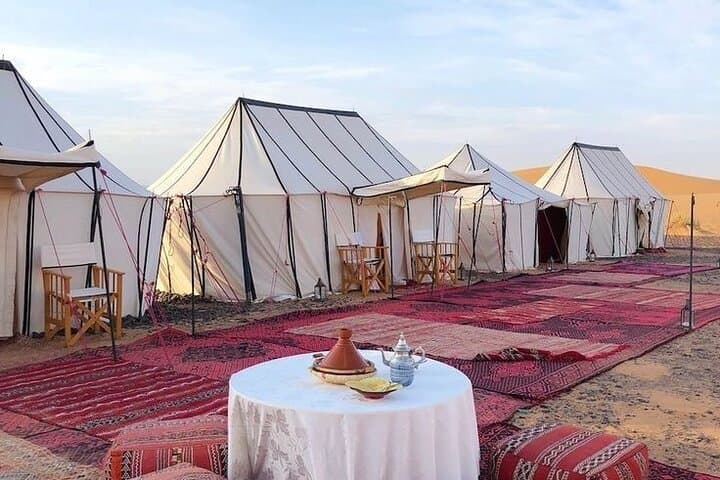
Practically, expect long, scenic drives with stops for photography and meals, a short canyon walk in Todgha, and a saddle-time camel trek at sunset to reach a traditional tented camp where dinners and drum performances are standard. Nights can be cold in desert months—thermal layers help—and camps range from basic shared tents to optional deluxe private tents with ensuite facilities.
Bring a small daypack for water, sun protection, and a headlamp for camp. Plan your camera and sunrise alarm: desert light changes fast. Respect local dress norms in villages and follow guides’ instructions on camel mounting and dune routes to minimize erosion and wildlife disturbance.
This is an accessible but immersive taste of southern Morocco—part landscape education, part slow-motion adventure under open sky.
easy.
3 days.
Suitable for travelers with basic fitness; involves short canyon walks, climbing dunes, and several long vehicle transfers.
Camel treks to camp usually last 1–2 hours at a walking pace; guides handle mounting and will pair you with experienced camels—no riding skill required.
Standard desert camps offer shared traditional tents, communal dining, and basic washrooms; deluxe upgrades with private ensuite facilities are available at extra cost.
Yes—transport is private and accessible, and physical demands are low, but consider dune walking and camel comfort; infants generally ride in arms on camels and vehicles provide infant seats on request.
Most operators can handle common dietary needs with advance notice—specify restrictions at booking so kitchens can prepare appropriate meals.
The route traces ancient trans-Saharan caravan corridors and Berber settlements; Ait Ben Haddou’s kasbah reflects centuries of mudbrick architecture and film-era fame.
The Sahara’s dune systems and oasis habitats are fragile—stick to established tracks, avoid off-route driving, and minimize water use in camps.
Afro Marrakech Tours operates guided outdoor trips and adventures with an emphasis on safety, stewardship, and memorable experiences.
The sun leans low over giant orange dunes as your camel caravan threads a slow, salty line toward camp; the wide silence of Erg Chebbi presses and refreshes at once.
The sun leans low over giant orange dunes as your camel caravan threads a slow, salty line toward camp; the wide silence of Erg Chebbi presses and refreshes at once.
This three-day loop from Marrakech crosses the High Atlas, passes Ait Ben Haddou’s timeworn kasbahs and the sculpted Dades Valley, then narrows into the Todgha Gorges’ sheer limestone walls before opening to the Sahara’s rolling sands at Merzouga. Geologically, the Erg Chebbi dunes are wind-built dunes of quartz and iron-rich sand that shift with seasonal winds, while Todgha records ancient river erosion in vertical bands.
Culturally, the route follows historic caravan corridors and contemporary Berber communities; Ait Ben Haddou’s UNESCO mudbrick fortress points to centuries of trade and film fame, while desert camps keep nomadic music and drumming alive after dark.
Practically, expect long, scenic drives with stops for photography and meals, a short canyon walk in Todgha, and a saddle-time camel trek at sunset to reach a traditional tented camp where dinners and drum performances are standard. Nights can be cold in desert months—thermal layers help—and camps range from basic shared tents to optional deluxe private tents with ensuite facilities.
Bring a small daypack for water, sun protection, and a headlamp for camp. Plan your camera and sunrise alarm: desert light changes fast. Respect local dress norms in villages and follow guides’ instructions on camel mounting and dune routes to minimize erosion and wildlife disturbance.
This is an accessible but immersive taste of southern Morocco—part landscape education, part slow-motion adventure under open sky.