THE ADVENTURE COLLECTIVE® · Independent discovery and booking for outdoor travel

Cross the High Atlas, visit Ait Ben Haddou, then ride camels into Erg Chebbi for a night under a star-filled Sahara sky. This three-day loop balances driving stretches with sunrise dune walks, Berber camps, and fossil-rich desert roads.
Cross the High Atlas, visit Ait Ben Haddou, then ride camels into Erg Chebbi for a night under a star-filled Sahara sky. This three-day loop balances driving stretches with sunrise dune walks, Berber camps, and fossil-rich desert roads.
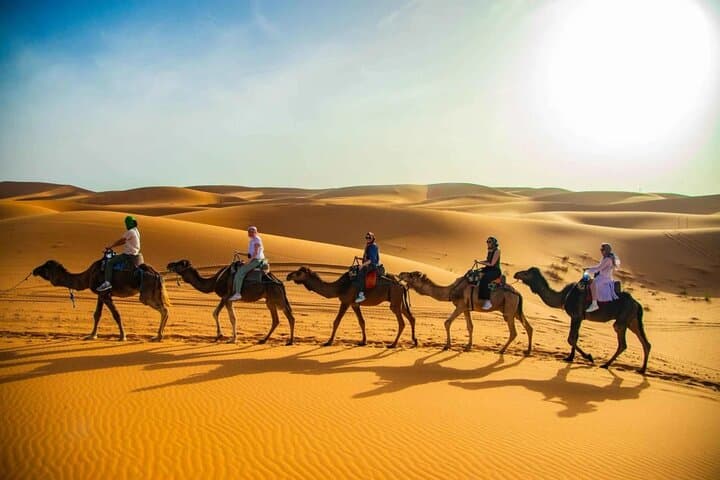
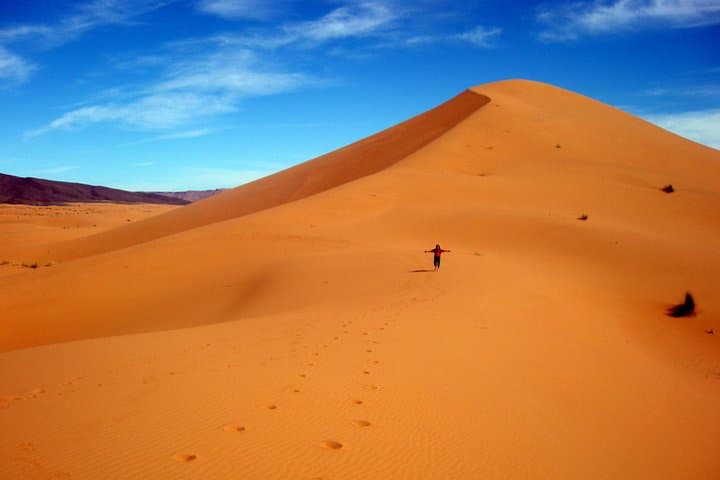
Dawn breaks cold and sharp over Erg Chebbi; the dunes first hold their blue shadows, then tip into gold as sunlight slides down the wind-sculpted faces. On a three-day loop from Marrakech you cross the Tichka Pass, thread through fortified ksars and palm oases, and arrive where the sand seems to breathe — Merzouga’s sweeping dunes. Camels step sure-footed along the flanks of the big dunes, and at night Berber drums invite you out beneath a sky thick with stars.
Verified experiences and guided adventures in the surrounding area.
Operated by red city travel · Merzouga, Drâa-Tafilalet
Dawn breaks cold and sharp over Erg Chebbi; the dunes first hold their blue shadows, then tip into gold as sunlight slides down the wind-sculpted faces. On a three-day loop from Marrakech you cross the Tichka Pass, thread through fortified ksars and palm oases, and arrive where the sand seems to breathe — Merzouga’s sweeping dunes. Camels step sure-footed along the flanks of the big dunes, and at night Berber drums invite you out beneath a sky thick with stars.
This route traces centuries-old caravan corridors that linked the Sahara to the High Atlas and the Atlantic trade routes. Geologically, Erg Chebbi is a mobile sand sea fed by winds off the Sahel, sitting beside fossil-rich plateaus like Erfoud. Culturally, the trip is anchored in Amazigh (Berber) hospitality: shared tagine, Gnawa rhythms, and tented bivouacs run by local families.
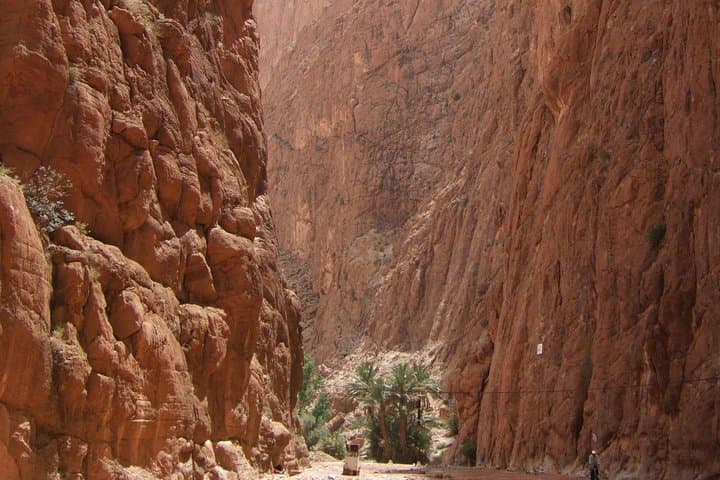
Plan for long drives between highlights — Ait Ben Haddou (UNESCO) and the Todra and Dades gorges — and for walking short dune ridges at sunrise and sunset. Bring layered clothing: daytime desert heat flips to near-freezing pre-dawn. Hydrate deliberately; sand and sun accelerate fatigue. Wear closed shoes for dunes and a light scarf to keep sand from the face during gusts. Respect camp rules: avoid climbing fragile dune crests and keep noise low after midnight to preserve the nocturnal calm. Book with operators that use established tracks to limit erosion, and consider a local guide to deepen cultural exchanges. This is a simple itinerary by design — three days of long horizons, tactile sand, and the steady rhythm of camel steps under an enormous sky.
moderate.
3 days.
Moderate fitness—able to handle several short dune walks, 1–2 hours on a camel and long vehicle transfers.
Camel rides are low-impact but require balance; rides here are typically 45–60 minutes between vehicles and camp with frequent breaks.
Bivouacs vary; most offer mattresses, blankets and basic toilets — bring a sleeping liner and your own toiletries for comfort.
Most operators can adapt meals if informed at booking; use the special requirements field to note allergies or preferences.
Spring (Mar–May) and fall (Sep–Nov) offer the most comfortable daytime temperatures and stable weather; winter nights are cold but clear.
The route follows traditional trans-Saharan caravan arteries; Ait Ben Haddou and nearby ksars served as fortified stops on trade routes between Marrakech and the Sahara.
Erg systems are fragile — stick to tracks, pack out waste, and choose guides who limit vehicle crossings to prevent dune destabilization.
red city travel operates guided outdoor trips and adventures with an emphasis on safety, stewardship, and memorable experiences.
Dawn breaks cold and sharp over Erg Chebbi; the dunes first hold their blue shadows, then tip into gold as sunlight slides down the wind-sculpted faces. On a three-day loop from Marrakech you cross the Tichka Pass, thread through fortified ksars and palm oases, and arrive where the sand seems to breathe — Merzouga’s sweeping dunes. Camels step sure-footed along the flanks of the big dunes, and at night Berber drums invite you out beneath a sky thick with stars.
Dawn breaks cold and sharp over Erg Chebbi; the dunes first hold their blue shadows, then tip into gold as sunlight slides down the wind-sculpted faces. On a three-day loop from Marrakech you cross the Tichka Pass, thread through fortified ksars and palm oases, and arrive where the sand seems to breathe — Merzouga’s sweeping dunes. Camels step sure-footed along the flanks of the big dunes, and at night Berber drums invite you out beneath a sky thick with stars.
This route traces centuries-old caravan corridors that linked the Sahara to the High Atlas and the Atlantic trade routes. Geologically, Erg Chebbi is a mobile sand sea fed by winds off the Sahel, sitting beside fossil-rich plateaus like Erfoud. Culturally, the trip is anchored in Amazigh (Berber) hospitality: shared tagine, Gnawa rhythms, and tented bivouacs run by local families.
Plan for long drives between highlights — Ait Ben Haddou (UNESCO) and the Todra and Dades gorges — and for walking short dune ridges at sunrise and sunset. Bring layered clothing: daytime desert heat flips to near-freezing pre-dawn. Hydrate deliberately; sand and sun accelerate fatigue. Wear closed shoes for dunes and a light scarf to keep sand from the face during gusts. Respect camp rules: avoid climbing fragile dune crests and keep noise low after midnight to preserve the nocturnal calm. Book with operators that use established tracks to limit erosion, and consider a local guide to deepen cultural exchanges. This is a simple itinerary by design — three days of long horizons, tactile sand, and the steady rhythm of camel steps under an enormous sky.