THE ADVENTURE COLLECTIVE® · Independent discovery and booking for outdoor travel

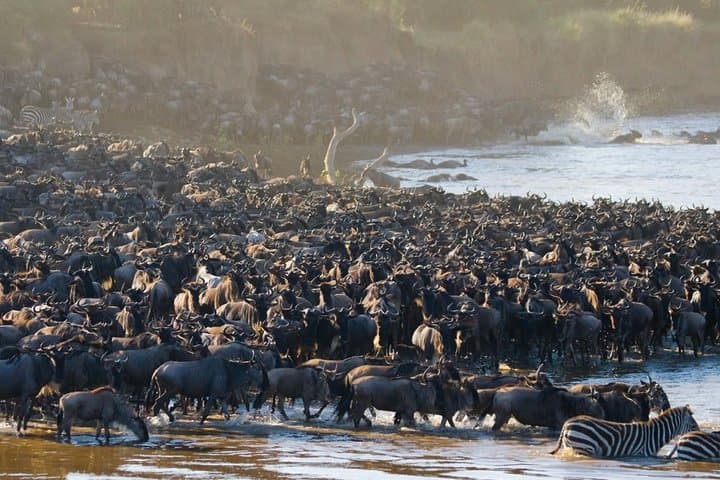
Spend three days crossing the iconic Masai Mara plains in search of the Big Five and seasonal river crossings. This practical guide outlines what to expect on a multi-day safari, from game-drive rhythm to gear and local insights.
Spend three days crossing the iconic Masai Mara plains in search of the Big Five and seasonal river crossings. This practical guide outlines what to expect on a multi-day safari, from game-drive rhythm to gear and local insights.
Early light pours across an endless savanna as your vehicle crests a ridge and the Mara opens—gold grass swaying, acacia silhouettes punctuating the horizon, and a distant lion pausing as if to signpost the route ahead.
Verified experiences and guided adventures in the surrounding area.
Operated by Tour Operator Kenya · Narok, Narok County
Early light pours across an endless savanna as your vehicle crests a ridge and the Mara opens—gold grass swaying, acacia silhouettes punctuating the horizon, and a distant lion pausing as if to signpost the route ahead.
The Masai Mara sits on the southwestern edge of Kenya’s Rift Valley, a landscape shaped by tectonic uplift and seasonal rivers that carve channels through plains frequented by grazers. Human history here is lived: Maasai communities maintain grazing traditions alongside wildlife economies, and the reserve’s name recalls a Maasai word for spotted or patterned land.
Geology gives the Mara its broad floodplains and kopjes—rock islands that leopards and vigilant mongooses use as lookout posts. Culturally, guided drives offer a window into both animal behavior and Maasai-day-to-day life when visits include local bomas or markets.
Practical guidance: drives are timed for early morning and late afternoon when predators are most active; midday is for rest or lodge meals. Expect dusty roads, bumpy game tracks, and long transfer times if coming from Nairobi (about 5–6 hours by road). Bring layered clothing for chilly mornings, sun protection for noon, and a good telephoto lens for wildlife shots.
Logistics: camps provide meals and basic amenities; check whether park fees and transport are included. Respect wildlife distances, follow your guide’s instructions, and limit noise—animals react quickly. With preparation you’ll trade a checklist for moments when the plains demand your full attention.
moderate.
3 days.
Low to moderate fitness—able to tolerate long vehicle transfers, short walks at camp, and uneven terrain
Confirm with the operator—many packages include entrance fees, but some list them separately; check the booking details.
Expect approximately 5–6 hours by road depending on traffic and stops; air transfers are faster if available.
The migration timing varies; July–October is prime for Mara river crossings, but sightings are seasonal and never guaranteed.
This trip uses camp accommodation—amenities range from basic tented camps to more comfortable lodges; verify the listed camp standard before booking.
The Mara’s conservation history involves community land use and the establishment of the reserve in the 1960s to protect wildlife and grazing lands adjacent to the Serengeti.
Support operators who contribute to community programs and anti-poaching efforts; stay on designated tracks to minimize habitat disturbance.
Tour Operator Kenya operates guided outdoor trips and adventures with an emphasis on safety, stewardship, and memorable experiences.


Early light pours across an endless savanna as your vehicle crests a ridge and the Mara opens—gold grass swaying, acacia silhouettes punctuating the horizon, and a distant lion pausing as if to signpost the route ahead.
Early light pours across an endless savanna as your vehicle crests a ridge and the Mara opens—gold grass swaying, acacia silhouettes punctuating the horizon, and a distant lion pausing as if to signpost the route ahead.
The Masai Mara sits on the southwestern edge of Kenya’s Rift Valley, a landscape shaped by tectonic uplift and seasonal rivers that carve channels through plains frequented by grazers. Human history here is lived: Maasai communities maintain grazing traditions alongside wildlife economies, and the reserve’s name recalls a Maasai word for spotted or patterned land.
Geology gives the Mara its broad floodplains and kopjes—rock islands that leopards and vigilant mongooses use as lookout posts. Culturally, guided drives offer a window into both animal behavior and Maasai-day-to-day life when visits include local bomas or markets.
Practical guidance: drives are timed for early morning and late afternoon when predators are most active; midday is for rest or lodge meals. Expect dusty roads, bumpy game tracks, and long transfer times if coming from Nairobi (about 5–6 hours by road). Bring layered clothing for chilly mornings, sun protection for noon, and a good telephoto lens for wildlife shots.
Logistics: camps provide meals and basic amenities; check whether park fees and transport are included. Respect wildlife distances, follow your guide’s instructions, and limit noise—animals react quickly. With preparation you’ll trade a checklist for moments when the plains demand your full attention.