THE ADVENTURE COLLECTIVE® · Independent discovery and booking for outdoor travel

Traverse the High Atlas to the sweeping Erg Chebbi dunes on a three-day journey from Marrakech to Merzouga. Ride camels, sleep in a luxury nomad camp, and watch desert sunrises framed by rippled sand.
Traverse the High Atlas to the sweeping Erg Chebbi dunes on a three-day journey from Marrakech to Merzouga. Ride camels, sleep in a luxury nomad camp, and watch desert sunrises framed by rippled sand.
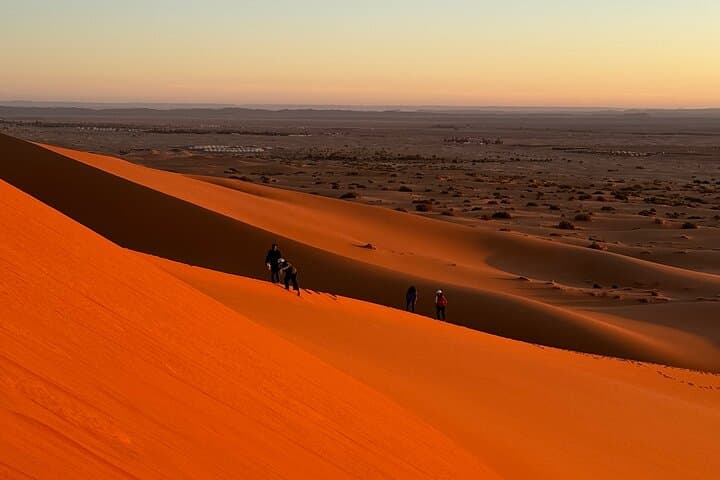
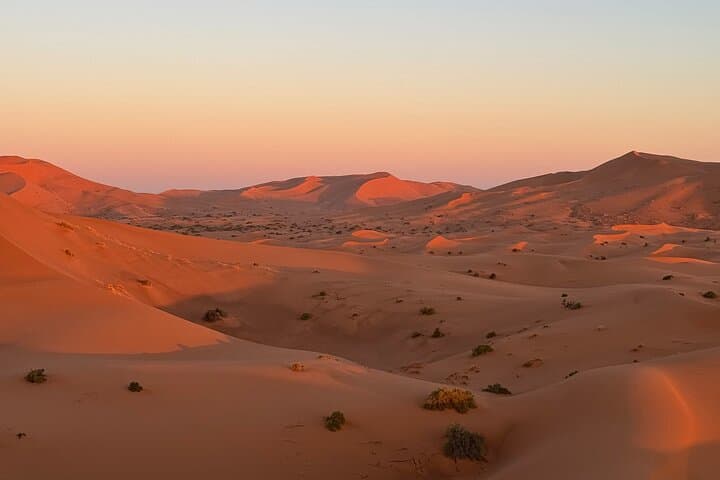
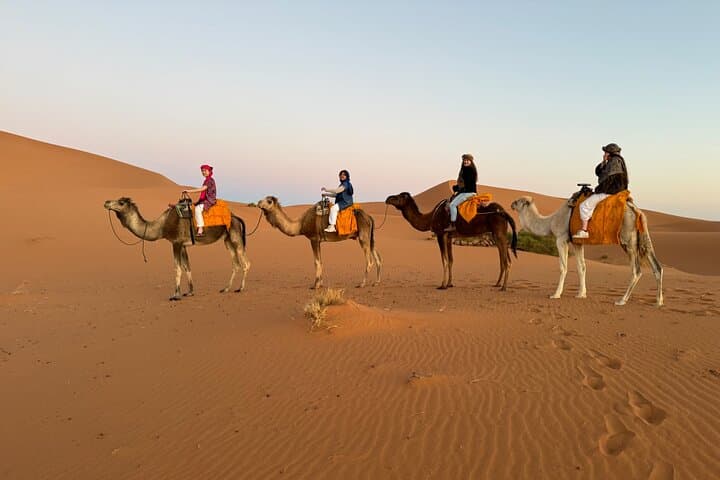
You leave Marrakech before dawn, the city’s ochre walls shrinking behind you as the road climbs into the High Atlas. Mountains push the horizon into jagged ribs; the air thins and the landscape shifts from olive groves to wind-sculpted plateaus. By evening, the dunes of Erg Chebbi rise like a moving ocean, and you trade asphalt for soft sand and the slow rhythm of a camel’s gait.
Verified experiences and guided adventures in the surrounding area.
Operated by Rachid · Merzouga, Drâa-Tafilalet
You leave Marrakech before dawn, the city’s ochre walls shrinking behind you as the road climbs into the High Atlas. Mountains push the horizon into jagged ribs; the air thins and the landscape shifts from olive groves to wind-sculpted plateaus. By evening, the dunes of Erg Chebbi rise like a moving ocean, and you trade asphalt for soft sand and the slow rhythm of a camel’s gait.
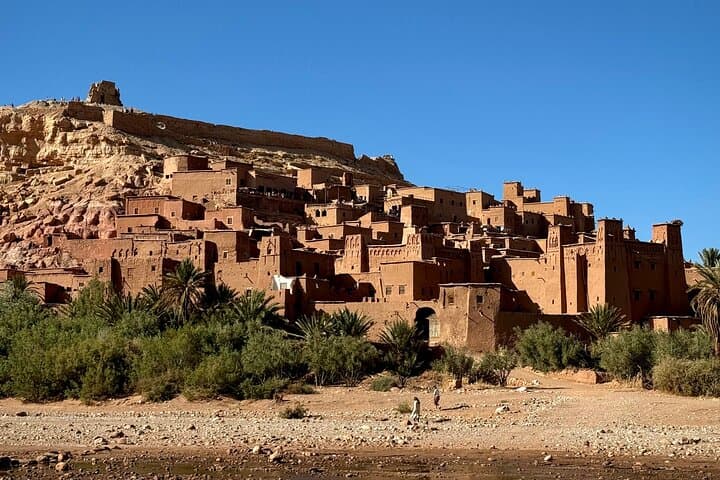
This route threads centuries of trade and film history—Aït Ben Haddou’s earthen kasbahs stand on an ancient caravan line and doubled for Hollywood epics—while Todra Gorge cuts limestone canyons carved by intermittent rivers. Berber culture remains visible in villages and music at the desert camp, where stars take over the sky in a way cities can’t pretend to know.
Expect geology in motion: red-brown Atlas ranges give way to alluvial plains and then to wind-sorted sands; fossils around Erfoud hint at a tropical past. Local guides combine storytelling with practicalities—camel handling, sandboard basics, and dune-route awareness.
Practical guidance: pack sun protection and layered clothing—the desert swings hot days to cold nights; bring closed shoes for walking the stony approaches and lighter footwear for dunes. Hydrate proactively on long drives and carry cash for small purchases in villages. Overnighting in a luxury tent means basic comforts like mattresses and meals are provided, but facilities are rustic compared with city hotels.
Timing: sunrise and sunset on the dunes are the goals; photography and short hikes are best then when the light shapes the sand. Travel times between stops can be long—treat the journey as part of the adventure, not just transit.
moderate.
3 days.
Suitable for travelers in light to moderate fitness—comfortable with walking on sand and long vehicle transfers.
The standard camel trek provided is about 1 hour to reach the camp and sunset viewpoints; longer rides can often be arranged locally.
Luxury nomad camps typically offer proper mattresses, blankets, and private tents with basic facilities, but showers and electricity can be limited or scheduled.
The tour is marketed as suitable for most fitness levels, but camel mounting and dune walking can be difficult for people with limited mobility—discuss accessibility needs with the operator ahead of booking.
Local currency is the Moroccan dirham (MAD); Arabic and Tamazight (Berber) are common, with French widely spoken in tourist areas.
The route follows parts of ancient trans-Saharan caravan corridors and passes ksars and kasbahs used historically for trade and film production.
Dune ecosystems are sensitive to vehicle traffic and camp siting; stick to established routes, avoid trampling vegetation, and support camps that manage waste responsibly.
Rachid operates guided outdoor trips and adventures with an emphasis on safety, stewardship, and memorable experiences.
You leave Marrakech before dawn, the city’s ochre walls shrinking behind you as the road climbs into the High Atlas. Mountains push the horizon into jagged ribs; the air thins and the landscape shifts from olive groves to wind-sculpted plateaus. By evening, the dunes of Erg Chebbi rise like a moving ocean, and you trade asphalt for soft sand and the slow rhythm of a camel’s gait.
You leave Marrakech before dawn, the city’s ochre walls shrinking behind you as the road climbs into the High Atlas. Mountains push the horizon into jagged ribs; the air thins and the landscape shifts from olive groves to wind-sculpted plateaus. By evening, the dunes of Erg Chebbi rise like a moving ocean, and you trade asphalt for soft sand and the slow rhythm of a camel’s gait.
This route threads centuries of trade and film history—Aït Ben Haddou’s earthen kasbahs stand on an ancient caravan line and doubled for Hollywood epics—while Todra Gorge cuts limestone canyons carved by intermittent rivers. Berber culture remains visible in villages and music at the desert camp, where stars take over the sky in a way cities can’t pretend to know.
Expect geology in motion: red-brown Atlas ranges give way to alluvial plains and then to wind-sorted sands; fossils around Erfoud hint at a tropical past. Local guides combine storytelling with practicalities—camel handling, sandboard basics, and dune-route awareness.
Practical guidance: pack sun protection and layered clothing—the desert swings hot days to cold nights; bring closed shoes for walking the stony approaches and lighter footwear for dunes. Hydrate proactively on long drives and carry cash for small purchases in villages. Overnighting in a luxury tent means basic comforts like mattresses and meals are provided, but facilities are rustic compared with city hotels.
Timing: sunrise and sunset on the dunes are the goals; photography and short hikes are best then when the light shapes the sand. Travel times between stops can be long—treat the journey as part of the adventure, not just transit.