THE ADVENTURE COLLECTIVE® · Independent discovery and booking for outdoor travel

Cross the High Atlas, explore Aït Benhaddou and Todra Gorge, then ride camels into the orange waves of Erg Chebbi for a night in a Berber desert camp. This three-day loop pairs roadscapes, geology and living culture with practical tips for timing, gear and weather.
Cross the High Atlas, explore Aït Benhaddou and Todra Gorge, then ride camels into the orange waves of Erg Chebbi for a night in a Berber desert camp. This three-day loop pairs roadscapes, geology and living culture with practical tips for timing, gear and weather.
The minivan eases up and over the Tizi n’Tichka pass, leaving Marrakech’s ochre walls behind as the High Atlas folds into wide, sun-baked plains. By midafternoon the mud-brick towers of Aït Benhaddou rise from the valley like an old trading post frozen in time; later, the road tightens and the Todra Gorge opens—a sheer orange cleft where wind and water still argue with the rock.
Verified experiences and guided adventures in the surrounding area.
Operated by Palacio da Bahia · Merzouga, Drâa-Tafilalet
The minivan eases up and over the Tizi n’Tichka pass, leaving Marrakech’s ochre walls behind as the High Atlas folds into wide, sun-baked plains. By midafternoon the mud-brick towers of Aït Benhaddou rise from the valley like an old trading post frozen in time; later, the road tightens and the Todra Gorge opens—a sheer orange cleft where wind and water still argue with the rock.
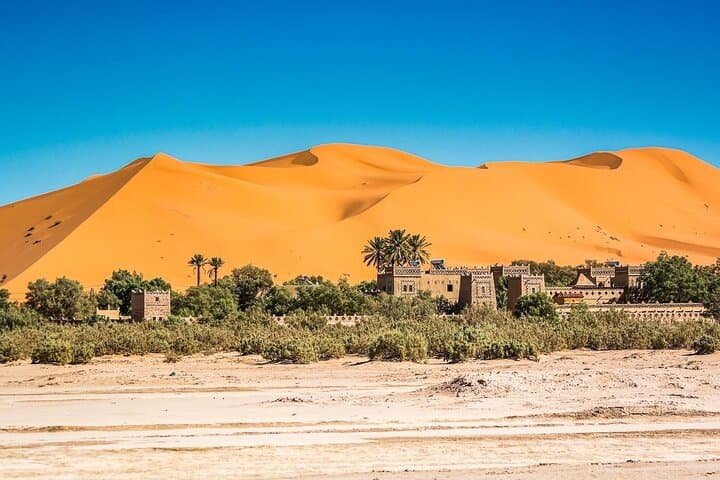
This three-day route stitches together Morocco’s layered history: ancient caravan tracks, the kasbahs that once sheltered traders, and the palm oases that mark scarce water. Geologically the trip moves from folded metamorphic ranges to limestone canyons and finally to the wind-swept granules of Erg Chebbi—dunes that the wind sculpts daily, daring you to climb their western faces at sunset. Culture along the way is rooted in Berber life: Rissani’s market stalls, nomad music at the desert camp, and villages where traditional agriculture persists.
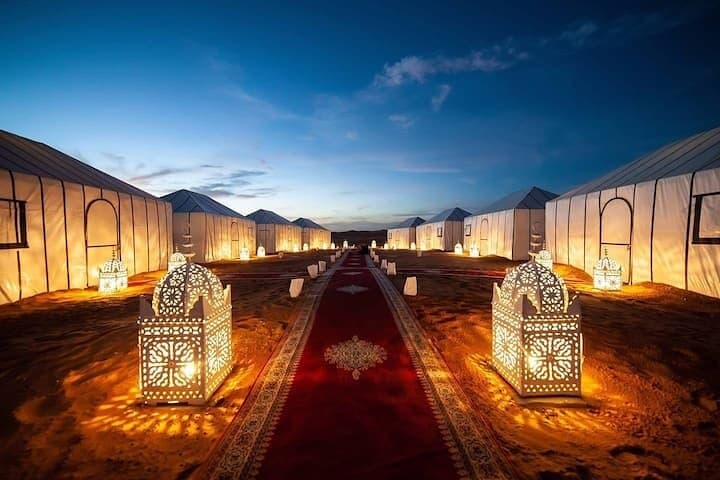
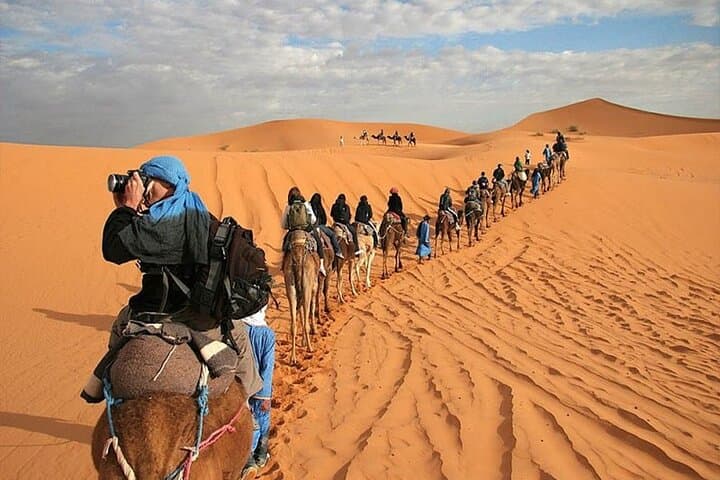
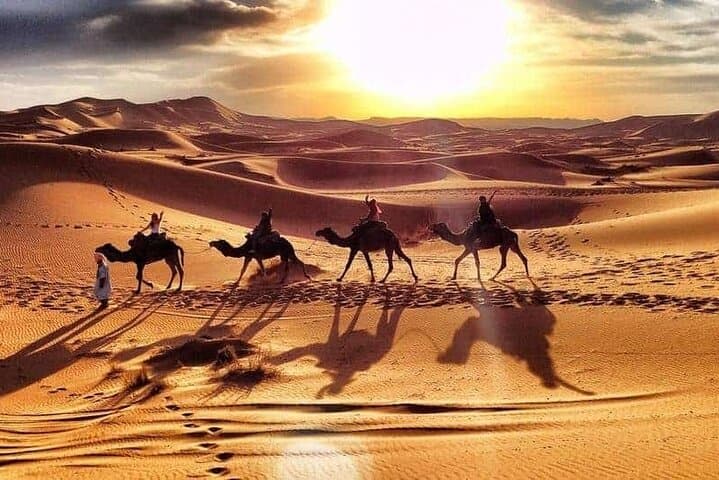
Practically, expect long drives broken by short hikes, a late-afternoon camel ride into the dunes, and one night under canvas in a desert camp with local food provided. Temperatures swing dramatically—hot days, cold nights—so layer and plan for strong sun and sand. Bring cash for small purchases, aim for sunrise or sunset for photography, and allow time to walk the kasbahs rather than rush through. The pace is deliberate: the road moves you from mountain to sand, and the desert rewards anyone willing to slow down and listen.
moderate.
72 hours (3 days).
Suitable for travelers in reasonable health; involves long drives, short walks, and a camel ride—no steep technical hiking required.
Expect several hours on the road daily—day one and three involve long scenic drives across the Atlas, while day two includes shorter transfers and the camel approach into the dunes.
No special skill is required; the camel ride is paced for most travelers, though mounting can be awkward and a steady balance helps.
Camps are typically simple Berber-style tents with shared facilities; some provide basic mattresses and blankets but nights are cold so bring warm layers.
The itinerary includes two breakfasts and two dinners (one at the camp); lunches and some meals in towns are usually at your own expense.
Aït Benhaddou developed as a fortified caravan stop on trans-Saharan trade routes; the Todra Gorge marks an old river incision into limestone uplifted by Atlas tectonics.
The Sahara’s ecosystems are fragile—stay on established tracks, avoid disturbing vegetation or wildlife, and pack out all trash to reduce impacts on scarce water resources.
Palacio da Bahia operates guided outdoor trips and adventures with an emphasis on safety, stewardship, and memorable experiences.
The minivan eases up and over the Tizi n’Tichka pass, leaving Marrakech’s ochre walls behind as the High Atlas folds into wide, sun-baked plains. By midafternoon the mud-brick towers of Aït Benhaddou rise from the valley like an old trading post frozen in time; later, the road tightens and the Todra Gorge opens—a sheer orange cleft where wind and water still argue with the rock.
The minivan eases up and over the Tizi n’Tichka pass, leaving Marrakech’s ochre walls behind as the High Atlas folds into wide, sun-baked plains. By midafternoon the mud-brick towers of Aït Benhaddou rise from the valley like an old trading post frozen in time; later, the road tightens and the Todra Gorge opens—a sheer orange cleft where wind and water still argue with the rock.
This three-day route stitches together Morocco’s layered history: ancient caravan tracks, the kasbahs that once sheltered traders, and the palm oases that mark scarce water. Geologically the trip moves from folded metamorphic ranges to limestone canyons and finally to the wind-swept granules of Erg Chebbi—dunes that the wind sculpts daily, daring you to climb their western faces at sunset. Culture along the way is rooted in Berber life: Rissani’s market stalls, nomad music at the desert camp, and villages where traditional agriculture persists.
Practically, expect long drives broken by short hikes, a late-afternoon camel ride into the dunes, and one night under canvas in a desert camp with local food provided. Temperatures swing dramatically—hot days, cold nights—so layer and plan for strong sun and sand. Bring cash for small purchases, aim for sunrise or sunset for photography, and allow time to walk the kasbahs rather than rush through. The pace is deliberate: the road moves you from mountain to sand, and the desert rewards anyone willing to slow down and listen.