THE ADVENTURE COLLECTIVE® · Independent discovery and booking for outdoor travel

Drive the High Atlas, tour the UNESCO ksar of Ait Ben Haddou, walk Todgha Gorge and sleep under stars at an Erg Chebbi camp. This private 3-day route pairs cinema-set kasbahs with long desert horizons and short guided walks.
Drive the High Atlas, tour the UNESCO ksar of Ait Ben Haddou, walk Todgha Gorge and sleep under stars at an Erg Chebbi camp. This private 3-day route pairs cinema-set kasbahs with long desert horizons and short guided walks.
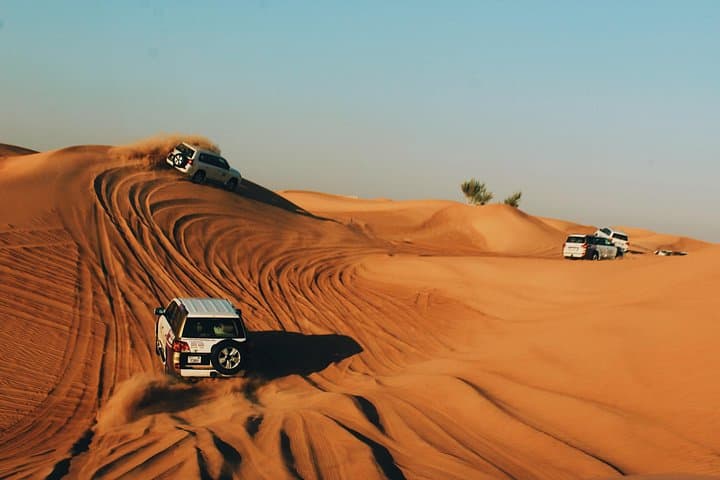
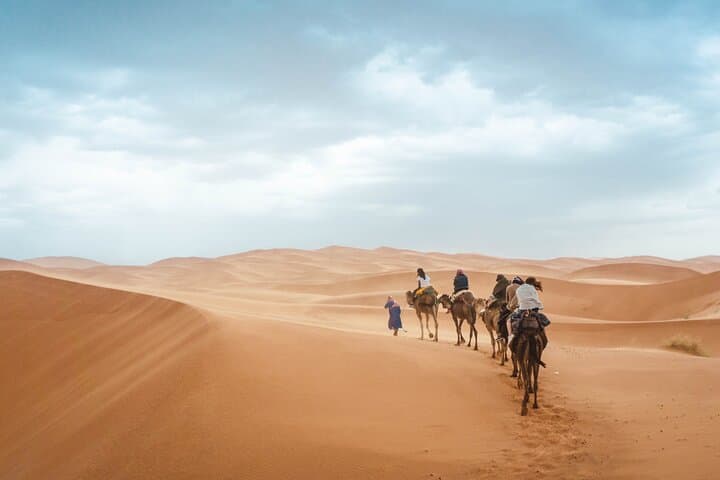
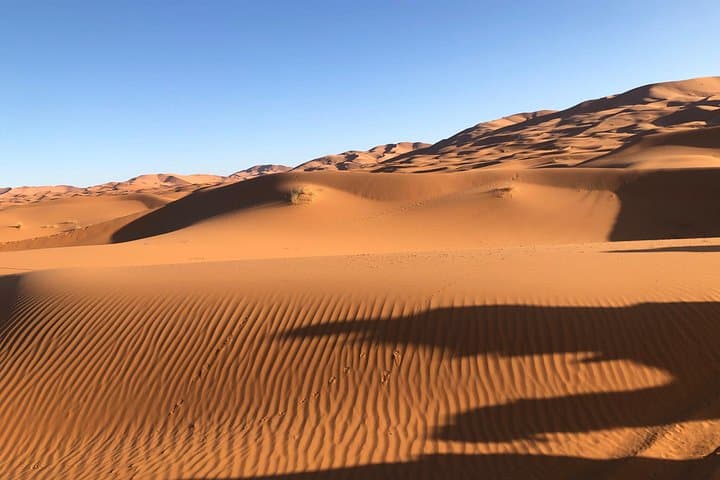
Dawn pulls light across a sea of sand and the first camel silhouettes move like punctuation marks across the Erg Chebbi ridgeline. You arrive by air-conditioned 4x4 after the High Atlas compresses and releases the landscape—sharp passes, ochre kasbahs and, finally, the soft, rippling tall dunes of Merzouga where the desert stretches toward the Algerian border.
Verified experiences and guided adventures in the surrounding area.
Operated by Master Desert Tours · Merzouga, Drâa-Tafilalet
Dawn pulls light across a sea of sand and the first camel silhouettes move like punctuation marks across the Erg Chebbi ridgeline. You arrive by air-conditioned 4x4 after the High Atlas compresses and releases the landscape—sharp passes, ochre kasbahs and, finally, the soft, rippling tall dunes of Merzouga where the desert stretches toward the Algerian border.
This route threads history and geology: the Tizi n’Tichka pass climbs above 2,200 m to cross the High Atlas; Ait Ben Haddou, a UNESCO ksar, preserves mud-brick architecture used in major films; the Todgha Gorge cuts a narrow limestone corridor with sheer walls that speak to millennia of tectonic uplift and river erosion. Local culture is Berber and Saharan—oasis agriculture, camel caravans and camp music around a fire are living practices, and old khettara water tunnels hint at historical water management here.
Practically, expect long drives (Marrakech–Merzouga is roughly 9–10 hours by road with stops), short guided walks (Ait Ben Haddou, Todgha Gorge), a 2-hour camel ride to an overnight desert camp, and sandboarding options. Camps provide dinner and breakfast; riads bookend the nights. Bring layered clothing for hot days and cool nights, sun protection and at least 2–3 liters of water per day. Health notes: the tour is marketed as suitable for most fitness levels but is not recommended for pregnant travelers or those with serious cardiovascular issues. Time your visit for clear skies if you want star-filled nights; travel early in the day for better light and a more comfortable crossing of the Atlas.
easy.
3 days.
Suitable for travelers in basic to moderate fitness—long vehicle transfers with short walks and a 2-hour camel trek; not strenuous.
Transport by air-conditioned 4x4, two dinners and two breakfasts, a sunset and sunrise camel ride to the desert camp, sandboarding and accommodation in riads and a desert camp are included per the itinerary.
The camel trek to the desert camp is approximately 2 hours—enough to reach the dunes and arrive at camp before nightfall for dinner and music.
The tour is suitable for a wide range of ages, but it is not recommended for pregnant travelers or people with serious cardiovascular conditions; infant seats are available for young children.
Expect long driving segments—Marrakech to Merzouga typically takes 9–10 hours with scheduled stops including Ait Ben Haddou, Skoura, Todgha Gorge and Erfoud for rest and sightseeing.
Ait Ben Haddou and the kasbahs mark former trans-Saharan trade routes and retain traditional mud-brick architecture used for defense and storage.
Erg sands and oasis systems are delicate—stay on established paths, limit campfire impact, and support local operators who follow low-impact practices.
Master Desert Tours operates guided outdoor trips and adventures with an emphasis on safety, stewardship, and memorable experiences.
Dawn pulls light across a sea of sand and the first camel silhouettes move like punctuation marks across the Erg Chebbi ridgeline. You arrive by air-conditioned 4x4 after the High Atlas compresses and releases the landscape—sharp passes, ochre kasbahs and, finally, the soft, rippling tall dunes of Merzouga where the desert stretches toward the Algerian border.
Dawn pulls light across a sea of sand and the first camel silhouettes move like punctuation marks across the Erg Chebbi ridgeline. You arrive by air-conditioned 4x4 after the High Atlas compresses and releases the landscape—sharp passes, ochre kasbahs and, finally, the soft, rippling tall dunes of Merzouga where the desert stretches toward the Algerian border.
This route threads history and geology: the Tizi n’Tichka pass climbs above 2,200 m to cross the High Atlas; Ait Ben Haddou, a UNESCO ksar, preserves mud-brick architecture used in major films; the Todgha Gorge cuts a narrow limestone corridor with sheer walls that speak to millennia of tectonic uplift and river erosion. Local culture is Berber and Saharan—oasis agriculture, camel caravans and camp music around a fire are living practices, and old khettara water tunnels hint at historical water management here.
Practically, expect long drives (Marrakech–Merzouga is roughly 9–10 hours by road with stops), short guided walks (Ait Ben Haddou, Todgha Gorge), a 2-hour camel ride to an overnight desert camp, and sandboarding options. Camps provide dinner and breakfast; riads bookend the nights. Bring layered clothing for hot days and cool nights, sun protection and at least 2–3 liters of water per day. Health notes: the tour is marketed as suitable for most fitness levels but is not recommended for pregnant travelers or those with serious cardiovascular issues. Time your visit for clear skies if you want star-filled nights; travel early in the day for better light and a more comfortable crossing of the Atlas.