THE ADVENTURE COLLECTIVE® · Independent discovery and booking for outdoor travel

Cross the High Atlas, walk the red sand ridges of Erg Chebbi, and sleep beneath Saharan stars on this accessible three‑day circuit from Marrakech to Merzouga. Expect kasbahs, gorges, camel treks, and a night in a Berber camp.
Cross the High Atlas, walk the red sand ridges of Erg Chebbi, and sleep beneath Saharan stars on this accessible three‑day circuit from Marrakech to Merzouga. Expect kasbahs, gorges, camel treks, and a night in a Berber camp.
A string of towns slides away as the minibus climbs the Tizi n’Tichka pass; the Atlas Mountains push the sky open and the valley below tightens into villages of ochre and stone. By the second day the road gives up pavement for the ribbed skin of dunes—Erg Chebbi’s ochre waves—where camels take over and the desert’s slow, patient breath sets the pace.
Verified experiences and guided adventures in the surrounding area.
Operated by Morocco Global Adventures · Merzouga, Drâa-Tafilalet
A string of towns slides away as the minibus climbs the Tizi n’Tichka pass; the Atlas Mountains push the sky open and the valley below tightens into villages of ochre and stone. By the second day the road gives up pavement for the ribbed skin of dunes—Erg Chebbi’s ochre waves—where camels take over and the desert’s slow, patient breath sets the pace.
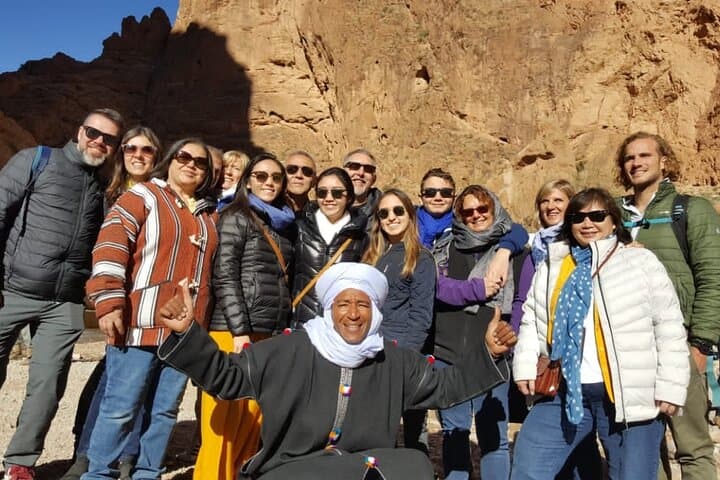
This route stitches together layers of history: caravan routes that linked Marrakech to sub-Saharan trade, the mud‑brick ksar of Ait Ben Haddou—a UNESCO stop that testifies to premodern caravan architecture—and the deep clefts of Todra Gorge carved by millennia of flash floods. Geologically, the region is a playground of uplifted Atlas bedrock and wind-sculpted sand fields; the dunes themselves migrate and whisper with the trade winds.
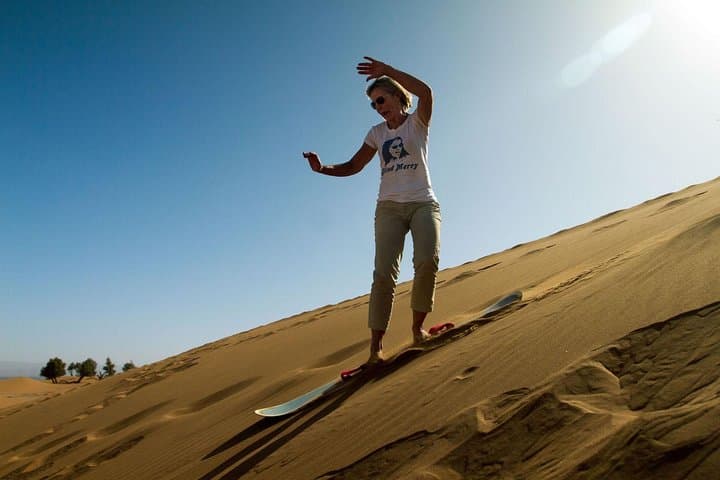
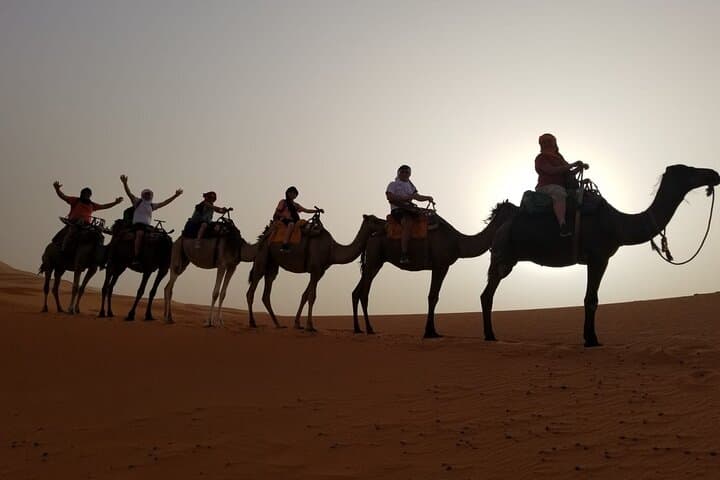
Culture here is immediate: Berber hospitality at a kasbah, evening drums at a desert camp, and the practical rhythms of oasis life in Tinghir. Expect camel treks at dusk and dawn, sandboarding from dune ridges, and two nights—one in a valley hotel, one under Saharan stars in a nomad tent.
Practical guidance: bring sun protection and sturdy closed-toe shoes for sand and rock; carry a small overnight bag for the camp transfer; schedule arrival in Marrakech the day before departure. Hydrate on long transfers, and plan for dusty conditions—layers and a buff are useful. The tour balances comfortable vehicle travel with low-impact desert trekking; it’s an accessible, experiential route into Morocco’s southern Sahara.
moderate.
3 days (approx. 72 hours).
Suitable for travelers who can handle long vehicle transfers, short camel rides, walking on loose sand, and brief stair/cliffside walks.
Camel rides are short and mostly seated; you should be able to mount/dismount with basic mobility—no prior experience required.
Yes; the itinerary notes leaving larger luggage at the Merzouga hotel and taking a small bag to the desert camp for the overnight.
Camps offer basic Berber tents, sleeping mats/blankets, shared bathrooms at the camp area, and a simple dinner with drums and tea.
Sandboarding is included and guided from dune crests; first-timers can try a gentle slope under staff supervision.
The route follows historic caravan corridors; Ait Ben Haddou served as a fortified ksar and trading waypoint between sub‑Saharan Africa and Marrakech.
Dune ecosystems are fragile—avoid driving on dunes, pack out trash, and follow local guides to minimize impact on vegetation and wildlife.
Morocco Global Adventures operates guided outdoor trips and adventures with an emphasis on safety, stewardship, and memorable experiences.

A string of towns slides away as the minibus climbs the Tizi n’Tichka pass; the Atlas Mountains push the sky open and the valley below tightens into villages of ochre and stone. By the second day the road gives up pavement for the ribbed skin of dunes—Erg Chebbi’s ochre waves—where camels take over and the desert’s slow, patient breath sets the pace.
A string of towns slides away as the minibus climbs the Tizi n’Tichka pass; the Atlas Mountains push the sky open and the valley below tightens into villages of ochre and stone. By the second day the road gives up pavement for the ribbed skin of dunes—Erg Chebbi’s ochre waves—where camels take over and the desert’s slow, patient breath sets the pace.
This route stitches together layers of history: caravan routes that linked Marrakech to sub-Saharan trade, the mud‑brick ksar of Ait Ben Haddou—a UNESCO stop that testifies to premodern caravan architecture—and the deep clefts of Todra Gorge carved by millennia of flash floods. Geologically, the region is a playground of uplifted Atlas bedrock and wind-sculpted sand fields; the dunes themselves migrate and whisper with the trade winds.
Culture here is immediate: Berber hospitality at a kasbah, evening drums at a desert camp, and the practical rhythms of oasis life in Tinghir. Expect camel treks at dusk and dawn, sandboarding from dune ridges, and two nights—one in a valley hotel, one under Saharan stars in a nomad tent.
Practical guidance: bring sun protection and sturdy closed-toe shoes for sand and rock; carry a small overnight bag for the camp transfer; schedule arrival in Marrakech the day before departure. Hydrate on long transfers, and plan for dusty conditions—layers and a buff are useful. The tour balances comfortable vehicle travel with low-impact desert trekking; it’s an accessible, experiential route into Morocco’s southern Sahara.