THE ADVENTURE COLLECTIVE® · Independent discovery and booking for outdoor travel

Three days across East Java takes you from a jungle-walled waterfall to a sand-filled volcanic sea and down into an acid crater where blue flames burn. Expect pre-dawn jeep rides, steep descents, and close encounters with sulfur miners—plus two nights in basic highland guesthouses.
Three days across East Java takes you from a jungle-walled waterfall to a sand-filled volcanic sea and down into an acid crater where blue flames burn. Expect pre-dawn jeep rides, steep descents, and close encounters with sulfur miners—plus two nights in basic highland guesthouses.
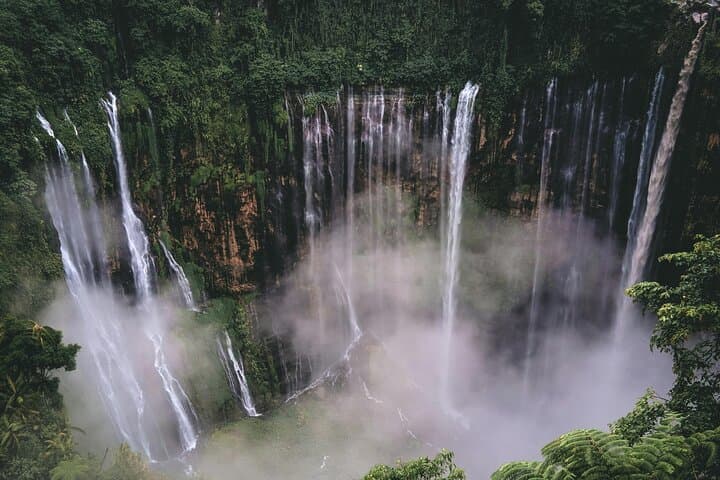
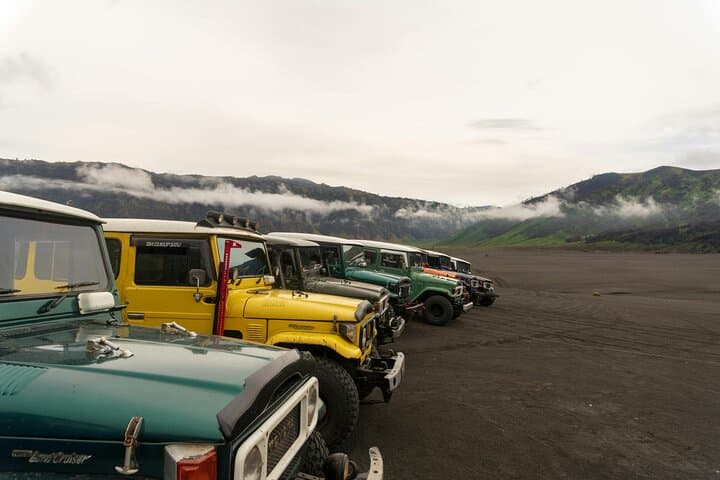
Dawn breaks over a volcanic skyline as you step from a 4x4 into a cold highland air that smells faintly of ash and coffee. Day one drops you into the jungle rim above Tumpak Sewu—water thunders in a horseshoe chute, and a narrow trail leads down to a misted pool. By nightfall you’re in Cemoro Lawang at roughly 2,300 m, trading jungle humidity for brittle highland wind.
Verified experiences and guided adventures in the surrounding area.
Operated by Indotravelteam · Cemoro Lawang, East Java
Dawn breaks over a volcanic skyline as you step from a 4x4 into a cold highland air that smells faintly of ash and coffee. Day one drops you into the jungle rim above Tumpak Sewu—water thunders in a horseshoe chute, and a narrow trail leads down to a misted pool. By nightfall you’re in Cemoro Lawang at roughly 2,300 m, trading jungle humidity for brittle highland wind.
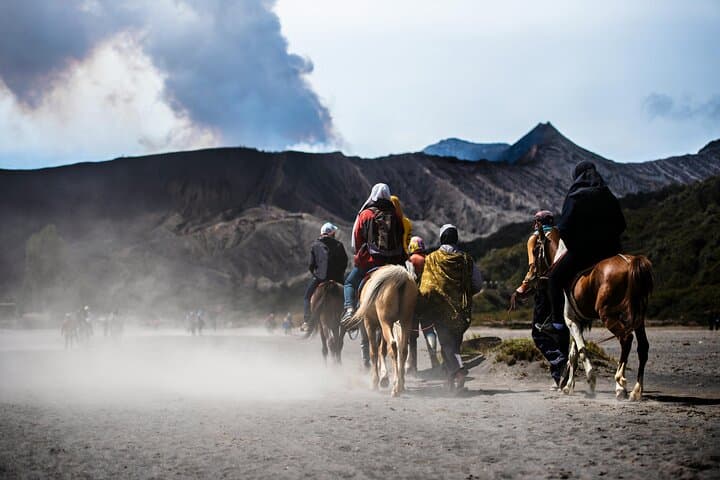
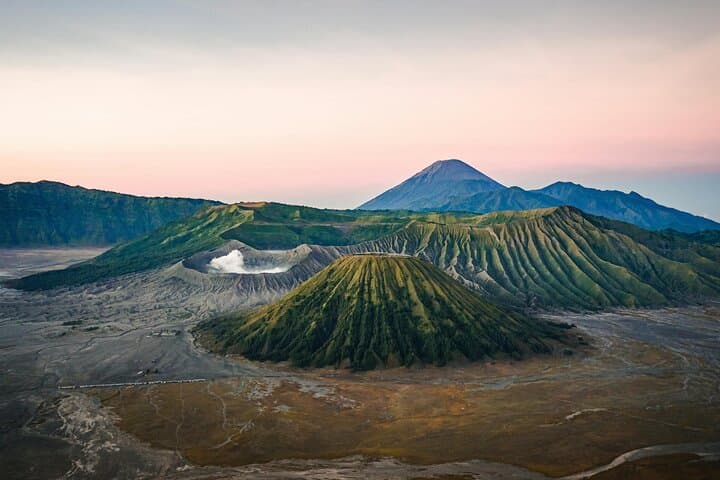
This route stitches together distinct geologies: the plunge pool and layered basalt of Tumpak Sewu, the ash-covered caldera and Sea of Sand around Mount Bromo, and Kawah Ijen’s turquoise acid lake where nocturnal sulfur combustion produces the rare “blue flame.” The Tengger people who live around Bromo maintain Hindu traditions—look for offerings and local ceremonies—and Ijen’s crater has long been a working sulfur site, with miners hauling raw loads by hand.
Expect long pre-dawn starts (jeeps to viewpoints, 1–1.5-hour guided ascents), uneven jungle steps, volcanic sand underfoot, and steep crater rims. Guides supply headlamps, gas masks, and gloves, and the itinerary includes two simple guesthouse nights with hot water and Wi‑Fi. Practical tips: hydrate for altitude, layer for sharp temperature swings, and carry cash for small local purchases and tips. Respect mining areas and stay with your guide at night for the best—and safest—chance to see the blue flames and sunrise reflections across Ijen’s acid lake.
This is a compact, physically engaging loop that pairs dramatic photo moments with hands-on cultural encounters—ideal for travelers prepared for early mornings and variable terrain.
moderate.
3 days.
Suitable for travelers with moderate fitness: frequent short hikes, some steep sections, and early-morning ascents up to 1.5 hours.
Blue flames are a nocturnal phenomenon caused by burning sulfur gases; sightings are common but not guaranteed—visibility depends on wind, gas output and timing of your descent into the crater.
Guides coordinate with local miners and access is controlled; stay with your guide, keep your distance from active work and wear a mask around fumes for safety.
The tour is rated moderate—expect multiple early-morning short hikes (up to 1.5 hours) on uneven and steep terrain; basic cardiovascular fitness is recommended.
Accommodations are simple, clean guesthouses with private rooms, hot water and Wi‑Fi; expect modest amenities typical of rural highland lodging.
The Tenggerese community around Bromo maintains ancient Hindu traditions and ceremonies (notably Yadnya Kasada) that predate much of the island’s later cultural shifts; Ijen has a long history of small-scale sulfur mining.
Kawah Ijen’s acidic lake and Tumpak Sewu’s jungle are ecologically sensitive; follow guide instructions, avoid littering and support local businesses to benefit conservation efforts.
Indotravelteam operates guided outdoor trips and adventures with an emphasis on safety, stewardship, and memorable experiences.
Dawn breaks over a volcanic skyline as you step from a 4x4 into a cold highland air that smells faintly of ash and coffee. Day one drops you into the jungle rim above Tumpak Sewu—water thunders in a horseshoe chute, and a narrow trail leads down to a misted pool. By nightfall you’re in Cemoro Lawang at roughly 2,300 m, trading jungle humidity for brittle highland wind.
Dawn breaks over a volcanic skyline as you step from a 4x4 into a cold highland air that smells faintly of ash and coffee. Day one drops you into the jungle rim above Tumpak Sewu—water thunders in a horseshoe chute, and a narrow trail leads down to a misted pool. By nightfall you’re in Cemoro Lawang at roughly 2,300 m, trading jungle humidity for brittle highland wind.
This route stitches together distinct geologies: the plunge pool and layered basalt of Tumpak Sewu, the ash-covered caldera and Sea of Sand around Mount Bromo, and Kawah Ijen’s turquoise acid lake where nocturnal sulfur combustion produces the rare “blue flame.” The Tengger people who live around Bromo maintain Hindu traditions—look for offerings and local ceremonies—and Ijen’s crater has long been a working sulfur site, with miners hauling raw loads by hand.
Expect long pre-dawn starts (jeeps to viewpoints, 1–1.5-hour guided ascents), uneven jungle steps, volcanic sand underfoot, and steep crater rims. Guides supply headlamps, gas masks, and gloves, and the itinerary includes two simple guesthouse nights with hot water and Wi‑Fi. Practical tips: hydrate for altitude, layer for sharp temperature swings, and carry cash for small local purchases and tips. Respect mining areas and stay with your guide at night for the best—and safest—chance to see the blue flames and sunrise reflections across Ijen’s acid lake.
This is a compact, physically engaging loop that pairs dramatic photo moments with hands-on cultural encounters—ideal for travelers prepared for early mornings and variable terrain.