THE ADVENTURE COLLECTIVE® · Independent discovery and booking for outdoor travel

See Egypt’s headline sites in three days: the Giza pyramids at sunrise, Saqqara’s Step Pyramid, Roman Alexandria and Cairo’s Citadel and museums. This compact guided tour pairs outdoor archaeology with historic city highlights and practical transport between them.
See Egypt’s headline sites in three days: the Giza pyramids at sunrise, Saqqara’s Step Pyramid, Roman Alexandria and Cairo’s Citadel and museums. This compact guided tour pairs outdoor archaeology with historic city highlights and practical transport between them.
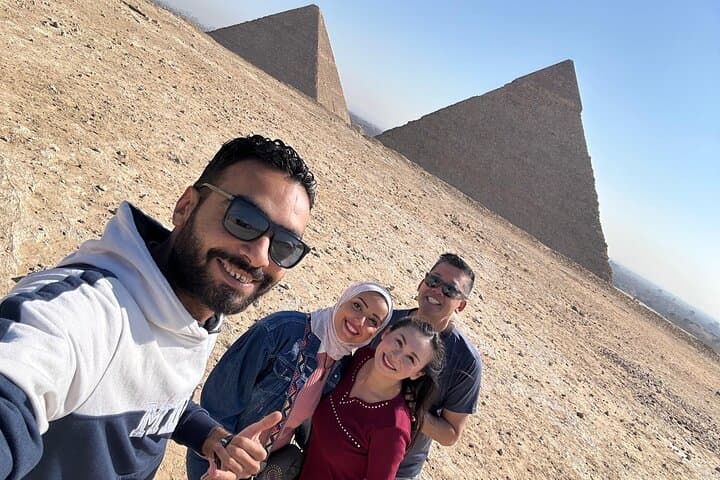
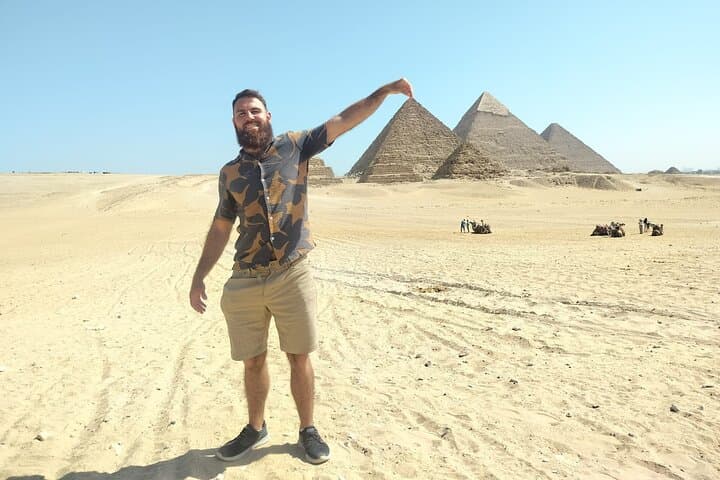
The first light over the Giza Plateau picks out the stepped edges of stone where Pharaohs once commanded the horizon. You stand on compacted desert, the Great Pyramid rising like a geological page turned slowly through millennia, and your guide begins to sort legend from fact.
Verified experiences and guided adventures in the surrounding area.
Operated by Hola Egipto · Cairo, Cairo Governorate
The first light over the Giza Plateau picks out the stepped edges of stone where Pharaohs once commanded the horizon. You stand on compacted desert, the Great Pyramid rising like a geological page turned slowly through millennia, and your guide begins to sort legend from fact.
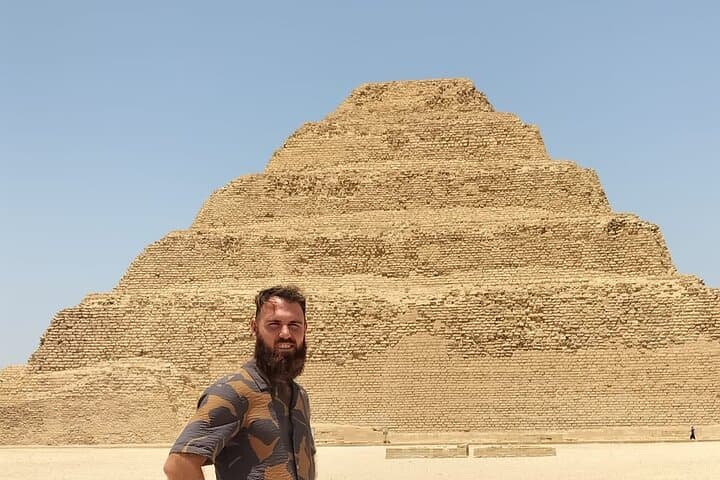
Over three days the route moves from Giza’s limestone plateaus to Saqqara’s Step Pyramid (built c. 2630 BC), through the ruins of Memphis, and west 220 km to Alexandria on the Mediterranean. The second day’s coastline brings Roman columns, the Catacombs and Pompey’s Pillar; the third returns to Cairo’s layered history—Saladin’s Citadel, Coptic churches and the Egyptian Museum with its Tutankhamen collection.
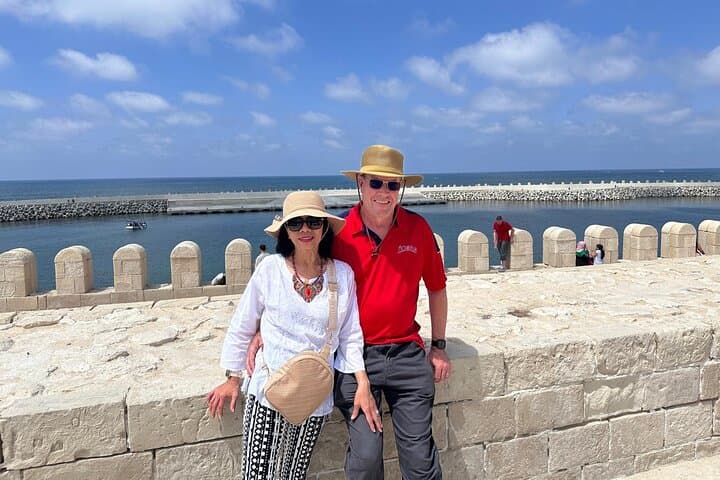
Geology here is literal: limestone bedrock quarried for tombs and monuments, silted Nile plains that supported ancient agriculture, and coastal limestone outcrops at Qaitbay. Culture is immediate—mosque courtyards, Coptic icons, and Alexandrian seafood—and local guides connect artifacts to daily life then and now.
Practical essentials: expect long days with several short walks at archaeological sites—Giza’s open hours run roughly 8:00–16:30—carry sun protection, a refillable water bottle, and a credit card for on-site entrance fees. Wear comfortable walking shoes; modest dress is required for mosques. Tours run in air-conditioned vehicles with English-speaking Egyptology guides and typically include transfers and local taxes. For photographers, sunrise at Giza and late-afternoon light on the Mediterranean are best. With a compact itinerary, this tour is a measured blend of outdoor ruins and urban history—packed, informative, and logistically straightforward.
easy.
3 days (approx. 72 hours).
Suitable for travelers of most fitness levels; expect multiple short walks on uneven archaeological ground and stairs at some sites.
Most included services cover transfers and guiding; specific site entrance fees are often paid at the attraction—check booking details and carry a credit card as many sites accept card payment only.
Yes—visitors can enter during Giza opening hours (generally 8:00–16:30), but access depends on ticket availability and specific site rules on the day.
Yes—the itinerary is labeled suitable for all fitness levels with short walks, though long days and uneven terrain may be tiring; wheelchair access is available for parts of the tour but check specifics with the operator.
The drive is about 2.5–3 hours each way (≈220 km) depending on traffic, so expect a full day for the Alexandria portion of the tour.
This corridor from Giza to Alexandria stitches together Old Kingdom tombs, Greco-Roman port infrastructure and medieval Islamic fortifications spanning over three millennia of continuous settlement.
Archaeological sites face erosion and visitor wear; stick to marked paths, avoid touching reliefs, and follow guide instructions to help preserve fragile stonework.
Hola Egipto operates guided outdoor trips and adventures with an emphasis on safety, stewardship, and memorable experiences.
The first light over the Giza Plateau picks out the stepped edges of stone where Pharaohs once commanded the horizon. You stand on compacted desert, the Great Pyramid rising like a geological page turned slowly through millennia, and your guide begins to sort legend from fact.
The first light over the Giza Plateau picks out the stepped edges of stone where Pharaohs once commanded the horizon. You stand on compacted desert, the Great Pyramid rising like a geological page turned slowly through millennia, and your guide begins to sort legend from fact.
Over three days the route moves from Giza’s limestone plateaus to Saqqara’s Step Pyramid (built c. 2630 BC), through the ruins of Memphis, and west 220 km to Alexandria on the Mediterranean. The second day’s coastline brings Roman columns, the Catacombs and Pompey’s Pillar; the third returns to Cairo’s layered history—Saladin’s Citadel, Coptic churches and the Egyptian Museum with its Tutankhamen collection.
Geology here is literal: limestone bedrock quarried for tombs and monuments, silted Nile plains that supported ancient agriculture, and coastal limestone outcrops at Qaitbay. Culture is immediate—mosque courtyards, Coptic icons, and Alexandrian seafood—and local guides connect artifacts to daily life then and now.
Practical essentials: expect long days with several short walks at archaeological sites—Giza’s open hours run roughly 8:00–16:30—carry sun protection, a refillable water bottle, and a credit card for on-site entrance fees. Wear comfortable walking shoes; modest dress is required for mosques. Tours run in air-conditioned vehicles with English-speaking Egyptology guides and typically include transfers and local taxes. For photographers, sunrise at Giza and late-afternoon light on the Mediterranean are best. With a compact itinerary, this tour is a measured blend of outdoor ruins and urban history—packed, informative, and logistically straightforward.