THE ADVENTURE COLLECTIVE® · Independent discovery and booking for outdoor travel

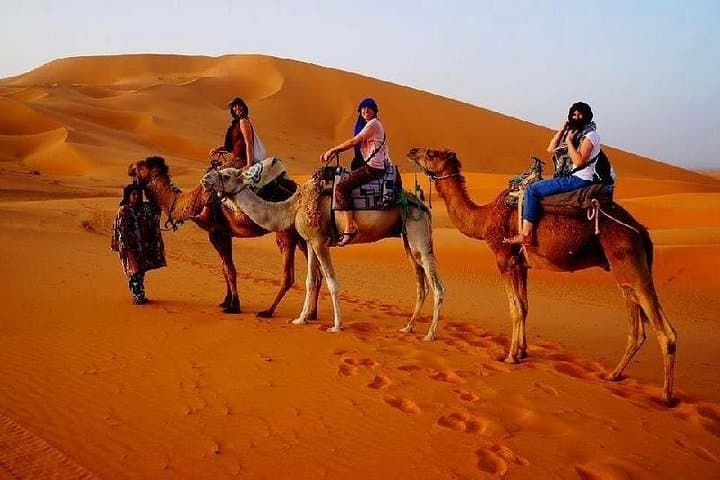
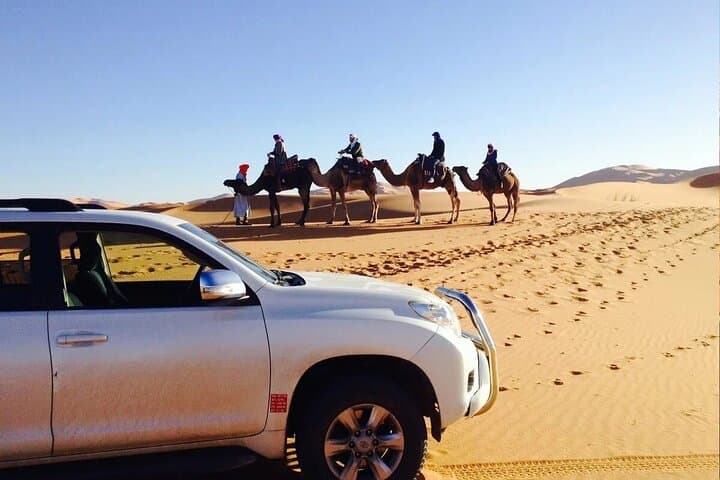
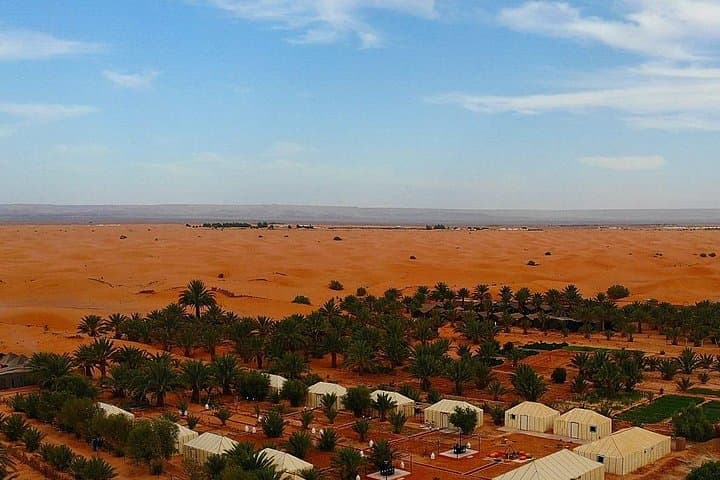
A compact three-day crossing from Fes to Marrakech that centers on two nights at Merzouga and the high dunes of Erg Chebbi. Expect long drives, a kasbah bivouac, desert-camp stargazing, camel rides, and cultural music in Khamlia.
A compact three-day crossing from Fes to Marrakech that centers on two nights at Merzouga and the high dunes of Erg Chebbi. Expect long drives, a kasbah bivouac, desert-camp stargazing, camel rides, and cultural music in Khamlia.
The road leaves Fes before dawn and the Rif foothills slide back as the atlas begins to rise; by late afternoon the horizon is a low, rippled sea of sand. In Erg Chebbi the dunes push and reshape with each wind, throwing long orange shadows at sunset while the sky cools fast after dark.
Verified experiences and guided adventures in the surrounding area.
Operated by 3t Travel · Merzouga, Errachidia Province
The road leaves Fes before dawn and the Rif foothills slide back as the atlas begins to rise; by late afternoon the horizon is a low, rippled sea of sand. In Erg Chebbi the dunes push and reshape with each wind, throwing long orange shadows at sunset while the sky cools fast after dark.
This three-day itinerary traces traditional caravan corridors and modern asphalt alike — a long transit punctuated by a night in a kasbah bivouac, a full desert camp experience, and guided camel rides at sunset and sunrise. Geologically, Erg Chebbi is a mobile sand sea with dunes that can reach roughly 150 meters; the village of Merzouga sits at about 730–760 m elevation. Culturally the region is Berber country: Khamlia musicians, market towns like Rissani, and nomadic influences shape music, food, and camp life.
Expect long driving days (Fes to Merzouga is roughly 470–500 km; plan for 7–9 hours of road time with stops). Terrain is paved between cities and soft sand in the dunes; boots and closed-toe shoes are recommended. Nights in the desert are cold — layers are essential — while days demand sun protection and ample water. Optional extras (quad biking, extra activities) can add cost.
Practical tips: pack a headlamp, carry hard cash for remote purchases, confirm pickup points in Fes, and allow a rest day after arrival in Marrakech — the drive is rewarding but relentless. Leave no trace: the dune ecosystem is fragile and easily scarred by vehicles and litter.
moderate.
3 days.
Moderate fitness for long vehicle transfers, short camel rides, and walking on sand; able to climb dune slopes.
The direct drive is about 470–500 km and typically takes 7–9 hours including short stops; expect longer if there are sightseeing detours.
Yes — camel rides to and from the camp are gentle and guided; conservatively paced sunset and sunrise rides are standard.
Camps provide standard beds in private or shared tents and basic facilities; children are welcome but check age and sharing policies with the operator.
Common extras include quad/ATV rides, additional sandboarding sessions, and private transfers — confirm prices before booking.
This corridor links old trans-Saharan caravan routes and is populated by Berber communities whose traditions influence music, crafts, and lodging styles.
The dune environment is fragile; avoid driving on dunes outside designated tracks, pack out all waste, and minimize water use to reduce local strain.
3t Travel operates guided outdoor trips and adventures with an emphasis on safety, stewardship, and memorable experiences.
The road leaves Fes before dawn and the Rif foothills slide back as the atlas begins to rise; by late afternoon the horizon is a low, rippled sea of sand. In Erg Chebbi the dunes push and reshape with each wind, throwing long orange shadows at sunset while the sky cools fast after dark.
The road leaves Fes before dawn and the Rif foothills slide back as the atlas begins to rise; by late afternoon the horizon is a low, rippled sea of sand. In Erg Chebbi the dunes push and reshape with each wind, throwing long orange shadows at sunset while the sky cools fast after dark.
This three-day itinerary traces traditional caravan corridors and modern asphalt alike — a long transit punctuated by a night in a kasbah bivouac, a full desert camp experience, and guided camel rides at sunset and sunrise. Geologically, Erg Chebbi is a mobile sand sea with dunes that can reach roughly 150 meters; the village of Merzouga sits at about 730–760 m elevation. Culturally the region is Berber country: Khamlia musicians, market towns like Rissani, and nomadic influences shape music, food, and camp life.
Expect long driving days (Fes to Merzouga is roughly 470–500 km; plan for 7–9 hours of road time with stops). Terrain is paved between cities and soft sand in the dunes; boots and closed-toe shoes are recommended. Nights in the desert are cold — layers are essential — while days demand sun protection and ample water. Optional extras (quad biking, extra activities) can add cost.
Practical tips: pack a headlamp, carry hard cash for remote purchases, confirm pickup points in Fes, and allow a rest day after arrival in Marrakech — the drive is rewarding but relentless. Leave no trace: the dune ecosystem is fragile and easily scarred by vehicles and litter.