THE ADVENTURE COLLECTIVE® · Independent discovery and booking for outdoor travel

Spend three days diving the Yucatán’s cenotes, where cavern passages, haloclines and million‑year formations create some of the clearest, most dramatic freshwater dives on earth. This guided trip is for certified divers ready for controlled overhead environments.
Spend three days diving the Yucatán’s cenotes, where cavern passages, haloclines and million‑year formations create some of the clearest, most dramatic freshwater dives on earth. This guided trip is for certified divers ready for controlled overhead environments.
At first light the cenote holds its breath: sunlight fractures through a collapsed roof and paints the freshwater like a cathedral floor. You slip into water that glows with impossible clarity, inhale the cool hush, and let the guide lead you into passages carved over millions of years. Stalactites and stalagmites loom like ancient columns; a thin halocline shudders where fresh and salt water meet and the world bends.
Verified experiences and guided adventures in the surrounding area.
Operated by Dive Guru · Playa del Carmen, Quintana Roo
At first light the cenote holds its breath: sunlight fractures through a collapsed roof and paints the freshwater like a cathedral floor. You slip into water that glows with impossible clarity, inhale the cool hush, and let the guide lead you into passages carved over millions of years. Stalactites and stalagmites loom like ancient columns; a thin halocline shudders where fresh and salt water meet and the world bends.
Cenotes were the lifeblood of the Maya — freshwater sources, ceremonial sites and portals into a limestone underworld. Geologically they’re sinkholes formed where the Yucatán’s porous limestone gave way, exposing underground rivers and caverns filled with fossilized coral and shells. Culturally the cenotes remain sacred places where local guides balance tourism with respect.
Over three days you'll visit different cenotes, each with distinct light, passage width and formations. Expect guided cavern dives rather than full cave penetration: restricted overhead environments, dramatic light plays, and haloclines that demand precise buoyancy. Operators typically include tanks, weights, snacks, bottled water and hotel transfers in select zones.
Practically, bring a reliable dive computer, redundant light, and a well-fitting mask; wear a 3–5mm wetsuit for thermal comfort in fresh water. Complete medical and dive-history forms, avoid flying within 24 hours of your last dive, and follow your guide’s line protocol closely. Plan for early starts to catch the best light and smaller groups for tighter caverns.
These dives reward attention to detail: move slowly, respect fragile formations, and the cenotes will reveal silent chambers, fossil shelves and shafts of light that make every descent feel like entering another world.
challenging.
3 days (approx. 4–6 hours diving per day).
Moderate to good cardiovascular fitness; comfort in confined spaces and multi‑dive days required.
You must be a certified diver; cavern certification or documented experience in overhead environments is strongly recommended since dives often enter limited‑visibility caverns.
Operators commonly include hotel pickup and drop‑off for central Playa del Carmen locations—confirm at booking for remote pickup points.
No—flying within 24 hours of the last dive is not recommended due to decompression risk; follow standard dive‑safe intervals.
Yes, tanks and weights are typically included, but bring personal regulators, mask, and computer if you prefer your own gear.
The Maya regarded cenotes as sacred water sources and entry points to the underworld; many archaeological finds and ceremonial artifacts have come from these sinkholes.
Cenotes are sensitive to pollution (sunscreens, soaps) and overuse; choose operators who limit group size, enforce no‑touch policies and use biodegradable products.
Dive Guru operates guided outdoor trips and adventures with an emphasis on safety, stewardship, and memorable experiences.
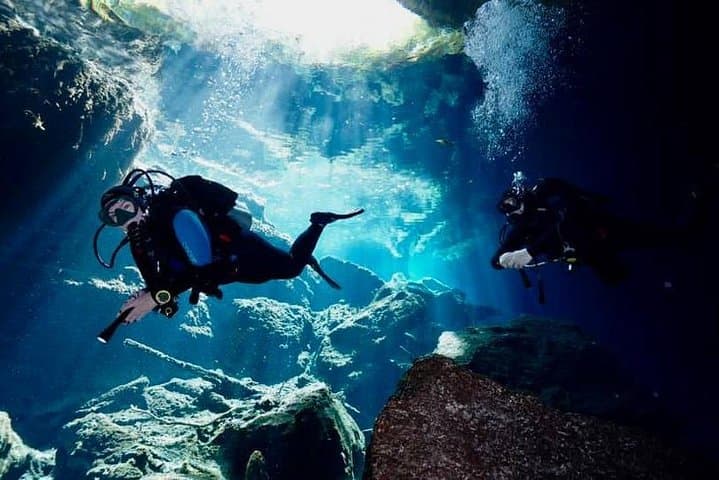
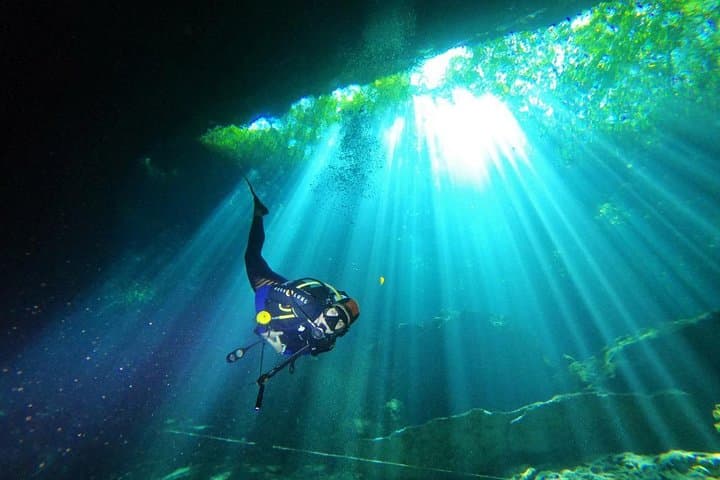
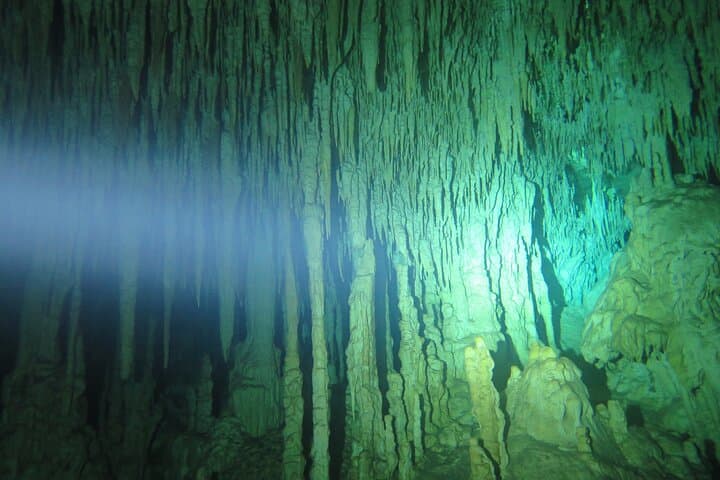
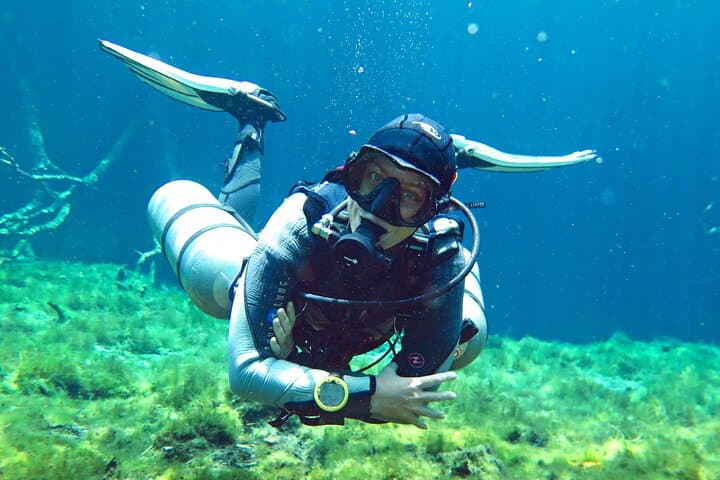
At first light the cenote holds its breath: sunlight fractures through a collapsed roof and paints the freshwater like a cathedral floor. You slip into water that glows with impossible clarity, inhale the cool hush, and let the guide lead you into passages carved over millions of years. Stalactites and stalagmites loom like ancient columns; a thin halocline shudders where fresh and salt water meet and the world bends.
At first light the cenote holds its breath: sunlight fractures through a collapsed roof and paints the freshwater like a cathedral floor. You slip into water that glows with impossible clarity, inhale the cool hush, and let the guide lead you into passages carved over millions of years. Stalactites and stalagmites loom like ancient columns; a thin halocline shudders where fresh and salt water meet and the world bends.
Cenotes were the lifeblood of the Maya — freshwater sources, ceremonial sites and portals into a limestone underworld. Geologically they’re sinkholes formed where the Yucatán’s porous limestone gave way, exposing underground rivers and caverns filled with fossilized coral and shells. Culturally the cenotes remain sacred places where local guides balance tourism with respect.
Over three days you'll visit different cenotes, each with distinct light, passage width and formations. Expect guided cavern dives rather than full cave penetration: restricted overhead environments, dramatic light plays, and haloclines that demand precise buoyancy. Operators typically include tanks, weights, snacks, bottled water and hotel transfers in select zones.
Practically, bring a reliable dive computer, redundant light, and a well-fitting mask; wear a 3–5mm wetsuit for thermal comfort in fresh water. Complete medical and dive-history forms, avoid flying within 24 hours of your last dive, and follow your guide’s line protocol closely. Plan for early starts to catch the best light and smaller groups for tighter caverns.
These dives reward attention to detail: move slowly, respect fragile formations, and the cenotes will reveal silent chambers, fossil shelves and shafts of light that make every descent feel like entering another world.