THE ADVENTURE COLLECTIVE® · Independent discovery and booking for outdoor travel

Join a three-day camel caravan from M'Hamid into the rolling dunes of Erg Zahar. Experience nomad routes, nights in desert tents, and Sunrise-swept dunes with knowledgeable local guides.
Join a three-day camel caravan from M'Hamid into the rolling dunes of Erg Zahar. Experience nomad routes, nights in desert tents, and Sunrise-swept dunes with knowledgeable local guides.
The caravan moves like a patient thought across the sand: dromedaries step, leather creaks, and the sun lowers the dunes into long, raked shadows. You begin in M'Hamid, the last village before empty horizon, set up camp by the mausoleum of Sidi Naji and feel the desert shift around a small human map.
Verified experiences and guided adventures in the surrounding area.
Operated by Erg Chigaga · M'Hamid, Drâa-Tafilalet
The caravan moves like a patient thought across the sand: dromedaries step, leather creaks, and the sun lowers the dunes into long, raked shadows. You begin in M'Hamid, the last village before empty horizon, set up camp by the mausoleum of Sidi Naji and feel the desert shift around a small human map.
This three-day route follows traditional nomad tracks across plains and into Erg Zahar’s great dunes. Geologically the area is wind-sculpted Pleistocene sand sitting on older alluvial benches; dunes migrate with each season, swallowing old paths and revealing new ones. Culturally, guides here are often descendants of Saharan nomads and share practical knowledge: how to read wind-lines, where to find ephemeral wells, the role of the marabout in local life.
Expect long camel-led legs of travel at a slow steady pace, sunrise and sunset that redraw the landscape, and nights in simple tents under a wide sky. Day two’s climb onto the higher dunes rewards sweeping views and a clear sense of scale; day three finishes with breakfast at Lahdibat and a jeep transfer back to M'Hamid.
Practically: pack layered clothing for hot days and cold nights, a wide-brim hat, ample water, and a small daypack for camera and snacks. Shoes should handle sand and short rocky approaches. Physically, moderate fitness and a willingness to sit on and mount camels repeatedly is required. Respect local people and fragile desert soils: stay on established routes, avoid open fires, and carry out waste.
moderate.
3 days (approx. 72 hours).
Moderate fitness—able to mount camels, manage full days of slow travel and short hikes on sand and rock
The caravan moves at a slow pace but requires repeated mounting and sitting for hours; moderate fitness is sufficient, and breaks are frequent.
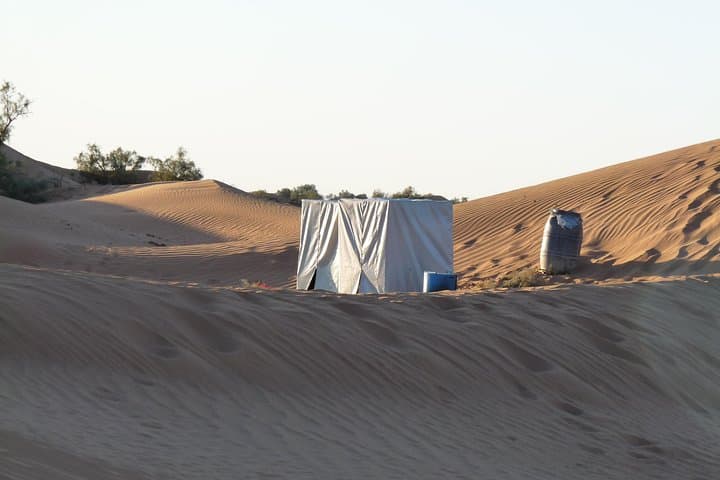
Camping is simple—shared or private tents depending on booking, with communal meals prepared by staff featuring local dishes and hot tea.
Electricity is limited in camp; bring power banks and check if the operator provides occasional charging at larger camps or the final pickup point.
This tour is not recommended for pregnant travelers or those with serious spinal or cardiovascular problems; check operator age and health policies for children.
This corridor has long been a trans-Saharan route where nomadic families moved with seasons; marabouts like Sidi Naji historically served as spiritual waypoints and community anchors.
The Sahara’s fragile crust and sparse vegetation recover slowly—stick to established routes, avoid littering, and minimize campfire impact to protect the dunes.
Erg Chigaga operates guided outdoor trips and adventures with an emphasis on safety, stewardship, and memorable experiences.
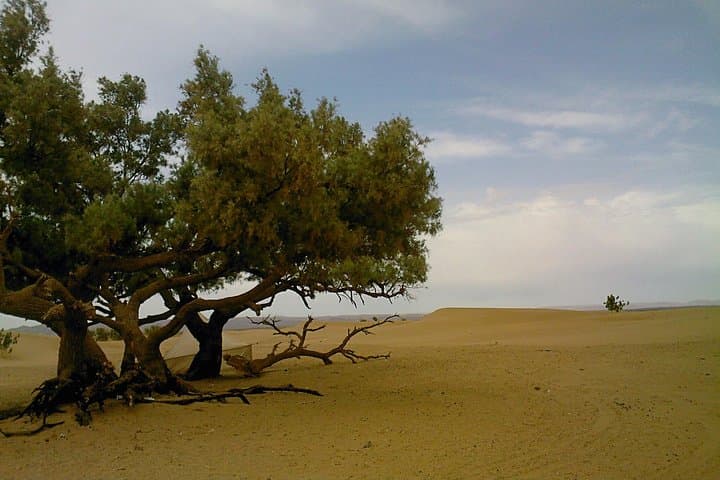
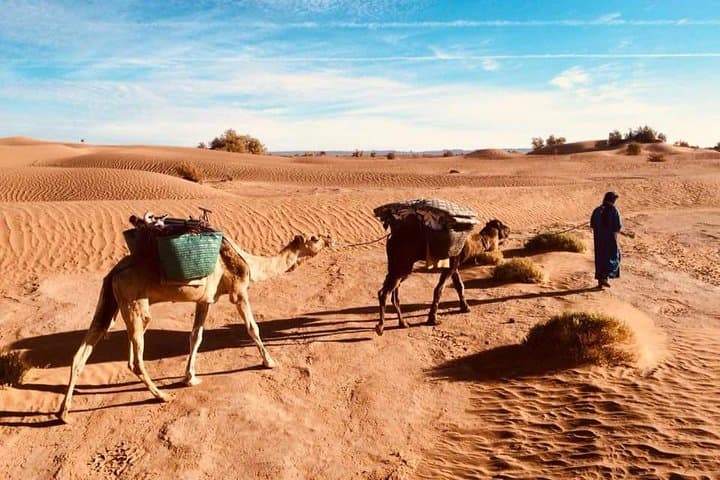
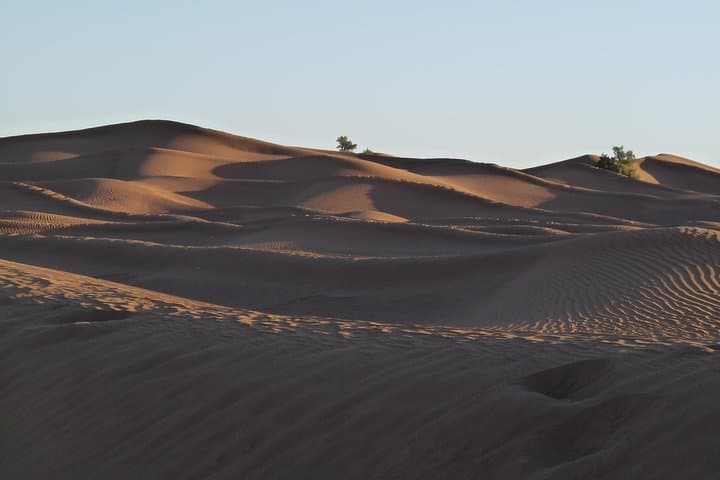
The caravan moves like a patient thought across the sand: dromedaries step, leather creaks, and the sun lowers the dunes into long, raked shadows. You begin in M'Hamid, the last village before empty horizon, set up camp by the mausoleum of Sidi Naji and feel the desert shift around a small human map.
The caravan moves like a patient thought across the sand: dromedaries step, leather creaks, and the sun lowers the dunes into long, raked shadows. You begin in M'Hamid, the last village before empty horizon, set up camp by the mausoleum of Sidi Naji and feel the desert shift around a small human map.
This three-day route follows traditional nomad tracks across plains and into Erg Zahar’s great dunes. Geologically the area is wind-sculpted Pleistocene sand sitting on older alluvial benches; dunes migrate with each season, swallowing old paths and revealing new ones. Culturally, guides here are often descendants of Saharan nomads and share practical knowledge: how to read wind-lines, where to find ephemeral wells, the role of the marabout in local life.
Expect long camel-led legs of travel at a slow steady pace, sunrise and sunset that redraw the landscape, and nights in simple tents under a wide sky. Day two’s climb onto the higher dunes rewards sweeping views and a clear sense of scale; day three finishes with breakfast at Lahdibat and a jeep transfer back to M'Hamid.
Practically: pack layered clothing for hot days and cold nights, a wide-brim hat, ample water, and a small daypack for camera and snacks. Shoes should handle sand and short rocky approaches. Physically, moderate fitness and a willingness to sit on and mount camels repeatedly is required. Respect local people and fragile desert soils: stay on established routes, avoid open fires, and carry out waste.