THE ADVENTURE COLLECTIVE® · Independent discovery and booking for outdoor travel

A compact three-day private tour that moves from Bucharest across the Danube into Bulgaria’s historic north: rock monasteries, travertine waterfalls, a massive cavern, Lovech’s covered bridge and the hillside citadel of Veliko Tarnovo. Expect moderate walking, border formalities, and layered weather.
A compact three-day private tour that moves from Bucharest across the Danube into Bulgaria’s historic north: rock monasteries, travertine waterfalls, a massive cavern, Lovech’s covered bridge and the hillside citadel of Veliko Tarnovo. Expect moderate walking, border formalities, and layered weather.
Morning light breaks over the Danube as the group moves south across the Friendship Bridge, the river daring you to look back at Bucharest while the road pushes forward into Bulgaria.
Verified experiences and guided adventures in the surrounding area.
Operated by Tours in Romania by Adrian Ene · Veliko Tarnovo, Veliko Tarnovo Province
Morning light breaks over the Danube as the group moves south across the Friendship Bridge, the river daring you to look back at Bucharest while the road pushes forward into Bulgaria.
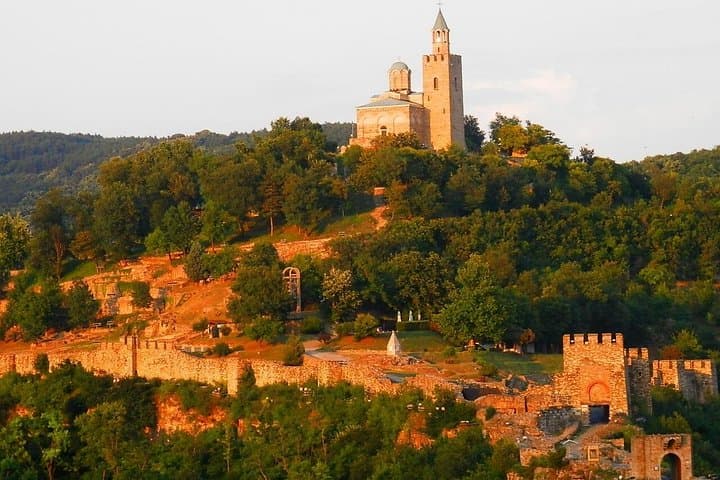
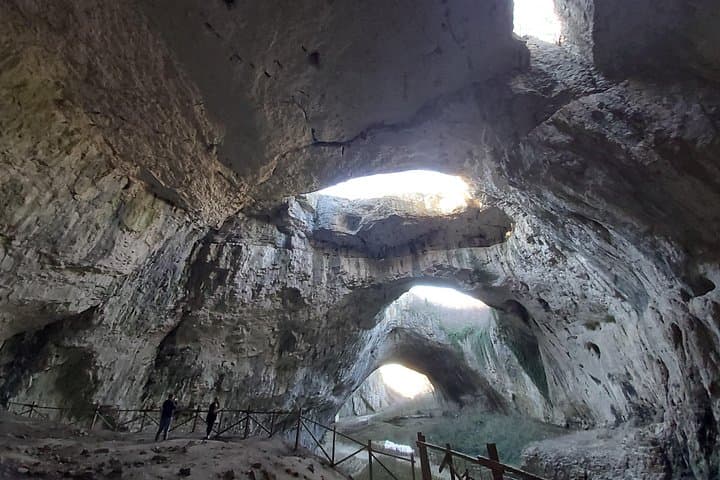
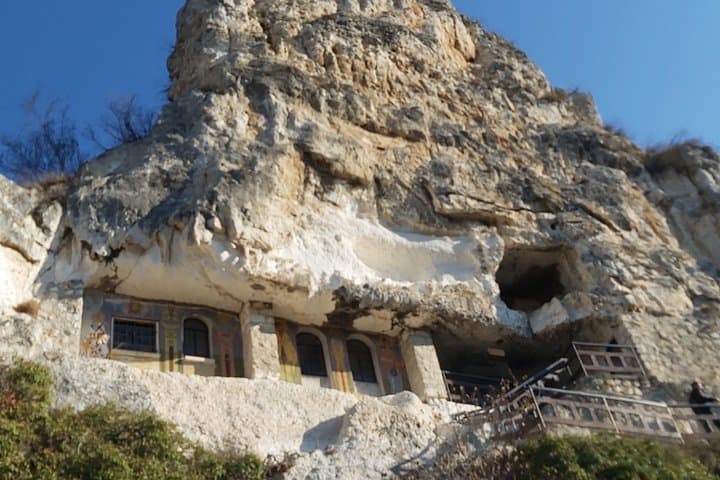
Over three days the route threads through limestone gorges and travertine terraces: the Ivanovo rock-hewn churches’ frescoes cling to shadowed walls, Krushuna’s turquoise cascades sing as they cut the soft travertine, and Devetashka’s cavernous chamber opens like a cathedral of stone lit by natural “windows.” Veliko Tarnovo rises on stepped hills with ruined walls that still mark the shape of medieval power; nearby Arbanasi preserves the heavy stone houses and icon-filled churches of the Revival period.
History sits beside geology here — Thracian settlements gave way to the medieval Bulgarian kingdoms, then Ottoman rule, leaving a patchwork of fortress ruins, covered bridges, and Revival-era craft quarters. Local guides thread those threads together, explaining how rivers sculpted passageways used for defense and settlement.
Practical side: expect moderate walking on uneven paths and stone staircases; a short hike at Krushuna includes boardwalks and viewing platforms, while Devetashka requires careful footing near pools and slick rock. Carry a passport for the border crossing and allow time for immigration; entrances to key sites may require modest fees. Hydrate often, wear grippy shoes, and bring layers — the weather can change quickly in the valley and on the hills. Aim for spring or early fall for the best water flows and fewer crowds, and plan evening time in Veliko Tarnovo to catch the fortress lit up against the ridge.
moderate.
3 days.
Moderate fitness: comfortable walking, some short hill climbs and stair sections; expect periods of standing during tours.
Most travelers from EU, US, Canada, Australia and many countries do not need a visa for short visits, but you must carry a valid passport; check your nationality’s requirements before travel.
Expect several short guided walks and stair climbs (Krushuna falls boardwalk, fortress paths, and village streets) totaling a few hours of light to moderate walking daily.
The itinerary notes admissions at several stops; confirm with the operator which specific entry fees are covered before booking, as some optional sites may require additional payment on site.
This tour includes uneven terrain, cave steps, and pedestrian-only fortress areas; travelers with significant mobility limitations may find parts of the itinerary challenging.
The route highlights sites tied to the First and Second Bulgarian Empires and the Ottoman and Revival periods, including the 1187 Lovech peace events and Tsarevets fortress for medieval tsar power.
Cave and waterfall environments are sensitive — avoid leaving litter, stay on marked paths to protect travertine formations and bat habitats, and support local guides who follow conservation practices.
Tours in Romania by Adrian Ene operates guided outdoor trips and adventures with an emphasis on safety, stewardship, and memorable experiences.

Morning light breaks over the Danube as the group moves south across the Friendship Bridge, the river daring you to look back at Bucharest while the road pushes forward into Bulgaria.
Morning light breaks over the Danube as the group moves south across the Friendship Bridge, the river daring you to look back at Bucharest while the road pushes forward into Bulgaria.
Over three days the route threads through limestone gorges and travertine terraces: the Ivanovo rock-hewn churches’ frescoes cling to shadowed walls, Krushuna’s turquoise cascades sing as they cut the soft travertine, and Devetashka’s cavernous chamber opens like a cathedral of stone lit by natural “windows.” Veliko Tarnovo rises on stepped hills with ruined walls that still mark the shape of medieval power; nearby Arbanasi preserves the heavy stone houses and icon-filled churches of the Revival period.
History sits beside geology here — Thracian settlements gave way to the medieval Bulgarian kingdoms, then Ottoman rule, leaving a patchwork of fortress ruins, covered bridges, and Revival-era craft quarters. Local guides thread those threads together, explaining how rivers sculpted passageways used for defense and settlement.
Practical side: expect moderate walking on uneven paths and stone staircases; a short hike at Krushuna includes boardwalks and viewing platforms, while Devetashka requires careful footing near pools and slick rock. Carry a passport for the border crossing and allow time for immigration; entrances to key sites may require modest fees. Hydrate often, wear grippy shoes, and bring layers — the weather can change quickly in the valley and on the hills. Aim for spring or early fall for the best water flows and fewer crowds, and plan evening time in Veliko Tarnovo to catch the fortress lit up against the ridge.