THE ADVENTURE COLLECTIVE® · Independent discovery and booking for outdoor travel

Explore Angkor’s iconic temples, the pink-carved Banteay Srey and the river-carved Kbal Spean, then cross Tonle Sap to Kompong Phluk’s stilted houses on this private three-day tour from Siem Reap. Expect temple causeways, a short jungle hike, and a boat ride through a seasonally shifting lakescape.
Explore Angkor’s iconic temples, the pink-carved Banteay Srey and the river-carved Kbal Spean, then cross Tonle Sap to Kompong Phluk’s stilted houses on this private three-day tour from Siem Reap. Expect temple causeways, a short jungle hike, and a boat ride through a seasonally shifting lakescape.
Morning light slices across the Angkor moat as a private minivan pulls away from Siem Reap and into a landscape of stone and scrub. Over three days this tour moves from the carved bas-reliefs of Angkor Thom and Angkor Wat to the pink sandstone detail of Banteay Srey, then uphill through a short jungle trail to the river-carved lintels at Kbal Spean and finally out onto the changing waters of Tonle Sap and the stilted homes of Kompong Phluk.
Verified experiences and guided adventures in the surrounding area.
Operated by Angkor Wat Travel Tour · Siem Reap, Siem Reap Province
Morning light slices across the Angkor moat as a private minivan pulls away from Siem Reap and into a landscape of stone and scrub. Over three days this tour moves from the carved bas-reliefs of Angkor Thom and Angkor Wat to the pink sandstone detail of Banteay Srey, then uphill through a short jungle trail to the river-carved lintels at Kbal Spean and finally out onto the changing waters of Tonle Sap and the stilted homes of Kompong Phluk.
Angkor is the footprint of the Khmer Empire (9th–15th centuries): its temples are sandstone records of cosmology, kingship and late-Holocene river systems that supported rice civilization. Banteay Srey, 36 km northeast of Siem Reap, is noted for intricate 10th-century carvings; Kbal Spean reveals submerged sandstone lintels and iconography downstream. Tonle Sap’s seasonal pulse expands its shoreline by kilometers, creating the floating communities you’ll ride through by longtail.
Expect varied terrain: paved temple causeways, compacted dirt jungle paths (about a 2 km uphill walk to Kbal Spean), and slow boat channels through flooded mangroves. Practicalities: the Angkor Park pass is purchased separately; bring cash for local boat fees and tips. Start early to avoid heat and crowds, carry sun and rain protection, and leave single-use plastics behind — both temples and lake ecosystems are sensitive to visitor impact.
This itinerary blends intensive cultural watching with low-impact nature moments — a straightforward three-day route for travelers who want historic depth and an unvarnished view of contemporary riverside life.
easy.
3 days.
Suitable for travelers of average fitness; includes short hikes of up to 2 km and long periods of standing and walking on uneven stone.
No — the Angkor Park pass is purchased separately at the park ticket center; options include 1-, 3- and 7-day passes.
Boat rides to Kompong Phluk typically last 1.5–2 hours depending on water level and chosen route; additional short mangrove excursions may cost extra in cash.
Access varies: major temple terraces and causeways have uneven steps and compacted earth; floating villages use narrow docks and boats, making full accessibility limited.
English-speaking guides are commonly provided; tipping is customary for good service — typical amounts are small and given in cash directly to guides or drivers.
Angkor was the political center of the Khmer Empire (9th–15th centuries); many monuments combine Hindu and Buddhist iconography reflecting changing dynasties.
Tonle Sap is a critical freshwater fishery with large seasonal fluctuations; visitors should minimize plastic use and respect fishing and village livelihoods to reduce ecological stress.
Angkor Wat Travel Tour operates guided outdoor trips and adventures with an emphasis on safety, stewardship, and memorable experiences.
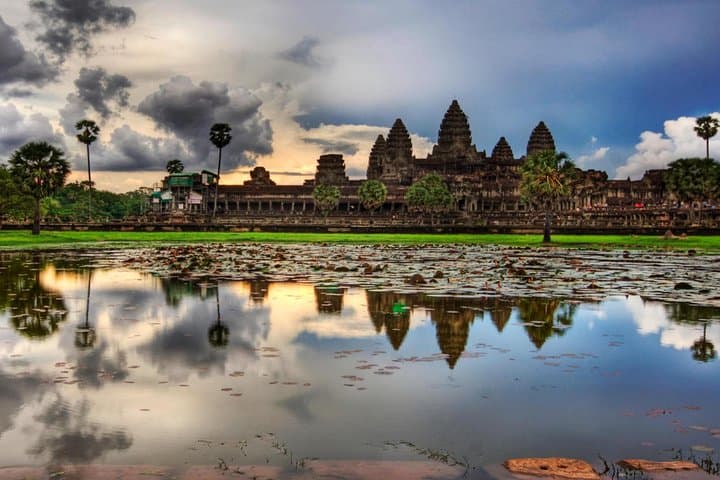
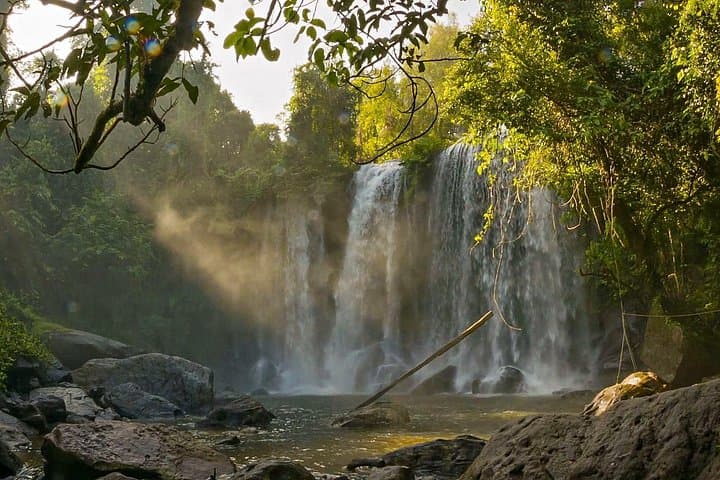
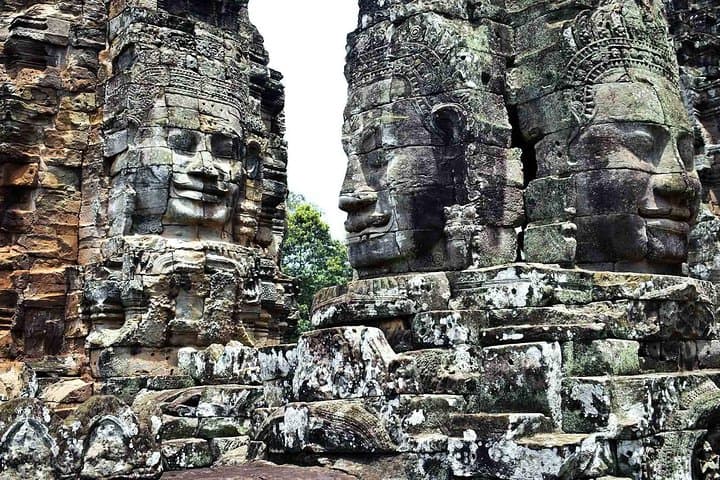
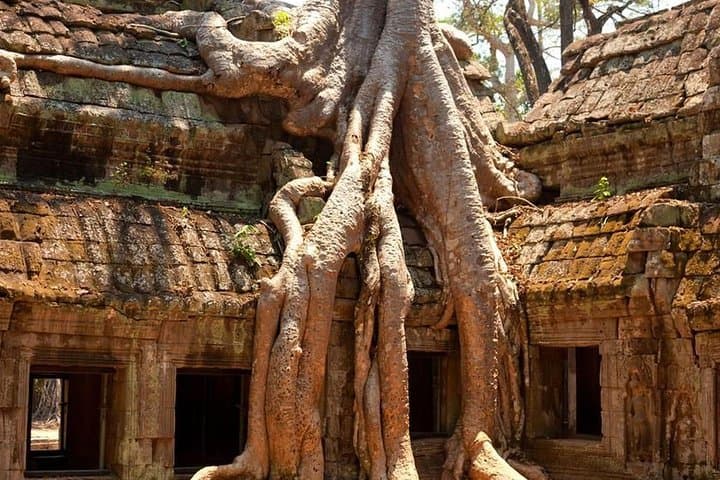
Morning light slices across the Angkor moat as a private minivan pulls away from Siem Reap and into a landscape of stone and scrub. Over three days this tour moves from the carved bas-reliefs of Angkor Thom and Angkor Wat to the pink sandstone detail of Banteay Srey, then uphill through a short jungle trail to the river-carved lintels at Kbal Spean and finally out onto the changing waters of Tonle Sap and the stilted homes of Kompong Phluk.
Morning light slices across the Angkor moat as a private minivan pulls away from Siem Reap and into a landscape of stone and scrub. Over three days this tour moves from the carved bas-reliefs of Angkor Thom and Angkor Wat to the pink sandstone detail of Banteay Srey, then uphill through a short jungle trail to the river-carved lintels at Kbal Spean and finally out onto the changing waters of Tonle Sap and the stilted homes of Kompong Phluk.
Angkor is the footprint of the Khmer Empire (9th–15th centuries): its temples are sandstone records of cosmology, kingship and late-Holocene river systems that supported rice civilization. Banteay Srey, 36 km northeast of Siem Reap, is noted for intricate 10th-century carvings; Kbal Spean reveals submerged sandstone lintels and iconography downstream. Tonle Sap’s seasonal pulse expands its shoreline by kilometers, creating the floating communities you’ll ride through by longtail.
Expect varied terrain: paved temple causeways, compacted dirt jungle paths (about a 2 km uphill walk to Kbal Spean), and slow boat channels through flooded mangroves. Practicalities: the Angkor Park pass is purchased separately; bring cash for local boat fees and tips. Start early to avoid heat and crowds, carry sun and rain protection, and leave single-use plastics behind — both temples and lake ecosystems are sensitive to visitor impact.
This itinerary blends intensive cultural watching with low-impact nature moments — a straightforward three-day route for travelers who want historic depth and an unvarnished view of contemporary riverside life.