THE ADVENTURE COLLECTIVE® · Independent discovery and booking for outdoor travel

Three days across Angkor’s major temples—from the sunrise glow of Angkor Wat to the jungle-claimed galleries of Ta Prohm and the hilltop views at Phnom Kulen. This private package balances iconic moments with quieter sites and practical logistics.
Three days across Angkor’s major temples—from the sunrise glow of Angkor Wat to the jungle-claimed galleries of Ta Prohm and the hilltop views at Phnom Kulen. This private package balances iconic moments with quieter sites and practical logistics.
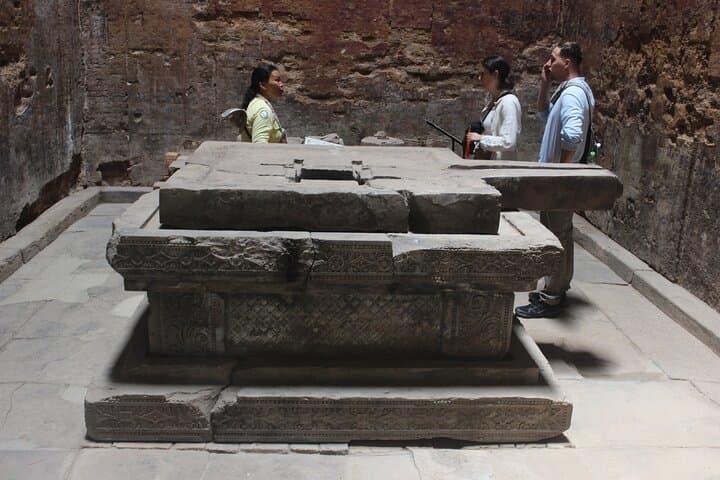
Dawn on the moat at Angkor Wat is a study in motion: warm light crawling across sandstone, the first motorbike hums on a distant road, and the temple’s reflection shivers as morning breezes pass through reed beds. Over three days this private package moves from that quiet sunrise to the denser, carved corridors of Bayon and the root-wrapped ruins of Ta Prohm, then east to Phnom Kulen and the pink sandstone detail of Banteay Srei.
Verified experiences and guided adventures in the surrounding area.
Operated by Join The Ride Tours · Siem Reap, Siem Reap Province
Dawn on the moat at Angkor Wat is a study in motion: warm light crawling across sandstone, the first motorbike hums on a distant road, and the temple’s reflection shivers as morning breezes pass through reed beds. Over three days this private package moves from that quiet sunrise to the denser, carved corridors of Bayon and the root-wrapped ruins of Ta Prohm, then east to Phnom Kulen and the pink sandstone detail of Banteay Srei.
The temples here record the rise of the Khmer Empire from the 9th–13th centuries—builders who moved enormous laterite and sandstone blocks, shaped bas-reliefs, and aligned temples to cosmology and reservoirs. Geology matters: much of the complex sits on ancient alluvial plain and engineered barays (reservoirs) whose dry beds still mark the landscape. Culturally, Angkor remains a living place—Buddhist shrines, local markets, and farmers working scrubby fields punctuate the ruins.
Practical guidance: arrive before sunrise for Angkor Wat to avoid crowds and heat; buy an Angkor Pass in advance so you’re not delayed at entrances. Wear breathable, modest clothing—temples require covered shoulders and knees—sturdy shoes for uneven stone, and a hat for long walks between sites. Days can be long and hot; carry a refillable water bottle, sunscreen, and insect repellent. Expect guided driving between distant monuments; plan chill time back in Siem Reap to process the scale of what you’ve seen. With a private driver and flexible itinerary, you’ll have time to linger at carvings, time your sunset at Phnom Bakheng, and leave room for the small, quieter temples that reward a slower pace.
easy.
3 days.
Basic fitness for multiple hours of walking each day; be prepared for uneven stone steps and sun exposure.
No—Angkor Park entry passes are not included and must be purchased separately at the official ticket center or online before arrival.
Expect several hours of walking per day on uneven stone, short staircases, and between dispersed temple sites; vehicles cover longer distances between complexes.
Yes—the itinerary is marked as suitable for all fitness levels, but parents should plan for heat, sun, and occasional uneven surfaces that require supervision.
This package includes an English-speaking driver; you can add a licensed local guide at additional cost to deepen historical and cultural interpretation at major temples.
Angkor’s monuments were built between the 9th and 13th centuries during the Khmer Empire; King Jayavarman VII left especially visible Buddhist-era works such as Bayon and Preah Khan.
Visitor impact is managed through controlled access and local conservation programs—stay on marked paths, avoid touching bas-reliefs, and support licensed guides and community-run services.
Join The Ride Tours operates guided outdoor trips and adventures with an emphasis on safety, stewardship, and memorable experiences.


Dawn on the moat at Angkor Wat is a study in motion: warm light crawling across sandstone, the first motorbike hums on a distant road, and the temple’s reflection shivers as morning breezes pass through reed beds. Over three days this private package moves from that quiet sunrise to the denser, carved corridors of Bayon and the root-wrapped ruins of Ta Prohm, then east to Phnom Kulen and the pink sandstone detail of Banteay Srei.
Dawn on the moat at Angkor Wat is a study in motion: warm light crawling across sandstone, the first motorbike hums on a distant road, and the temple’s reflection shivers as morning breezes pass through reed beds. Over three days this private package moves from that quiet sunrise to the denser, carved corridors of Bayon and the root-wrapped ruins of Ta Prohm, then east to Phnom Kulen and the pink sandstone detail of Banteay Srei.
The temples here record the rise of the Khmer Empire from the 9th–13th centuries—builders who moved enormous laterite and sandstone blocks, shaped bas-reliefs, and aligned temples to cosmology and reservoirs. Geology matters: much of the complex sits on ancient alluvial plain and engineered barays (reservoirs) whose dry beds still mark the landscape. Culturally, Angkor remains a living place—Buddhist shrines, local markets, and farmers working scrubby fields punctuate the ruins.
Practical guidance: arrive before sunrise for Angkor Wat to avoid crowds and heat; buy an Angkor Pass in advance so you’re not delayed at entrances. Wear breathable, modest clothing—temples require covered shoulders and knees—sturdy shoes for uneven stone, and a hat for long walks between sites. Days can be long and hot; carry a refillable water bottle, sunscreen, and insect repellent. Expect guided driving between distant monuments; plan chill time back in Siem Reap to process the scale of what you’ve seen. With a private driver and flexible itinerary, you’ll have time to linger at carvings, time your sunset at Phnom Bakheng, and leave room for the small, quieter temples that reward a slower pace.