THE ADVENTURE COLLECTIVE® · Independent discovery and booking for outdoor travel

Swim three different cenotes and feel the jungle breeze on a short zipline on this half-day Puerto Morelos excursion. Practical hotel pickup, life vests provided, and a mix of open and cavern-style cenotes make it a good introduction to Riviera Maya freshwater systems.
Swim three different cenotes and feel the jungle breeze on a short zipline on this half-day Puerto Morelos excursion. Practical hotel pickup, life vests provided, and a mix of open and cavern-style cenotes make it a good introduction to Riviera Maya freshwater systems.
A short transfer from coastal hotels drops visitors at the edge of the jungle and the air changes—humid, green, and threaded with bird calls. The route through Puerto Morelos' cenote corridor leads to three distinct sinkholes: open sunlight basins, sheltered cavern pockets and a clear, cool pool framed by roots and limestone. Between swims, a low zipline slices across the canopy, putting wind and jungle noise in the foreground.
Verified experiences and guided adventures in the surrounding area.
Operated by Coba Tulum Tour Operator · Puerto Morelos, Quintana Roo
A short transfer from coastal hotels drops visitors at the edge of the jungle and the air changes—humid, green, and threaded with bird calls. The route through Puerto Morelos' cenote corridor leads to three distinct sinkholes: open sunlight basins, sheltered cavern pockets and a clear, cool pool framed by roots and limestone. Between swims, a low zipline slices across the canopy, putting wind and jungle noise in the foreground.
Cenotes are karst sinkholes formed as the Yucatán's limestone collapsed and exposed a connected groundwater table; the Maya treated many as sacred freshwater springs and ritual sites. Today these sites offer a tangible connection to that geological history: clear water, submerged limestone formations, and fragile flora clinging to steep banks. Cultural notes include small local communities and family-run cenote parks that often provide traditional Mayan snacks and basic facilities.
Practically, the excursion runs about five hours with hotel pickup, brief safety orientation, and guided swims. Expect uneven stone steps, short forest trails, and water entries that require basic swimming comfort. Guides typically provide life vests and enforce no-glass, no-drone rules to protect the water. Weather can shift quickly—late-afternoon storms are common in summer.
Bring biodegradable sunscreen, water shoes, and a change of clothes. Move deliberately around edges and follow guide instructions when using the zipline; weight limits and health restrictions apply. For travelers who want an efficient mix of swimming, light adventure, and local context, this cenotes route delivers a concise, nature-forward half-day in the Riviera Maya.
moderate.
4–5 hours.
Moderate fitness: able to walk short uneven trails, climb steps, and be comfortable swimming short distances.
Yes—round transportation from many hotels or a designated meeting point is typically provided and included in the booking.
Yes, life vests are supplied and required for certain cenote sections where guides advise flotation.
The zipline has a weight limit (around 270 pounds) and is not recommended for pregnant travelers or those with heart or back conditions.
No—many operators prohibit drones, action cameras, and valuables during activities to protect safety and the site.
Cenotes in the Yucatán formed when limestone collapsed and exposed groundwater; many were vital freshwater sources for the Maya and hold archaeological significance in the region.
These karst systems are ecologically sensitive—operators encourage biodegradable products, no littering, and sticking to marked paths to reduce contamination and erosion.
Coba Tulum Tour Operator operates guided outdoor trips and adventures with an emphasis on safety, stewardship, and memorable experiences.


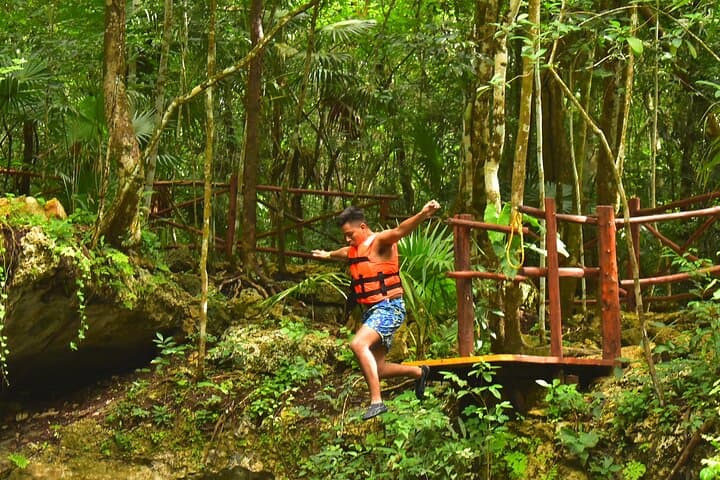
A short transfer from coastal hotels drops visitors at the edge of the jungle and the air changes—humid, green, and threaded with bird calls. The route through Puerto Morelos' cenote corridor leads to three distinct sinkholes: open sunlight basins, sheltered cavern pockets and a clear, cool pool framed by roots and limestone. Between swims, a low zipline slices across the canopy, putting wind and jungle noise in the foreground.
A short transfer from coastal hotels drops visitors at the edge of the jungle and the air changes—humid, green, and threaded with bird calls. The route through Puerto Morelos' cenote corridor leads to three distinct sinkholes: open sunlight basins, sheltered cavern pockets and a clear, cool pool framed by roots and limestone. Between swims, a low zipline slices across the canopy, putting wind and jungle noise in the foreground.
Cenotes are karst sinkholes formed as the Yucatán's limestone collapsed and exposed a connected groundwater table; the Maya treated many as sacred freshwater springs and ritual sites. Today these sites offer a tangible connection to that geological history: clear water, submerged limestone formations, and fragile flora clinging to steep banks. Cultural notes include small local communities and family-run cenote parks that often provide traditional Mayan snacks and basic facilities.
Practically, the excursion runs about five hours with hotel pickup, brief safety orientation, and guided swims. Expect uneven stone steps, short forest trails, and water entries that require basic swimming comfort. Guides typically provide life vests and enforce no-glass, no-drone rules to protect the water. Weather can shift quickly—late-afternoon storms are common in summer.
Bring biodegradable sunscreen, water shoes, and a change of clothes. Move deliberately around edges and follow guide instructions when using the zipline; weight limits and health restrictions apply. For travelers who want an efficient mix of swimming, light adventure, and local context, this cenotes route delivers a concise, nature-forward half-day in the Riviera Maya.