THE ADVENTURE COLLECTIVE® · Independent discovery and booking for outdoor travel

Walk three hours through Prague’s preserved center with a private guide who explains Romanesque foundations up through Art Nouveau and Czech Cubism. Visit Wenceslas Square, Old Town, Charles Bridge, Republic Square and the Jewish Quarter while learning to read façades and urban history.
Walk three hours through Prague’s preserved center with a private guide who explains Romanesque foundations up through Art Nouveau and Czech Cubism. Visit Wenceslas Square, Old Town, Charles Bridge, Republic Square and the Jewish Quarter while learning to read façades and urban history.
Morning light slips over the Vltava as the guide meets the group at a hotel door and leads them into a city that reads like an architectural ledger. Cobbled streets give way to Gothic spires, Art Nouveau flourishes, and the sharp planes of Czech Cubism—each façade a paragraph in Prague’s long story.
Verified experiences and guided adventures in the surrounding area.
Operated by Supreme Prague · Prague, Prague
Morning light slips over the Vltava as the guide meets the group at a hotel door and leads them into a city that reads like an architectural ledger. Cobbled streets give way to Gothic spires, Art Nouveau flourishes, and the sharp planes of Czech Cubism—each façade a paragraph in Prague’s long story.
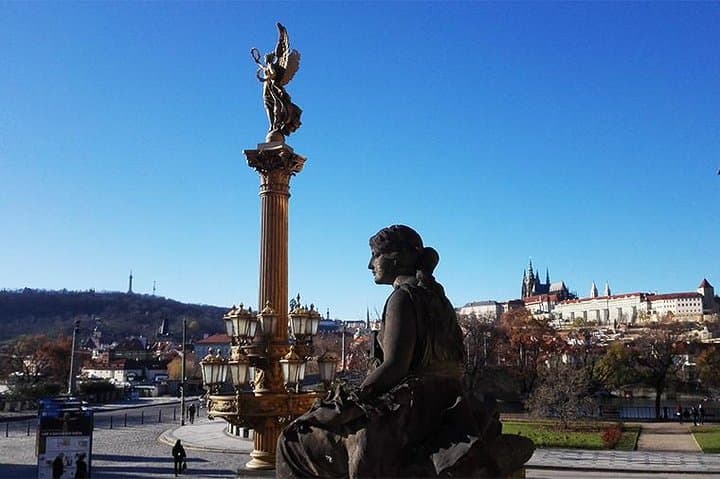
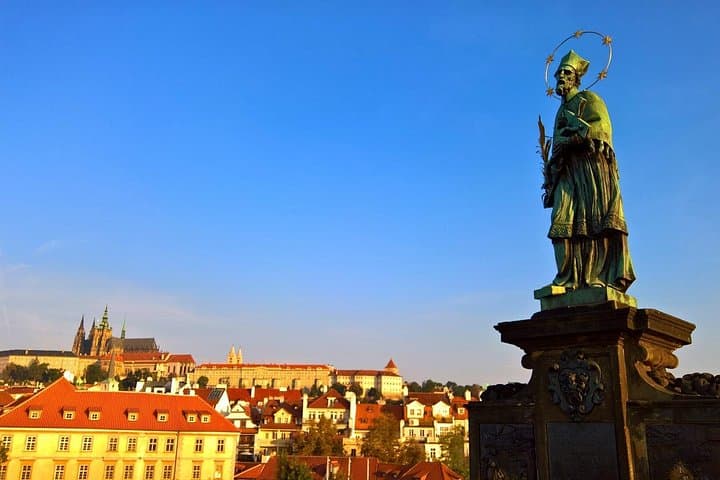
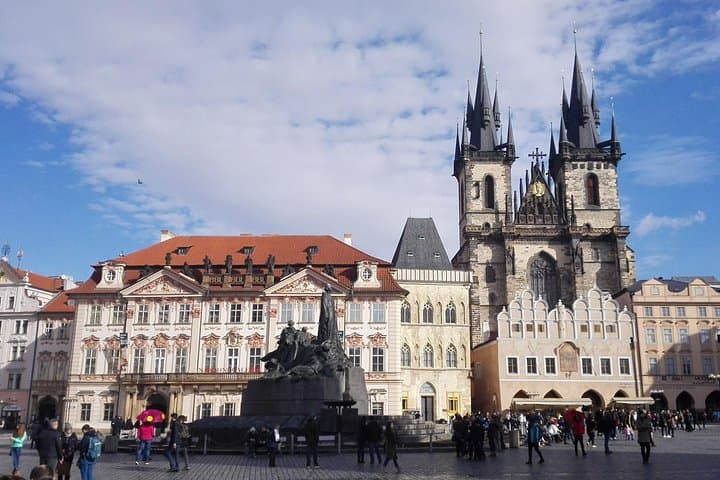
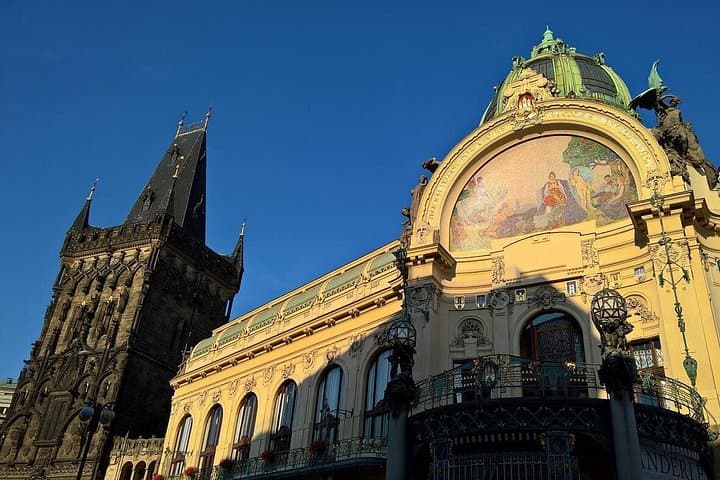
The walk threads Wenceslas Square, Old Town Square with its Astronomical Clock, Charles Bridge, Republic Square and the Jewish Quarter, pausing at the Municipal House and Powder Tower. Visitors will trace styles from 12th‑century Romanesque foundations through Gothic vaults and Baroque drama to the early 20th‑century experiments that made Prague a rare European center of Cubist architecture. Along the way the guide explains influences from neighboring Germanic and Italian schools, the role of guilds and patrons, and how Prague’s largely intact medieval core survived modern warfare and reshaping.
This is a sensory tour: stone that still holds soot, river currents nudging the bridge crowds, and narrow alleys that funnel sound and history together. Practical stops include viewpoints at Old Town Hall, sketchable details at the House of the Black Madonna, and a look at the main train station’s historic façade.
Plan for three hours of walking on uneven pavement; comfortable shoes and layered clothing make the day easier. Mornings cut crowds, while late afternoons bring warm light on sandstone and bronze. Photography is welcome; respect memorial sites and private property. The experience suits curious travelers who want a tight, contextual run‑through of Prague’s architectural evolution without museum pacing.
easy.
3 hours.
Light to moderate walking fitness; able to stand and walk on uneven ground for up to 3 hours
The guide meets you at your hotel for a private start; meeting elsewhere is possible if arranged in advance.
The tour is listed as wheelchair accessible, but some historic streets and cobbles may be challenging—contact the operator to confirm route adjustments.
Admissions are generally not included; the itinerary focuses on exterior architecture and public spaces unless stated otherwise.
Guides are professional and typically speak English; request other languages when booking to confirm availability.
Prague’s historic core survived major 20th‑century conflicts largely intact, producing a continuous architectural record from Romanesque to modern movements; the historic center is a UNESCO World Heritage Site.
Walking tours concentrate visitor impact on established streets—stay on sidewalks, avoid touching façades, and use local cafés and services to support preservation efforts.
Supreme Prague operates guided outdoor trips and adventures with an emphasis on safety, stewardship, and memorable experiences.
Morning light slips over the Vltava as the guide meets the group at a hotel door and leads them into a city that reads like an architectural ledger. Cobbled streets give way to Gothic spires, Art Nouveau flourishes, and the sharp planes of Czech Cubism—each façade a paragraph in Prague’s long story.
Morning light slips over the Vltava as the guide meets the group at a hotel door and leads them into a city that reads like an architectural ledger. Cobbled streets give way to Gothic spires, Art Nouveau flourishes, and the sharp planes of Czech Cubism—each façade a paragraph in Prague’s long story.
The walk threads Wenceslas Square, Old Town Square with its Astronomical Clock, Charles Bridge, Republic Square and the Jewish Quarter, pausing at the Municipal House and Powder Tower. Visitors will trace styles from 12th‑century Romanesque foundations through Gothic vaults and Baroque drama to the early 20th‑century experiments that made Prague a rare European center of Cubist architecture. Along the way the guide explains influences from neighboring Germanic and Italian schools, the role of guilds and patrons, and how Prague’s largely intact medieval core survived modern warfare and reshaping.
This is a sensory tour: stone that still holds soot, river currents nudging the bridge crowds, and narrow alleys that funnel sound and history together. Practical stops include viewpoints at Old Town Hall, sketchable details at the House of the Black Madonna, and a look at the main train station’s historic façade.
Plan for three hours of walking on uneven pavement; comfortable shoes and layered clothing make the day easier. Mornings cut crowds, while late afternoons bring warm light on sandstone and bronze. Photography is welcome; respect memorial sites and private property. The experience suits curious travelers who want a tight, contextual run‑through of Prague’s architectural evolution without museum pacing.