THE ADVENTURE COLLECTIVE® · Independent discovery and booking for outdoor travel

Stand where continents meet and democracy was argued aloud: Thingvellir blends visible tectonic drama with millennia of Icelandic history. This four-hour tour from Reykjavík packs geology, culture, and accessible trails into a clear, unforgettable half-day.
Stand where continents meet and democracy was argued aloud: Thingvellir blends visible tectonic drama with millennia of Icelandic history. This four-hour tour from Reykjavík packs geology, culture, and accessible trails into a clear, unforgettable half-day.
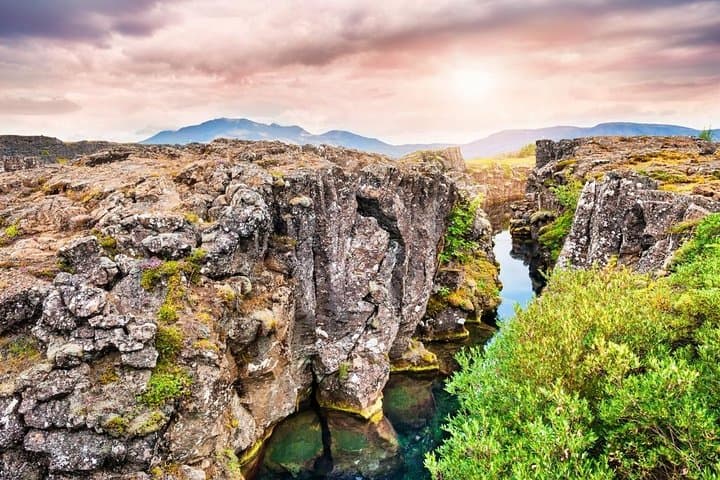
You step from the minibus into a wind that seems to speak in cracks—cold, clear, and carrying the metallic scent of distant lava. Before you, Almannagjá cleaves the ground open in a clean, vertical line; beyond it, the glassy expanse of Lake Þingvallavatn reflects serrated cliffs and a sky that can change moods twice before you finish tightening your jacket. The place feels like a page in slow motion: tectonics, water, and human memory all lodged in the same plain.
Verified experiences and guided adventures in the surrounding area.
Operated by Oak Travel Service · Thingvellir National Park, Þingvellir
You step from the minibus into a wind that seems to speak in cracks—cold, clear, and carrying the metallic scent of distant lava. Before you, Almannagjá cleaves the ground open in a clean, vertical line; beyond it, the glassy expanse of Lake Þingvallavatn reflects serrated cliffs and a sky that can change moods twice before you finish tightening your jacket. The place feels like a page in slow motion: tectonics, water, and human memory all lodged in the same plain.
Thingvellir (Þingvellir) is both a geological classroom and Iceland’s ceremonial heart. Here the Mid-Atlantic Ridge runs visibly through the landscape; the North American and Eurasian plates drift apart at roughly 2 cm per year, leaving fissures, faults and rifts that map the planet’s slow motion. On the human side, Thingvellir is the site of the Alþing, the world’s oldest parliament founded around 930 AD. For centuries chieftains met, disputes aired, and law was made on these plains—public ritual braided with raw geology.
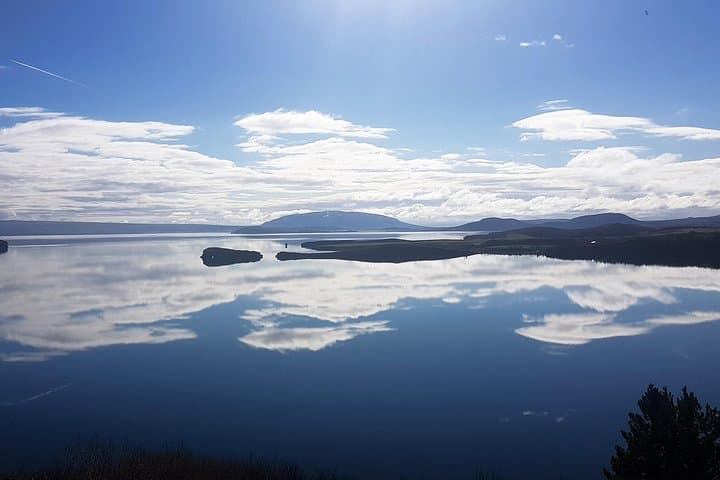
The park’s geology and ecology are inseparable. Þingvallavatn, Iceland’s largest natural lake, holds cold, clear water and an ecosystem adapted to volcanic runoff and glacial silt; you may notice Arctic char fishing boats along the shore. Basalt cliffs, calcified springs, and newly formed lava fields nearby reveal the constant interplay of ice, fire and sea that shapes this region.
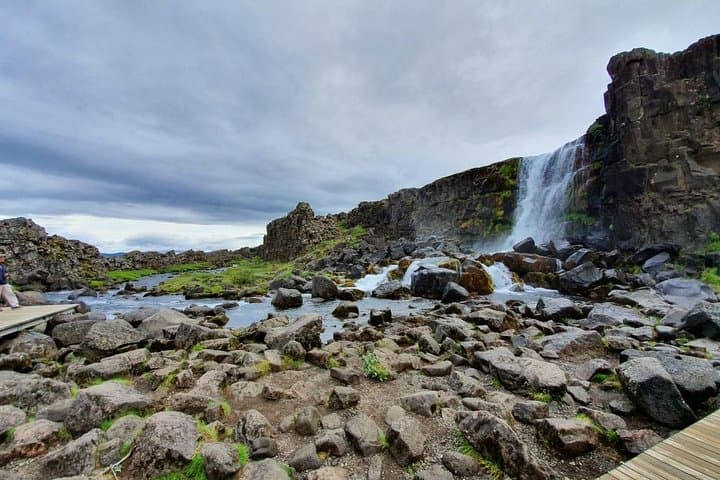
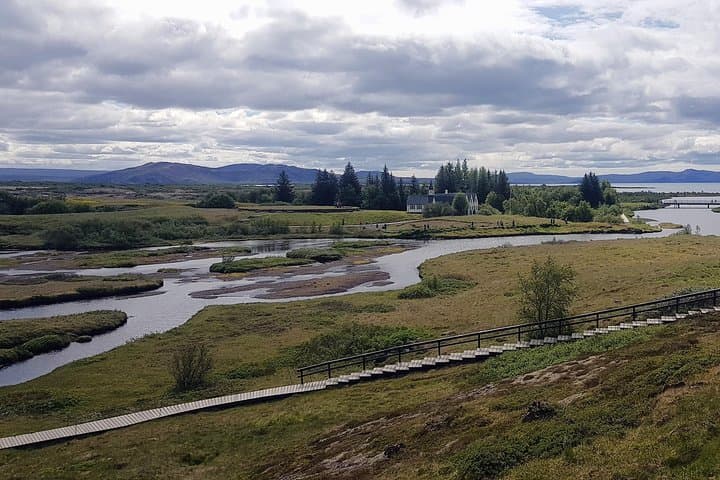
On a standard four-hour tour—about two hours on-site—guides lead you along compacted trails and wooden boardwalks that take in the principal viewpoints: Almannagjá gorge, the Law Rock (Lögberg) site, and the lake’s shoreline. Distances on the park loop are short (expect 1–3 km of walking with minimal elevation gain under 100 m), but wind and rain can turn easy terrain raw, so dress in layers.
Practicalities: tours commonly depart from Reykjavik and return the same day; pickup is often offered from city hotels. Accessibility is strong at major viewpoints—many paths are stroller- and wheelchair-friendly—but some lookout points require careful footing. Bring a windproof waterproof shell, sturdy boots with good traction for wet boardwalks, and a compact daypack for layers and snacks.
Timing matters: early mornings and late afternoons thin the crowds and give softer light for photography; winter brings low sun and chance of northern lights, while summer delivers long golden hours and easier hiking conditions. Respect the site—stay on marked paths to protect fragile vegetation and the park’s archaeological features. A visit to Thingvellir is a concise education in planetary processes and human story-telling—an easy, potent day that makes clear why Iceland’s landscape is never merely background but active company on the road.
easy.
4 hours (2 hours on-site).
Suitable for most fitness levels; requires short, easy walks on uneven or wet surfaces
The full tour is about four hours with roughly two hours spent exploring Thingvellir itself—enough time for main viewpoints and short walks.
Major viewpoints and boardwalks are generally wheelchair- and stroller-accessible, though some outlooks require stepping onto uneven ground; check with the operator for detailed accessibility arrangements.
Yes—the Almannagjá fissure and surrounding rifts are visible expressions of the Mid-Atlantic Ridge where the Eurasian and North American plates meet and slowly separate.
Layered clothing, a windproof waterproof shell, and sturdy shoes with traction; temperatures and wind can be colder than Reykjavík even in summer.
Photography is welcome; drone use is regulated—check park rules and local restrictions before flying as permits may be required.
Yes—standard tours include stops at the Law Rock (Lögberg) and other historical points where guides explain the site’s parliamentary history.
Thingvellir hosted the Alþing from about 930 AD until the parliament’s move to Reykjavík in 1844; the open-air assemblies shaped Icelandic law and identity.
The park is a UNESCO World Heritage Site—stick to trails to protect delicate moss and soil, and follow local rules on waste and drone use to minimize impact.
Oak Travel Service operates guided outdoor trips and adventures with an emphasis on safety, stewardship, and memorable experiences.
You step from the minibus into a wind that seems to speak in cracks—cold, clear, and carrying the metallic scent of distant lava. Before you, Almannagjá cleaves the ground open in a clean, vertical line; beyond it, the glassy expanse of Lake Þingvallavatn reflects serrated cliffs and a sky that can change moods twice before you finish tightening your jacket. The place feels like a page in slow motion: tectonics, water, and human memory all lodged in the same plain.
You step from the minibus into a wind that seems to speak in cracks—cold, clear, and carrying the metallic scent of distant lava. Before you, Almannagjá cleaves the ground open in a clean, vertical line; beyond it, the glassy expanse of Lake Þingvallavatn reflects serrated cliffs and a sky that can change moods twice before you finish tightening your jacket. The place feels like a page in slow motion: tectonics, water, and human memory all lodged in the same plain.
Thingvellir (Þingvellir) is both a geological classroom and Iceland’s ceremonial heart. Here the Mid-Atlantic Ridge runs visibly through the landscape; the North American and Eurasian plates drift apart at roughly 2 cm per year, leaving fissures, faults and rifts that map the planet’s slow motion. On the human side, Thingvellir is the site of the Alþing, the world’s oldest parliament founded around 930 AD. For centuries chieftains met, disputes aired, and law was made on these plains—public ritual braided with raw geology.
The park’s geology and ecology are inseparable. Þingvallavatn, Iceland’s largest natural lake, holds cold, clear water and an ecosystem adapted to volcanic runoff and glacial silt; you may notice Arctic char fishing boats along the shore. Basalt cliffs, calcified springs, and newly formed lava fields nearby reveal the constant interplay of ice, fire and sea that shapes this region.
On a standard four-hour tour—about two hours on-site—guides lead you along compacted trails and wooden boardwalks that take in the principal viewpoints: Almannagjá gorge, the Law Rock (Lögberg) site, and the lake’s shoreline. Distances on the park loop are short (expect 1–3 km of walking with minimal elevation gain under 100 m), but wind and rain can turn easy terrain raw, so dress in layers.
Practicalities: tours commonly depart from Reykjavik and return the same day; pickup is often offered from city hotels. Accessibility is strong at major viewpoints—many paths are stroller- and wheelchair-friendly—but some lookout points require careful footing. Bring a windproof waterproof shell, sturdy boots with good traction for wet boardwalks, and a compact daypack for layers and snacks.
Timing matters: early mornings and late afternoons thin the crowds and give softer light for photography; winter brings low sun and chance of northern lights, while summer delivers long golden hours and easier hiking conditions. Respect the site—stay on marked paths to protect fragile vegetation and the park’s archaeological features. A visit to Thingvellir is a concise education in planetary processes and human story-telling—an easy, potent day that makes clear why Iceland’s landscape is never merely background but active company on the road.