THE ADVENTURE COLLECTIVE® · Independent discovery and booking for outdoor travel

Trace the route of ancient armies from the steaming springs of Thermopylae to the oracle-strewn slopes of Delphi. This private full-day tour blends battlefield terrain, mountain geology and classical ruins with practical tips for an all-day cultural trek.
Trace the route of ancient armies from the steaming springs of Thermopylae to the oracle-strewn slopes of Delphi. This private full-day tour blends battlefield terrain, mountain geology and classical ruins with practical tips for an all-day cultural trek.
You arrive before the heat of the day, the bus easing onto a narrow coastal plain where the Aegean seems to press against the land. At Thermopylae the spring-fed hot baths still steam in the morning light and the plain opens like a page of history; the statue of King Leonidas watches the road, bronze set against scrub and distant hills. The landscape here is blunt—rock, salt, and a stubborn line of pine—terrain that once funneled armies into a single, decisive gate.
Verified experiences and guided adventures in the surrounding area.
Operated by Great Greece Tours · Delphi, Phocis
You arrive before the heat of the day, the bus easing onto a narrow coastal plain where the Aegean seems to press against the land. At Thermopylae the spring-fed hot baths still steam in the morning light and the plain opens like a page of history; the statue of King Leonidas watches the road, bronze set against scrub and distant hills. The landscape here is blunt—rock, salt, and a stubborn line of pine—terrain that once funneled armies into a single, decisive gate.
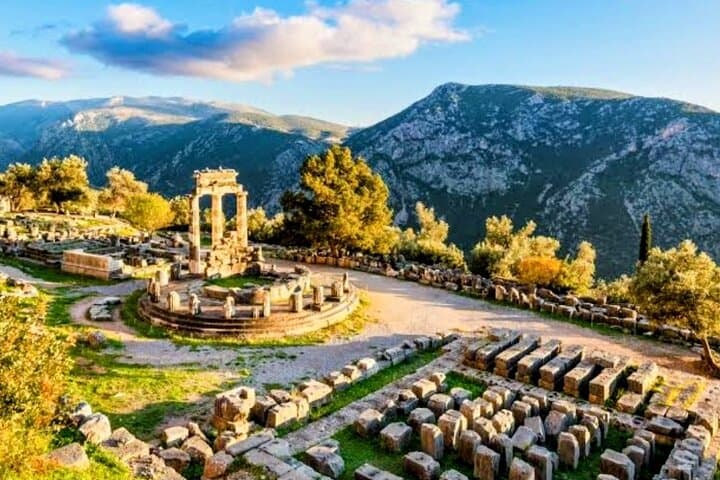
From the Warm Gates the road climbs toward Mount Parnassus and Delphi, a sweep of limestone ridges that create a natural amphitheater for the ancient sanctuary. Delphi’s terrace of treasuries, the round Tholos of Athena Pronaea and the Temple of Apollo sit on jagged bedrock where tectonics and time have exposed veins of stone that shaped cult practices for centuries. You’ll pass Arachova’s stone streets and Levadia’s waterfalls—small towns that feed on mountain water and regional culinary traditions.
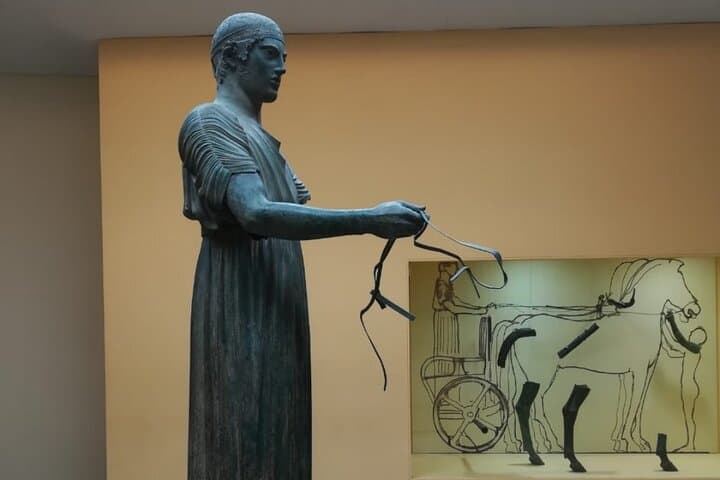
Practical guidance: this is a long private day (about 9–11 hours) with mostly seated transfer and repeated short walks across uneven archaeological stone, steps and museum floors. Wear supportive shoes with good traction, bring sun protection, and carry layers for wind on exposed terraces. Tickets for Delphi’s museum and sanctuary are purchased on site; the itinerary usually includes guided commentary and bottled water. Accessibility is generally good for main viewpoints, but expect some stair sections. Start early to avoid crowds and late afternoon heat, and allow time in Arachova or Levadia for a quiet meal after the tour.
easy.
9–11 hours.
Suitable for most fitness levels but requires repeated short walks and stairs; be comfortable walking on uneven ground.
The tour lasts approximately 9 to 11 hours including travel time between sites.
Admissions are typically not included—tickets are purchased on site unless otherwise stated by the operator.
Main viewpoints and some transportation are wheelchair accessible, but expect steps and uneven surfaces at certain ruins.
There are stops in mountain towns like Arachova and Levadia for meals; bring snacks for the road between stops.
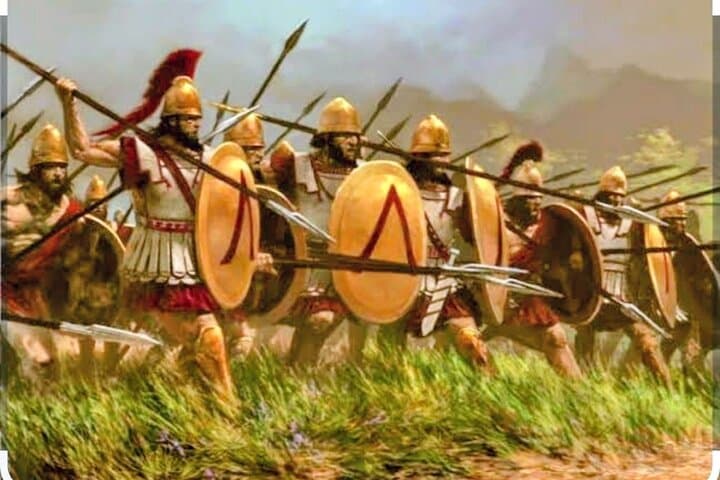
Delphi was regarded by ancient Greeks as the omphalos, or the center of the world, where the Pythia delivered oracles to pilgrims and city-states alike; Thermopylae marks the narrow coastal corridor where numerically inferior forces staged their famed defense.
These sites are managed to protect fragile stone and artifacts—stick to marked paths, avoid touching carved surfaces, and use local guides to minimize impact.
Great Greece Tours operates guided outdoor trips and adventures with an emphasis on safety, stewardship, and memorable experiences.
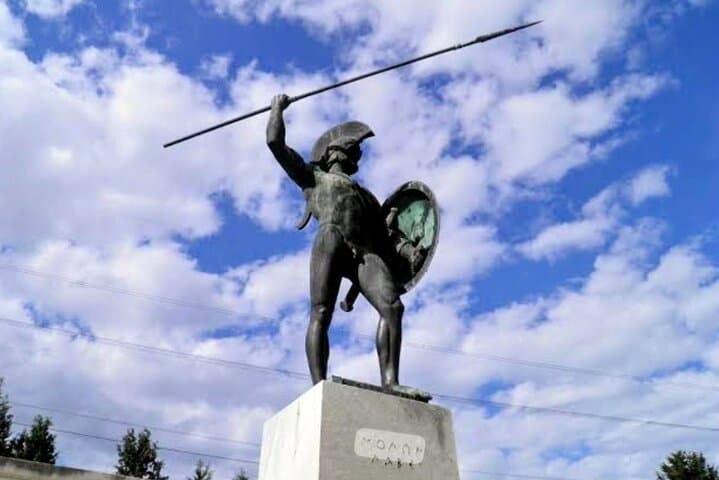
You arrive before the heat of the day, the bus easing onto a narrow coastal plain where the Aegean seems to press against the land. At Thermopylae the spring-fed hot baths still steam in the morning light and the plain opens like a page of history; the statue of King Leonidas watches the road, bronze set against scrub and distant hills. The landscape here is blunt—rock, salt, and a stubborn line of pine—terrain that once funneled armies into a single, decisive gate.
You arrive before the heat of the day, the bus easing onto a narrow coastal plain where the Aegean seems to press against the land. At Thermopylae the spring-fed hot baths still steam in the morning light and the plain opens like a page of history; the statue of King Leonidas watches the road, bronze set against scrub and distant hills. The landscape here is blunt—rock, salt, and a stubborn line of pine—terrain that once funneled armies into a single, decisive gate.
From the Warm Gates the road climbs toward Mount Parnassus and Delphi, a sweep of limestone ridges that create a natural amphitheater for the ancient sanctuary. Delphi’s terrace of treasuries, the round Tholos of Athena Pronaea and the Temple of Apollo sit on jagged bedrock where tectonics and time have exposed veins of stone that shaped cult practices for centuries. You’ll pass Arachova’s stone streets and Levadia’s waterfalls—small towns that feed on mountain water and regional culinary traditions.
Practical guidance: this is a long private day (about 9–11 hours) with mostly seated transfer and repeated short walks across uneven archaeological stone, steps and museum floors. Wear supportive shoes with good traction, bring sun protection, and carry layers for wind on exposed terraces. Tickets for Delphi’s museum and sanctuary are purchased on site; the itinerary usually includes guided commentary and bottled water. Accessibility is generally good for main viewpoints, but expect some stair sections. Start early to avoid crowds and late afternoon heat, and allow time in Arachova or Levadia for a quiet meal after the tour.