THE ADVENTURE COLLECTIVE® · Independent discovery and booking for outdoor travel

Take an elevator to the 52nd floor and see Palm Jumeirah, the Arabian Gulf, and Dubai’s skyline spread beneath you. This accessible observation deck gives 30–60 minutes of panoramic viewing with easy public transport access.
Take an elevator to the 52nd floor and see Palm Jumeirah, the Arabian Gulf, and Dubai’s skyline spread beneath you. This accessible observation deck gives 30–60 minutes of panoramic viewing with easy public transport access.
You step from the elevator onto the 52nd floor and the city opens: the crescent of the Arabian Gulf to one side, the palm-shaped fronds of Palm Jumeirah below like an engineered coastline daring you to map its edges, and the glittering strip of Dubai’s skyline pushing the eye toward the desert.
Verified experiences and guided adventures in the surrounding area.
Operated by Travel Square · Dubai, Dubai
You step from the elevator onto the 52nd floor and the city opens: the crescent of the Arabian Gulf to one side, the palm-shaped fronds of Palm Jumeirah below like an engineered coastline daring you to map its edges, and the glittering strip of Dubai’s skyline pushing the eye toward the desert.
Palm Jumeirah is modern engineering made visible — land reclaimed by dredging in the early 2000s to create a private coastline where hotels and residences carve new lines on the map. From this vantage, you see the rapid urban growth that defines Dubai: man-made islands, high-rise clusters, and the interplay between sea and structure. The deck itself is a practical stage for that view — glass-lined, accessible, and framed for photo-ready panoramas.
Culturally, the deck sits at an intersection: tourism, luxury development, and coastal ecology. Look for the contrast between the engineered beach edges and the open water beyond; tides and currents still shape what humans build here.
Practical guidance: allow 30–60 minutes for the visit; mornings and late afternoons provide the softest light and more comfortable temperatures. The site is wheelchair- and stroller-accessible and accepts mobile tickets; it’s not suited for visitors with severe cardiovascular concerns. Bring sunscreen, sunglasses, and a camera with optical zoom if you want distant detail. Public transport and parking are nearby, and staff frequently post viewing guidelines — follow them to minimize crowding at key windows.
Whether you’re sketching a route on a map or simply taking the skyline in, The View at The Palm offers a compact, unmistakable perspective on Dubai’s coastline and ambition.
easy.
30–60 minutes.
No special fitness required; accessible to most visitors
Most visitors spend 30–60 minutes—enough for panoramic viewing, photos, and a short break at the observation area.
Yes; the facility and transport options listed are wheelchair- and stroller-accessible.
Early morning or late afternoon for softer light and cooler temperatures; sunset is popular and busier.
Mobile tickets are accepted and instant confirmation is available; booking ahead can help avoid queues during peak times.
Palm Jumeirah is a 21st-century land-reclamation project by Nakheel that reshaped Dubai’s coastline into a palm-tree plan of fronds and a crescent breakwater.
Coastal development has altered local marine habitats; visitors are encouraged to avoid feeding wildlife, minimize plastic use, and stay to designated viewing and walking areas.
Travel Square operates guided outdoor trips and adventures with an emphasis on safety, stewardship, and memorable experiences.
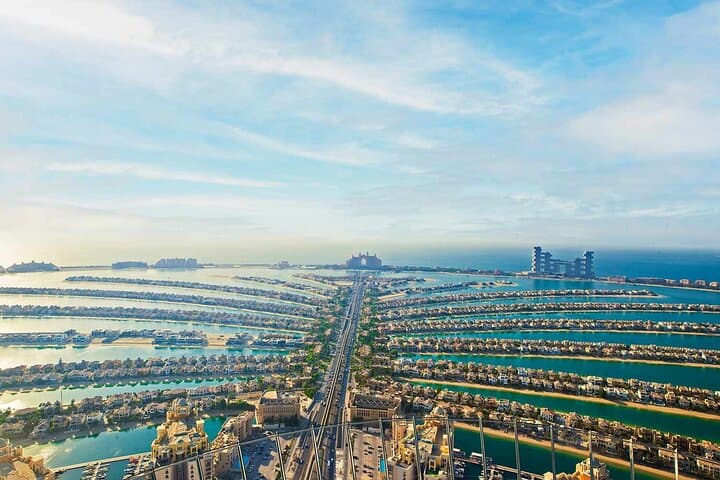
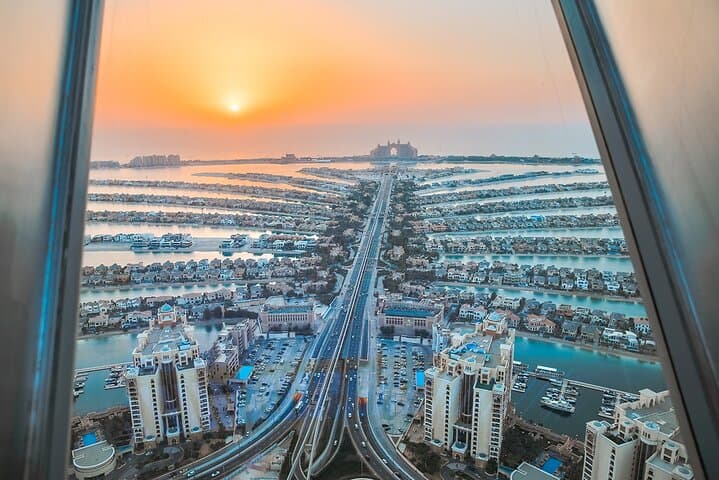
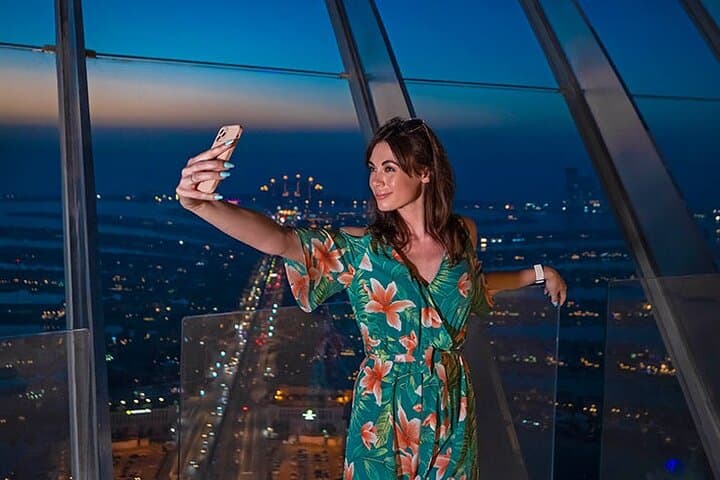
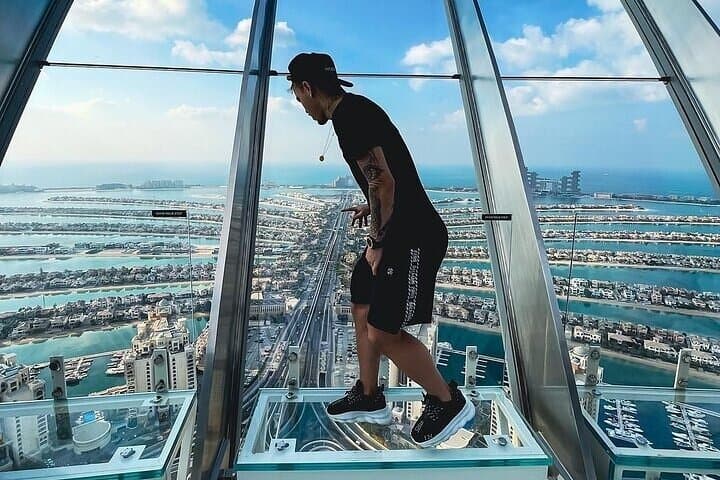
You step from the elevator onto the 52nd floor and the city opens: the crescent of the Arabian Gulf to one side, the palm-shaped fronds of Palm Jumeirah below like an engineered coastline daring you to map its edges, and the glittering strip of Dubai’s skyline pushing the eye toward the desert.
You step from the elevator onto the 52nd floor and the city opens: the crescent of the Arabian Gulf to one side, the palm-shaped fronds of Palm Jumeirah below like an engineered coastline daring you to map its edges, and the glittering strip of Dubai’s skyline pushing the eye toward the desert.
Palm Jumeirah is modern engineering made visible — land reclaimed by dredging in the early 2000s to create a private coastline where hotels and residences carve new lines on the map. From this vantage, you see the rapid urban growth that defines Dubai: man-made islands, high-rise clusters, and the interplay between sea and structure. The deck itself is a practical stage for that view — glass-lined, accessible, and framed for photo-ready panoramas.
Culturally, the deck sits at an intersection: tourism, luxury development, and coastal ecology. Look for the contrast between the engineered beach edges and the open water beyond; tides and currents still shape what humans build here.
Practical guidance: allow 30–60 minutes for the visit; mornings and late afternoons provide the softest light and more comfortable temperatures. The site is wheelchair- and stroller-accessible and accepts mobile tickets; it’s not suited for visitors with severe cardiovascular concerns. Bring sunscreen, sunglasses, and a camera with optical zoom if you want distant detail. Public transport and parking are nearby, and staff frequently post viewing guidelines — follow them to minimize crowding at key windows.
Whether you’re sketching a route on a map or simply taking the skyline in, The View at The Palm offers a compact, unmistakable perspective on Dubai’s coastline and ambition.