THE ADVENTURE COLLECTIVE® · Independent discovery and booking for outdoor travel

Ascend 240 meters to a 360-degree observatory on Palm Jumeirah for sweeping views of Atlantis, the Dubai skyline, and the Persian Gulf. This practical guide details what to expect, best times to visit, and smart tips to make the most of your ticket.
Ascend 240 meters to a 360-degree observatory on Palm Jumeirah for sweeping views of Atlantis, the Dubai skyline, and the Persian Gulf. This practical guide details what to expect, best times to visit, and smart tips to make the most of your ticket.
You step into the Palm Tower lobby, the city unfurling beyond glass, and within minutes the elevator hums upward to 240 meters — the wind and the Gulf rearrange themselves below as if taking a breath. From the observatory deck the crescent of the Palm Jumeirah reads like a coastline drawn in gold: Atlantis sits like a landmark, the Dubai skyline stitches vertical lines against the desert, and the Persian Gulf stretches, daring you to name its limits.
Verified experiences and guided adventures in the surrounding area.
Operated by Arabian Destination Tourism Dubai · Dubai, Dubai
You step into the Palm Tower lobby, the city unfurling beyond glass, and within minutes the elevator hums upward to 240 meters — the wind and the Gulf rearrange themselves below as if taking a breath. From the observatory deck the crescent of the Palm Jumeirah reads like a coastline drawn in gold: Atlantis sits like a landmark, the Dubai skyline stitches vertical lines against the desert, and the Persian Gulf stretches, daring you to name its limits.
The island itself is modern engineering: an artificial archipelago completed by Nakheel in the early 2000s, built from reclaimed sand and stone. Geology here is human reshaped — the sea and reclaimed land negotiating a new coastline. The Palm plays an outsized role in Dubai’s tourism culture, a deliberate monument to scale and spectacle, with Nakheel Mall and contemporary eateries concentrated at the tower’s base.
Expect an experience split between indoor exhibits and a secured outdoor viewing platform with 360-degree sightlines. The deck includes an immersive theater and interpretive displays that explain the Palm’s design and shoreline engineering. For photographers and sightseers, prime-sunset slots are the most sought-after; daytime visits give clearer views while twilight softens the skyline.
Practicalities: prebook a timed ticket to skip queues, allow 60–120 minutes for the full visit, and arrive early for cooler temperatures. Carry water, sun protection and a camera with a wide-angle lens; security checks are standard, and pushy tour groups can make peak hours feel compressed. With a little planning, the View at Palm is an efficient, high-reward urban lookout that pairs engineering history with panoramic Gulf perspectives.
easy.
60–120 minutes.
Suitable for all fitness levels; mostly standing and short walks on flat surfaces
Plan for 60–120 minutes depending on whether you use the exhibits and theater; photography-focused visitors may want extra time.
Yes — the observatory includes both indoor and an outdoor deck at 240 meters with 360-degree views.
Yes — the Palm Tower and observatory are designed to be accessible, with elevators and level routes; contact operators for specific assistance needs.
You can but prebooking is recommended to guarantee your preferred time slot, especially for sunset hours.
Palm Jumeirah is a purpose-built island completed in the 2000s by Nakheel, representing Dubai’s rapid coastal development and modern engineering ambitions.
Coastal reclamation changed local marine habitats; visitors are encouraged to avoid littering and support local beach clean-up efforts when possible.
Arabian Destination Tourism Dubai operates guided outdoor trips and adventures with an emphasis on safety, stewardship, and memorable experiences.
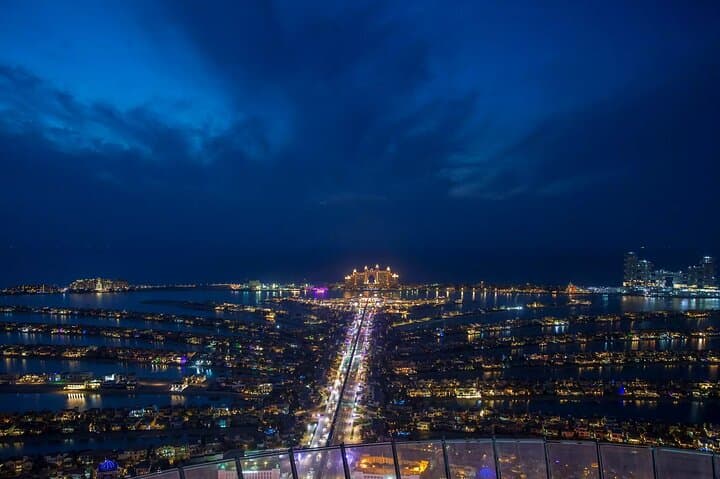
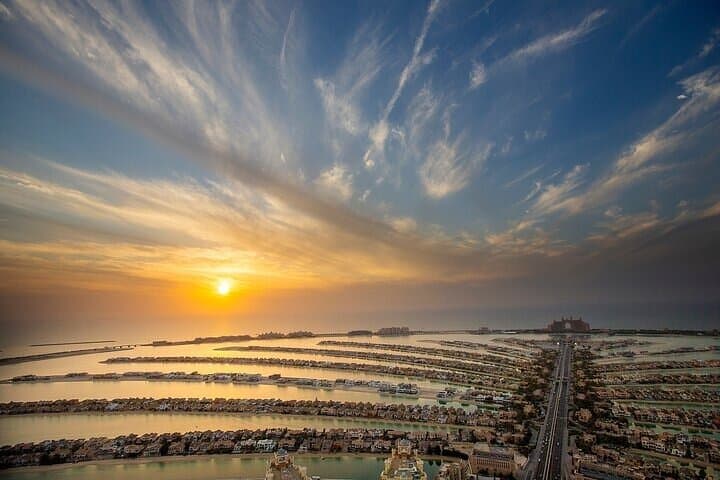
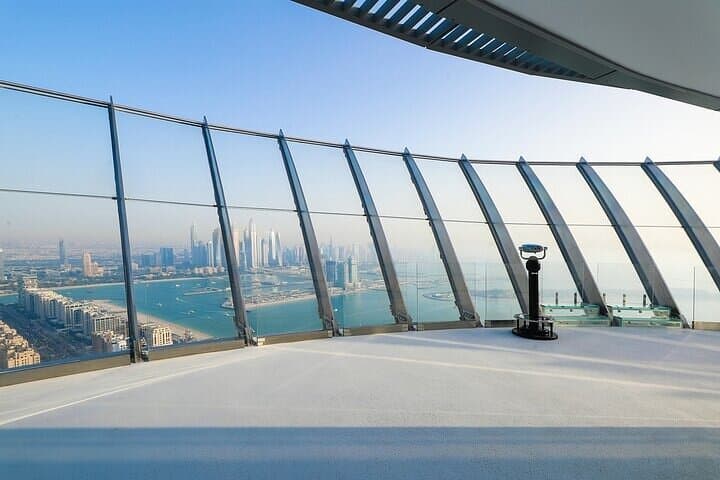
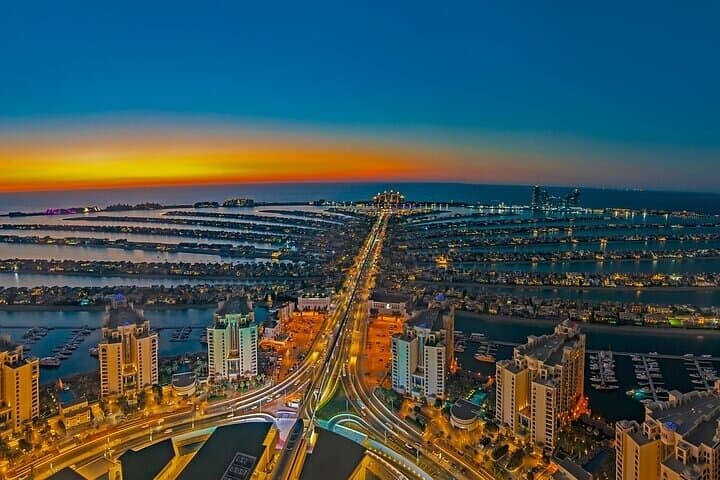
You step into the Palm Tower lobby, the city unfurling beyond glass, and within minutes the elevator hums upward to 240 meters — the wind and the Gulf rearrange themselves below as if taking a breath. From the observatory deck the crescent of the Palm Jumeirah reads like a coastline drawn in gold: Atlantis sits like a landmark, the Dubai skyline stitches vertical lines against the desert, and the Persian Gulf stretches, daring you to name its limits.
You step into the Palm Tower lobby, the city unfurling beyond glass, and within minutes the elevator hums upward to 240 meters — the wind and the Gulf rearrange themselves below as if taking a breath. From the observatory deck the crescent of the Palm Jumeirah reads like a coastline drawn in gold: Atlantis sits like a landmark, the Dubai skyline stitches vertical lines against the desert, and the Persian Gulf stretches, daring you to name its limits.
The island itself is modern engineering: an artificial archipelago completed by Nakheel in the early 2000s, built from reclaimed sand and stone. Geology here is human reshaped — the sea and reclaimed land negotiating a new coastline. The Palm plays an outsized role in Dubai’s tourism culture, a deliberate monument to scale and spectacle, with Nakheel Mall and contemporary eateries concentrated at the tower’s base.
Expect an experience split between indoor exhibits and a secured outdoor viewing platform with 360-degree sightlines. The deck includes an immersive theater and interpretive displays that explain the Palm’s design and shoreline engineering. For photographers and sightseers, prime-sunset slots are the most sought-after; daytime visits give clearer views while twilight softens the skyline.
Practicalities: prebook a timed ticket to skip queues, allow 60–120 minutes for the full visit, and arrive early for cooler temperatures. Carry water, sun protection and a camera with a wide-angle lens; security checks are standard, and pushy tour groups can make peak hours feel compressed. With a little planning, the View at Palm is an efficient, high-reward urban lookout that pairs engineering history with panoramic Gulf perspectives.