THE ADVENTURE COLLECTIVE® · Independent discovery and booking for outdoor travel

Explore Rabat on a two-hour, self-guided cultural escape that follows clues to a lost Henri Prost architectural project. Perfect for independent explorers and families who want a paced, urban adventure through historic gates and riverside gardens.
Explore Rabat on a two-hour, self-guided cultural escape that follows clues to a lost Henri Prost architectural project. Perfect for independent explorers and families who want a paced, urban adventure through historic gates and riverside gardens.
Walk out of the medina and into a two-hour urban mission where stone gates dare you to look closer and alleys whisper pieces of a forgotten plan.
Verified experiences and guided adventures in the surrounding area.
Operated by IZI Morocco: turn Morocco into a playground · Rabat, Rabat-Salé-Kénitra
Walk out of the medina and into a two-hour urban mission where stone gates dare you to look closer and alleys whisper pieces of a forgotten plan.
This self-guided cultural escape game steers players across Rabat’s waterfront, gardens, and historic quarters to uncover an early‑20th‑century architectural project by Henri Prost. Prost, the French planner who reshaped Rabat under the protectorate, blended European planning with Moroccan urban fabric; the game threads that history through puzzles anchored at real landmarks.
Geology here is urban — the ochre of limestone walls, basalt paving near the Bouregreg, and the estuary’s flats that have long shaped the city’s defenses. Cultural life folds into every clue: kasbah ramparts, Andalusian-influenced gardens, and artisans’ workshops that lend texture to the narrative.
Practical guidance: bring a charged smartphone and a local map app; the route is stroller- and wheelchair-accessible, mostly paved with brief stair sections. Expect 1.5–3 miles of walking spread over two hours; pace your time if you want to linger at museums or cafés. Start in the morning to avoid summer heat or choose golden-hour light for photography. Keep water, light layers, and a portable battery—phone navigation and puzzle apps are central.
The experience suits families, history fans, and independent explorers who prefer no guide but clear local curation. Play it as a cultural scavenger hunt: move deliberately, read plaques, and treat alleyways with respect—these are living neighborhoods, not museum backdrops.
easy.
2 hours.
Low; suitable for people comfortable with 1.5–3 miles of walking and brief stair sections
No — it’s 100% digital and self-guided. The game provides instructions and clues via your smartphone.
Yes — the operator lists wheelchair- and stroller-accessible surfaces; note there may be short stair sections in some areas.
Language availability can vary; check the booking page for options, though the app and clues are typically offered in major languages such as English and French.
Plan about two hours for gameplay; allow extra time if you want to pause for cafés, photos, or additional museum visits.
Henri Prost was commissioned in the early 20th century to modernize Rabat; his plans shaped the city’s mix of European-style avenues and preserved historic quarters.
The game emphasizes heritage protection—players are encouraged to avoid touching fragile monuments, respect local spaces, and carry out trash to minimize impact.
IZI Morocco: turn Morocco into a playground operates guided outdoor trips and adventures with an emphasis on safety, stewardship, and memorable experiences.


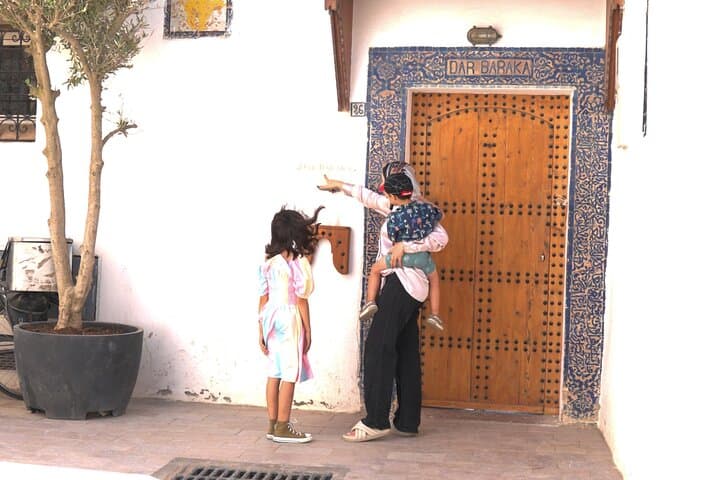
Walk out of the medina and into a two-hour urban mission where stone gates dare you to look closer and alleys whisper pieces of a forgotten plan.
Walk out of the medina and into a two-hour urban mission where stone gates dare you to look closer and alleys whisper pieces of a forgotten plan.
This self-guided cultural escape game steers players across Rabat’s waterfront, gardens, and historic quarters to uncover an early‑20th‑century architectural project by Henri Prost. Prost, the French planner who reshaped Rabat under the protectorate, blended European planning with Moroccan urban fabric; the game threads that history through puzzles anchored at real landmarks.
Geology here is urban — the ochre of limestone walls, basalt paving near the Bouregreg, and the estuary’s flats that have long shaped the city’s defenses. Cultural life folds into every clue: kasbah ramparts, Andalusian-influenced gardens, and artisans’ workshops that lend texture to the narrative.
Practical guidance: bring a charged smartphone and a local map app; the route is stroller- and wheelchair-accessible, mostly paved with brief stair sections. Expect 1.5–3 miles of walking spread over two hours; pace your time if you want to linger at museums or cafés. Start in the morning to avoid summer heat or choose golden-hour light for photography. Keep water, light layers, and a portable battery—phone navigation and puzzle apps are central.
The experience suits families, history fans, and independent explorers who prefer no guide but clear local curation. Play it as a cultural scavenger hunt: move deliberately, read plaques, and treat alleyways with respect—these are living neighborhoods, not museum backdrops.