THE ADVENTURE COLLECTIVE® · Independent discovery and booking for outdoor travel

Walk the Lower East Side as a living classroom: a two‑hour participatory tour that uncovers the neighborhood’s slang, immigrant history, and the accents that shaped modern New York speech. Expect stops at storefronts, short performances and guided group exercises.
Walk the Lower East Side as a living classroom: a two‑hour participatory tour that uncovers the neighborhood’s slang, immigrant history, and the accents that shaped modern New York speech. Expect stops at storefronts, short performances and guided group exercises.
Morning light slants across cracked stoops as the group gathers at the top steps of Sara D. Roosevelt Park. Voices rise and fall, not just from the guide in a jumpsuit known as “The Tour” but from the street itself—stoops, delis and subway grates contributing cadence to phrases that have hardened into local grammar.
Verified experiences and guided adventures in the surrounding area.
Operated by The City Speaks · New York, NY
Morning light slants across cracked stoops as the group gathers at the top steps of Sara D. Roosevelt Park. Voices rise and fall, not just from the guide in a jumpsuit known as “The Tour” but from the street itself—stoops, delis and subway grates contributing cadence to phrases that have hardened into local grammar.
The Lower East Side wears its history on storefronts and lettered signs. In the late 19th and early 20th centuries waves of Jewish, Italian, German and later Chinese immigrants shaped neighborhoods and lexicon. Beneath the asphalt, Manhattan schist and glacial deposits form the island’s hidden geology; aboveground, tenement blocks and newsprint storefronts record migration and commerce.
On this two‑hour walking performance you’ll decode Yiddish loanwords, the clipped vowel of a classic New York accent, and contemporary slang born in bodegas, community centers and through cross-cultural exchange. Stops include long-standing commercial corridors, a storefront immortalized on album art, and corners where Cantonese characters and Hebrew letters overlap.
Practical edge: expect roughly 1.8 miles of walking on flat to slightly uneven sidewalks over two hours, with frequent stops for group activities and short standing discussions. Wear supportive shoes, carry a small water bottle, and plan to use public transit—the nearby Second Avenue F station and multiple bus lines offer the fastest access. Groups are participatory; come ready to speak, mimic, and ask questions. The tour blends theater and local history, making it ideal for language buffs, cultural curious travelers, and anyone who wants to hear the city speak for itself.
easy.
2 hours.
Light walking ability; comfortable standing and short walks over flat urban terrain
Yes. The meeting point and route are wheelchair accessible, and the tour notes accessibility in advance—contact the operator for specific accommodations.
Yes. The tour is stroller accessible and suitable for older children who can participate in group exercises and walks of about 1.8 miles.
The tour is conducted in English with explanations of words from Yiddish, Chinese and other local languages; primary instruction and activities are in English.
Tours may be canceled for bad weather according to the operator’s policy; check the booking terms for refunds and rescheduling options.
The Lower East Side was a primary arrival neighborhood for European Jewish immigrants in the late 19th century and later became home to diverse communities, influencing local slang and commerce.
Respect local businesses by not obstructing doorways and avoid damaging historic signs; lower‑impact tourism supports small retailers and preserves neighborhood character.
The City Speaks operates guided outdoor trips and adventures with an emphasis on safety, stewardship, and memorable experiences.
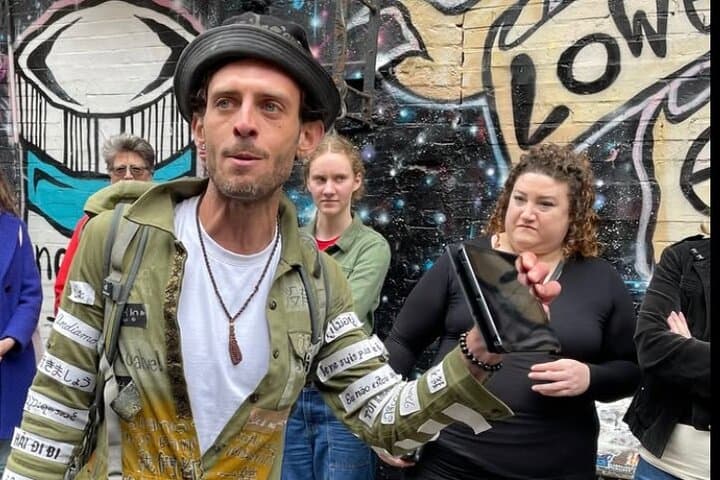
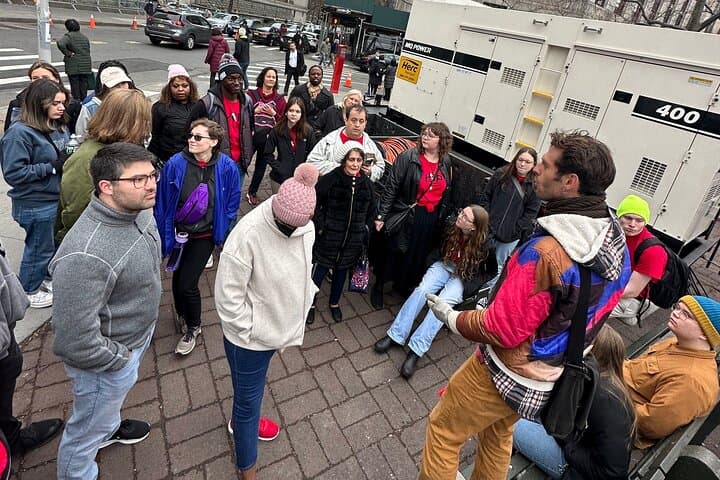
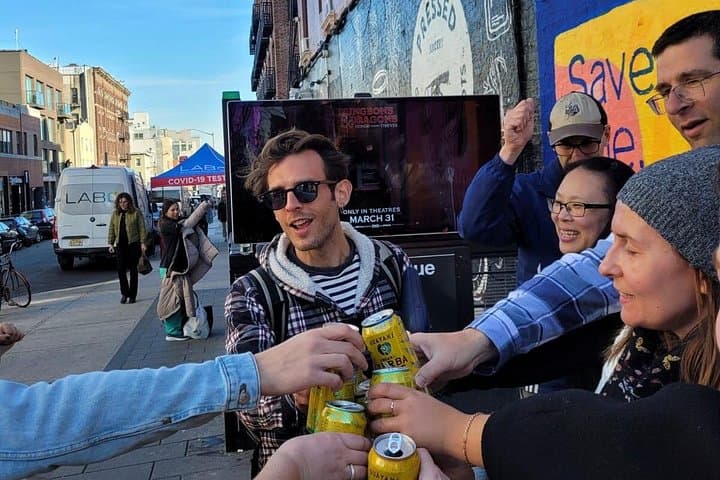
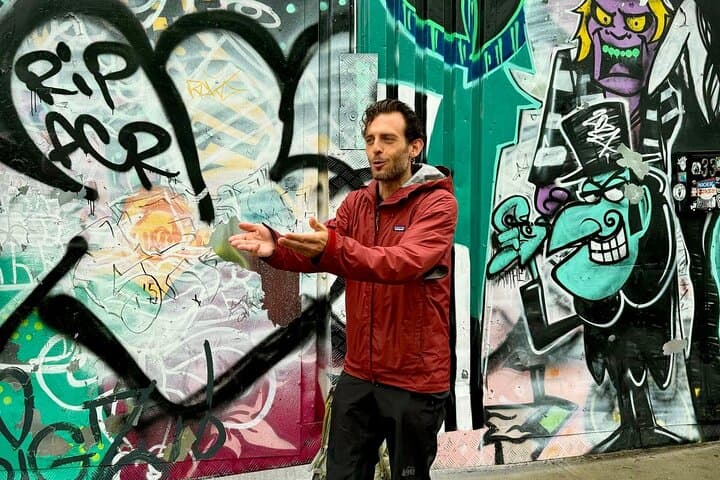
Morning light slants across cracked stoops as the group gathers at the top steps of Sara D. Roosevelt Park. Voices rise and fall, not just from the guide in a jumpsuit known as “The Tour” but from the street itself—stoops, delis and subway grates contributing cadence to phrases that have hardened into local grammar.
Morning light slants across cracked stoops as the group gathers at the top steps of Sara D. Roosevelt Park. Voices rise and fall, not just from the guide in a jumpsuit known as “The Tour” but from the street itself—stoops, delis and subway grates contributing cadence to phrases that have hardened into local grammar.
The Lower East Side wears its history on storefronts and lettered signs. In the late 19th and early 20th centuries waves of Jewish, Italian, German and later Chinese immigrants shaped neighborhoods and lexicon. Beneath the asphalt, Manhattan schist and glacial deposits form the island’s hidden geology; aboveground, tenement blocks and newsprint storefronts record migration and commerce.
On this two‑hour walking performance you’ll decode Yiddish loanwords, the clipped vowel of a classic New York accent, and contemporary slang born in bodegas, community centers and through cross-cultural exchange. Stops include long-standing commercial corridors, a storefront immortalized on album art, and corners where Cantonese characters and Hebrew letters overlap.
Practical edge: expect roughly 1.8 miles of walking on flat to slightly uneven sidewalks over two hours, with frequent stops for group activities and short standing discussions. Wear supportive shoes, carry a small water bottle, and plan to use public transit—the nearby Second Avenue F station and multiple bus lines offer the fastest access. Groups are participatory; come ready to speak, mimic, and ask questions. The tour blends theater and local history, making it ideal for language buffs, cultural curious travelers, and anyone who wants to hear the city speak for itself.