THE ADVENTURE COLLECTIVE® · Independent discovery and booking for outdoor travel

Learn basic Thai classical dance steps in a two-hour class near Wat Arun on the Chao Phraya. The session includes costume, translation, snacks and a chance to record your final performance.
Learn basic Thai classical dance steps in a two-hour class near Wat Arun on the Chao Phraya. The session includes costume, translation, snacks and a chance to record your final performance.
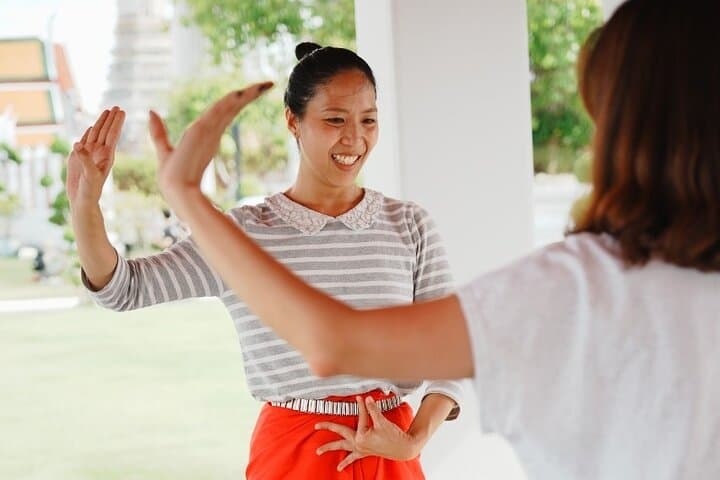
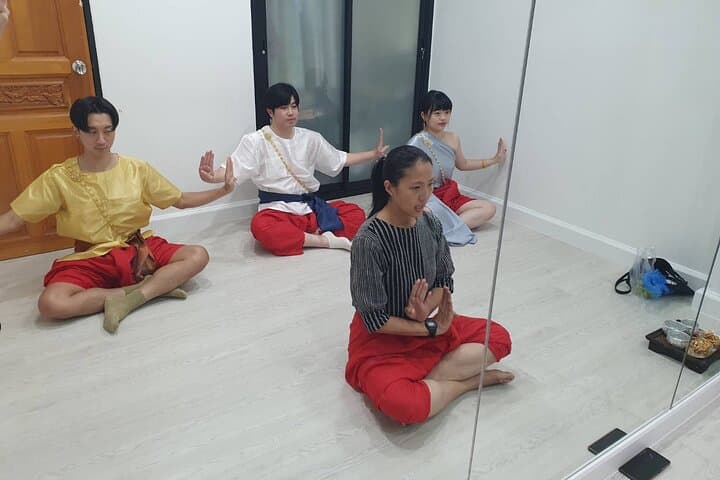
You step off the narrow pier, the river pulling at the air, and find a classroom where silk and silver-gilt finger pieces wait on a low table. Changing into a traditional loincloth and shawl, you feel the fabric slow you down—movement becomes deliberate, a language of arms and wrists taught by a local instructor whose hands trace centuries of practice.
Verified experiences and guided adventures in the surrounding area.
Operated by Thai Dance Class · Bangkok, Bangkok
You step off the narrow pier, the river pulling at the air, and find a classroom where silk and silver-gilt finger pieces wait on a low table. Changing into a traditional loincloth and shawl, you feel the fabric slow you down—movement becomes deliberate, a language of arms and wrists taught by a local instructor whose hands trace centuries of practice.
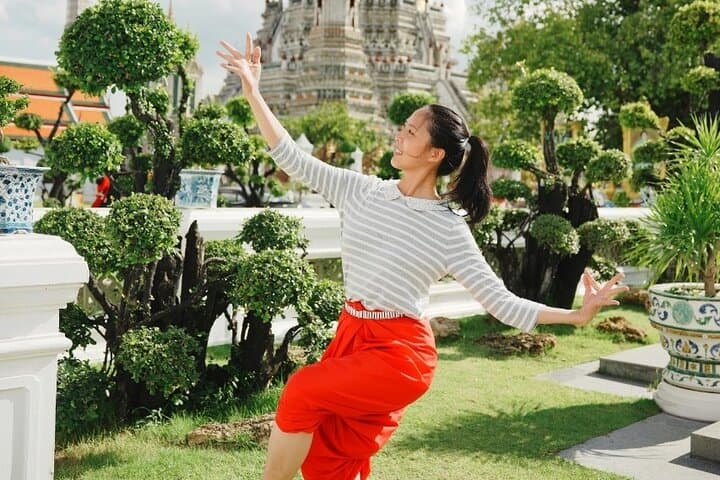
Wat Arun sits on the west bank of the Chao Phraya River; its central Khmer-style prang is faced with Chinese porcelain and rises like a carved sundial. Thai classical dance evolved around royal courts and temple ritual, and the class introduces foundational positions, handwork and three short routines drawn from distinct styles—each tied to the region’s history of monarchy and river trade.
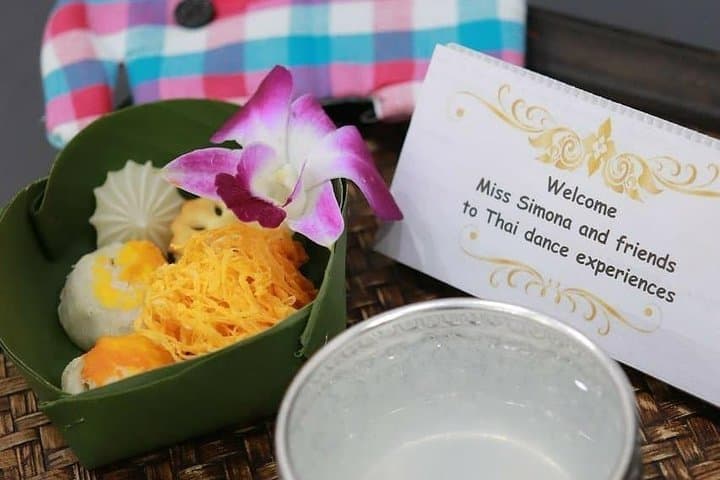
The lesson is practical: about two hours including costume, a guided warm-up, and snack with herbal drink. Expect gentle standing, repetitive arm and hand patterns, and a final, friendlier performance you can record on your phone (professional cameras are not allowed). English and Chinese translation are on hand, and the session is accessible to most fitness levels.
Plan for Bangkok heat—mornings feel cooler and twilight classes catch the river breeze. Wear modest clothing to enter temple areas and bring a refillable water bottle; the host supplies costume and snacks. This is cultural immersion with a clear, tactile payoff: you leave with new movement, better photographic memories, and a quieter sense of how dance maps onto the city’s riverside life.
easy.
2 hours.
Suitable for most levels; requires standing, gentle repetitive movement and basic coordination
No—this class is designed for beginners and teaches basic positions, hand work and short routines.
Yes, traditional Thai costume (for use during the class) is supplied as part of the experience.
No—participants may use mobile phones to record, but professional cameras are not permitted.
Yes; the listing notes wheelchair and stroller accessibility and offers translation for English and Chinese speakers.
Wat Arun dates to the Ayutthaya and early Bangkok eras; its porcelain-covered prang was refurbished under King Rama II–III and honors the Hindu god Aruna (dawn).
Support responsible tourism by avoiding single-use plastics and respecting temple rules; local classes often contribute to community income and cultural preservation.
Thai Dance Class operates guided outdoor trips and adventures with an emphasis on safety, stewardship, and memorable experiences.
You step off the narrow pier, the river pulling at the air, and find a classroom where silk and silver-gilt finger pieces wait on a low table. Changing into a traditional loincloth and shawl, you feel the fabric slow you down—movement becomes deliberate, a language of arms and wrists taught by a local instructor whose hands trace centuries of practice.
You step off the narrow pier, the river pulling at the air, and find a classroom where silk and silver-gilt finger pieces wait on a low table. Changing into a traditional loincloth and shawl, you feel the fabric slow you down—movement becomes deliberate, a language of arms and wrists taught by a local instructor whose hands trace centuries of practice.
Wat Arun sits on the west bank of the Chao Phraya River; its central Khmer-style prang is faced with Chinese porcelain and rises like a carved sundial. Thai classical dance evolved around royal courts and temple ritual, and the class introduces foundational positions, handwork and three short routines drawn from distinct styles—each tied to the region’s history of monarchy and river trade.
The lesson is practical: about two hours including costume, a guided warm-up, and snack with herbal drink. Expect gentle standing, repetitive arm and hand patterns, and a final, friendlier performance you can record on your phone (professional cameras are not allowed). English and Chinese translation are on hand, and the session is accessible to most fitness levels.
Plan for Bangkok heat—mornings feel cooler and twilight classes catch the river breeze. Wear modest clothing to enter temple areas and bring a refillable water bottle; the host supplies costume and snacks. This is cultural immersion with a clear, tactile payoff: you leave with new movement, better photographic memories, and a quieter sense of how dance maps onto the city’s riverside life.